WHEN IT IS OK TO BE A FOOL!

Ah, April Fool’s Day. Without going into detail, April Fool’s Day originated in France in the 16th century, when the king of France adopted a reformed calendar to correct some errors in the calendar they had been using. Up until the change, the New Year celebration began on March 25 and ended April 1. When New Year’s Day was changed to January 1, like all changes, some were slow to adopt the new calendar. In time those who continued to celebrate the New Year from March 25 to April 1, were called April Fools. In time there developed the custom of playing foolish pranks on friends and relatives on April 1, which spread across France and eventually spread to other areas.

The word “fool” is found some 75 times in the Bible. The Hebrew word for “fool” is nabal, meaning senseless, especially of someone who exhibited moral, ethical  and religious insensibility in regard to the truth. The Greek word for “foolish” is moros (from where we get our English words moron and moronic), meaning dull in understanding, lacking a grip on reality, brainless, mentally inept, dull of thinking, without an edge, sluggish in mind.

While the Bible uses the word “fool” in regard to describing certain individuals and their character, many are quick to point out that in the Sermon on the Mount (Matthew 5:22) Jesus instructs not to call someone a “fool.” Looking at the context of Jesus’ admonition, the Master Teacher is teaching on anger and control of the tongue when He instructs not to call someone a fool. Jesus is not necessarily forbidding the use of the word in its legitimate biblical context, but He is warning of its usage in the wrong tone, attitude, and manner when used as an insulting slur in a fit of rage. Jesus used the word “fool” and “foolish” when speaking of certain individuals, but He did so in order to reveal the nature of one’s state and in hopes of bringing them to faith. It is biblically and morally permissible to describe someone as a fool if it is spoken in its biblical usage and there is a genuine desire for the person’s salvation.

In that light, there are many places in the Bible where the Lord declares someone to be a fool. It would be wise to look at five places where the Word labels someone a “fool.” Is it ever ok to a be fool? Come, let us reason together.

First, there is the Atheistic Fool. We find in Psalms 14:1 and 53:1, “The fool says in his heart, ‘There is no God.’” Both the Psalmist and Paul write that the wonder of creation teaches man that there is an Intelligent Designer behind this vast universe. The universe didn’t pop into being by itself. All things that exist have a First Cause behind its existence.  The Psalmist says to try and argue that there is no God is foolish and unwise. For one to say there is no God only reveals one’s rebellious heart that seeks to dismiss the very One who created all things. The atheistic fool’s denial flies in the face of overwhelming evidence to the contrary, including one’s own conscience and the wonder of the universe that clearly echoes the Voice of the Creator.

Second, there is the Deceived Fool. Proverbs 14:9 reads, “Fools make a mock at sin.” The author of Hebrews warns about the deceitfulness of sin (Hebrews 3:12-13). The deceitfulness of sin whispers in our ears, “You can disobey and leave God out of your life with no adverse consequences resulting.” That is truly a lie from the Great Deceiver, the Devil. He is a master at convincing people to be their own god, that you don’t need God and if you obey the very one who created you it will cramp your style. Such thinking is foolish and disastrous. It will not only lead to a life (and a society) that will eventually shipwreck on rocks of willful defiance, it will lead to the dire consequences of spending eternity separated from the very presence of God who has prepared heaven for those who embrace Jesus Christ.

Third, there is the Neglectful Fool. In Matthew 7:24-27, Jesus tells the story of two men. Both built what seemed to others nice houses that were admired by onlookers. Then one day a torrential rain came, and one house withstood the storm, while the other house collapsed. The difference? One wisely built his house upon a rock foundation, the other neglected to build his house on a firm foundation, foolishly building his house on sand.  Because of his neglect, the house collapsed in the storm. Many people foolishly build their lives on faulty foundations like money, fame, prestige, heritage, pride, unrestrained living, etc.  From the outside all appears well, but when the storms of life come, they collapse in the winds, floods and shifting sands of adversity. When one builds their life on other than a firm foundation of a relationship with Jesus Christ they are building on sand. Christ is the Stone made without hands (Daniel 2:45) and when one builds their life on Him, while we may tremble in the storms of life, the Rock on which one has built their life will never tremble.

Fourth, there is the Unprepared Fool. In Luke 12:16-21 Jesus tells the story of a man who was careful to make detailed plans for this life in regard to materialistic possessions. However, he made no preparations for life after death, and Jesus said of His unpreparedness when death visited his luxurious home, “Thou fool” (Luke 12:20). He was a fool because he neglected to prepare his soul for death. He left God out of his life; he neglected Jesus Christ, God’s remedy for human sin; he neglected God’s only means to enter heavens gates; he neglected the truth that it was appointed unto man once to die and after that the judgement. Because we know not the day or hour when that “appointment day” will be, we need to heed the warning of Paul, “Today is the day of salvation” (2 Cor. 6:2). For one not to prepare for the day one departs this earthly world and stands before the Lord, is a fool indeed. The wise will make preparation for that inevitable day.

Fifth, there is the Fool for Christ. Paul declared that he was a fool for Christ (I Cor 4:10). The skewed perception of the world and the mind of God as found within the Word are diametrically opposed. The very core of Christianity appears foolish to the world. While the Bible teaches those who deny God, who live without Christ, who don’t make preparation for the afterlife are fools, the world teaches the opposite, that those who trust in the Lord, who seek to obey the Lord and the Bible’s precepts, and who hold to the hope of heaven, are fools for doing so. Paul appeared to be foolish in the eyes of his contemporaries, most of all in his preaching of the “foolish” Gospel of Christ crucified (I Cor. 1:18-23). Yet in actuality Paul was the wise one.

What does it mean to be a fool for Christ? It means one has embraced Jesus as Savior and Lord of thier lives; it means one whose mind is shaped by a biblical worldview; it is one who seeks to have an ever-developing relationship with the resurrected Christ; it is one who is guided by moral values that are in direct contradiction to the values of this world; it is one who instead of promoting their self, exalts the name of Jesus; it is one who instead of seeking to be served desires to reach out and serve others; it is one who instead of hating, seeks to love; it is one who instead of seeking revenge, extends forgiveness; it is one who instead of laying up only treasures in this life, is storing up treasures in heaven; it is one who trusts the Lord in the good and bad; it is one who each day realizes they are saved by grace and grace alone; it is one who walks by faith and hope knowing there is a hell to shun and a heaven to gain. If all this makes one a fool in the eyes of the world…. then that is ok…. unashamedly embrace the categorization of being a fool for Christ as a worthy badge of honor.

Have a great April Fool’s Day!

Blessings,
Dr. Dan


CHRIST “THE FIRSTBORN OF ALL CREATION” – WHAT DOES THAT MEAN?

Recently I was asked to explain what Paul meant when in Colossians 1:15 he refers to Christ as “the firstborn of every creature.” Is Paul saying that Christ was a created being, that he was the first being God created? Before proceeding to unfold what the term “firstborn” means, the answer to such a notion that Christ was the first creature God created or that He was a created being, is an emphatic, “NO.” As shall be seen, the term “firstborn” does not refer to Christ as created prior to all other beings or the world in general; the term denotes Christ’s authority and preeminence over all creation and all things.

Before delving into the meaning of the term “firstborn” in Colossians 1:15 one must understand the reason the Apostle penned the letter to the Colossian church. Writing from a prison in Rome, Paul was seeking to combat an error that was beginning to rise in the early church, called Gnosticism. The term comes from the Greek word gnosis, meaning knowledge. While there were many variations of Gnosticism, generally the Gnostics believed one gained salvation by obtaining special knowledge, such knowledge being gained from a myriad of intermediator “beings” called aeons or emanations. Since God was perfectly pure and transcendent, He could not have anything to do with this evil, material world or man; therefore, salvation was achieved by gaining special knowledge which would allow one to climb the hierarchical ladder of aeons or emanations that would eventually arrive at the “fullness” of God. In Gnosticism, Christ was an intermediator being created by God in whom was found the special knowledge needed that enabled one to climb the intermediator ladder to finally gain salvation. In Gnosticism the atoning death of Christ was denied, and, as well, Christ was a created being. While such concepts are foreign to biblical teaching and the Western mind, many eastern religions have concepts of achieving “salvation” that are akin to Gnosticism. Even the Jehovah Witnesses contain threads of Gnosticism as they believe Jesus was simply a created being who came to give us knowledge of how to obtain salvation.

So, Paul in Colossians is refuting the Gnostics who taught Christ, as an intermediator being, was created before all creation, He was the first creature God created. Paul in the first part of Colossians 1:15 refutes the claim of Gnostics when he writes that Christ “is the image of the invisible God.” Paul in essence is saying that Jesus is none other than God Himself. The word translated image was a word that was used to speak of an emperor’s image stamped on a coin, the coin bearing an exact image of the emperor. You could look at the image on the coin and tell who the emperor was. Jesus was the exact image of God the Father, He made visible to us the invisible God. We can look at Jesus and tell who the Father is! Isn’t that what Jesus told Phillip who wanted to see God? Jesus told him, “If you have seen me you have seen the Father” (John 14:9). The first part of Colossians 1:15 clearly pictures the Incarnation, that the invisible God became flesh in Jesus Christ.

The second part of Colossians 1:15 reads “the firstborn of every creature.” If Paul meant that Jesus was a created being, the first creature God created, then he just contradicted himself by stating Christ bears the very image of God, that the invisible God is made visible in Christ. That being said, the two statements in Colossians 1:15 must be interconnected not contradictory.

In striving to understand what Paul meant by using the word “firstborn” (Col. 1:15) in referring to Christ, it can’t be understood by imposing our Western thinking upon the text. The word “firstborn” (prōtotokos) comes from two Greek words prōto meaning “first or pre-eminent” and tokos meaning “born/bring forth” thus “firstborn.”

Now to understand the biblical concept of “firstborn” one must examine the word in the light of how it was used in the history of the Jewish people, which was portrayed in the word birthright. The term “firstborn” in Hebrew/Biblical understanding meant the prime person—the favored one, the one who inherited the rights to a better inheritance, which was usually the birthright of the oldest. The firstborn son in patriarchal society was regarded as special. From Abraham to the time of Christ, the word “firstborn” was understood in the framework of privileges and responsibilities. Furthermore, the term carried with it the meaning of primacy of status, of favor. It was a term that was related to primacy and priority.

There were privileges and primacy bestowed upon the firstborn son, that is why Jacob wanted the birthright of Esau, his brother. Esau was the firstborn son of Isaac, meaning to him was given the privileges of the birthright. By rights, Esau was to receive a double portion of his father’s estate when his father died. Along with the double portion came a special relationship between the firstborn and his father. The firstborn received a position of honor and preeminence within the family, such that when his father died, the firstborn was expected to take up the mantle of leadership and authority within the family,  he was the acknowledged head.

In Psalm 89:27 the Psalmist writes in a prophecy about the coming Messiah, “Also I will make him my firstborn, higher than the kings of the earth.” The Psalmist writes in respect to the coming Christ, “I will make him my firstborn;” that is, He will be given priority of status, He will be the preeminent One in whom all authority will be bestowed. As Charles Spurgeon eloquently wrote of Christ being the firstborn, “In Him is constituted the chief of all creatures, and the depository of all power, and the possessor of all privileges, and the heir of all creation.”

The OT usage of  firstborn was a Messianic title, the term “firstborn” used in reference to Jesus is indication that He is God. In fact, the ancient Rabbis called Yawhew Himself “Firstborn of the World” (Rabbi Bechai, cited in J. B. Lightfoot, Saint Paul’s Epistles to the Colossians and to Philemon, Grand Rapids: Zondervan, 1978, 147).   Reinecker and  Rogers  state,  “The word emphasizes the preexistence and uniqueness of Christ as well as His superiority over creation. The term does not indicate that Christ was a creation or a created being” (Fritz Reinecker and Cleon Rogers, Linguistic Key to The Greek New Testament, Grand Rapids: Zondervan, 1982, 567).

With an OT understanding of how the term “firstborn” was used, it is clear Paul did not use the word in a time sense, inferring Christ was first to be created or the first creature God made (for all things were made by Him – Col 1:16), but in the sense of One who has supremacy  over creation. Paul is saying that Christ occupies the position of authority, of preeminence, such as was afforded the firstborn in the OT, but of course in a much greater sense.  He makes that clear in verse 18 when he states Christ is “preeminent in all things.”

Let it be added, that the Greek word “firstborn” outside of biblical usage, was used by the Greek writer Homer in the sense of “first Parent” or “first Creator” (Isidior Pelusiot, l. 3. Ep. 31). Such usage in regard to Christ is warranted, for Christ as the “firstborn” is the first Parent or Creator of all creation, the one who is the bringer forth of all creation into being, “for by Him were all things created” (Col 1:16). Christ as the “firstborn” is not only the Creator of all things, He is the heir of all things, the sustainer of all things, the Head of the Church, and holds the keys to life and death in His hands.

Paul in this magnificent passage, Colossians 1:15-22, sets forth the wondrous glories of who Christ is. The whole passage reads: 15Who is the image of the invisible God, the firstborn of every creature: 16For by him were all things created, that are in heaven, and that are in earth, visible and invisible, whether they be thrones, or dominions, or principalities, or powers: all things were created by him, and for him: 17And he is before all things, and by him all things consist. 18And he is the head of the body, the church: who is the beginning, the firstborn from the dead; that in all things he might have the preeminence. 19For it pleased the Father that in him should all fulness dwell; 20And, having made peace through the blood of his cross, by him to reconcile all things unto himself; by him, I say, whether they be things in earth, or things in heaven. 21And you, that were sometime alienated and enemies in your mind by wicked works, yet now hath he reconciled 22In the body of his flesh through death, to present you holy and unblameable and unreproveable in his sight .

Listen to what Paul says about Jesus Christ: He is God become flesh in whom all authority dwells (v. 15), He is the Creator of all things (v. 16), He is pre-existent (v. 17), He is the Preserver of all that is created (v. 17), He is Head of the Church (v. 18), He is Lord over death (v. 18), He is the Preeminent One (v. 18), in Him the totality of the Godhead resides in fullness (v. 19), He has reconciled God and Man through His work on the cross (v. 20-21), and He is the Sanctifier of the saints (v. 22).

WOW, what a Savior! It should cause us to bow in worshipful adoration for who Christ is.

In verse 19 Paul says that in Christ “all fullness dwells.” In Gnosticism the totality of who God was, was called the pleroma (Greek word translated “fullness). Paul says Jesus is the fullness or pleroma of God, Jesus is the totality of the Godhead, of who God is!! Paul echoes the very words of John who calls Jesus the Word, who in the beginning was with God, was God, and by Him all things were created, and He became flesh and dwelt among us (John 1:1-3; 14). John goes on to say, “Of His fullness (pleroma) we have all received” (John 1:16). John and Paul mirror one another in proclaiming Jesus is the totality of who God is, for He is the God who become flesh and walked among us.

In summary, Paul is crystal clear in Colossians of who Jesus Christ is – He is not a created being, He is God who became flesh and dwelt among us for the purpose of giving Himself for our sins to reconcile us unto Himself through the atoning Sacrifice of Himself! And He who is before all things, in Him all authority and preeminence resides.

O, what a Savior!

Blessings,
Dr. Dan

IS “EDUCATION” IMPORTANT WHEN PREACHING?

Recently a statement came to this writer’s attention, that warrants addressing. The statement in essence stated that “preachers should leave their education at home and preach what is given them by the Holy Spirit.” Such a statement needs more clarification. If by “education” is meant that one who has earned formal degrees and with prideful reliance places them above the Word of God and the Holy Spirit when preaching, then I agree. However, if by “education” is meant that one should not prayerfully study and prepare for the message to be preached and “just rely on the Holy Spirit,” then I strongly disagree.

Is “education” important when preaching? It is not only important, this writer contends it is essential. Patience from the reader is asked as clarity is given as to the definition of “education.”

This writer is not defining “education” necessarily by degrees and diplomas (though it could be), but any preacher who consults Bible commentaries or reads books on the Bible in an attempt to better understand the Sacred Volume, then he is “educating” himself. Are not preachers to “educate” themselves in seeking to better grasp the contents of the Bible? Did not Jesus say the Holy Spirit “will bring all things to your remembrance, whatsoever I have said unto you” (John 14:26)? Well, how can the Holy Spirit call to one’s remembrance the Word if it has not been stored in the memory bank? The more we “educate” ourselves in the Word and about the Word, the more the Holy Spirit has to draw from to “call to remembrance” when one does preach. A preacher must continually strive to “educate” himself in regard to the contents of the Bible. No preacher should ever say, “I am just depending on the Holy Spirt” as a reason not to study or a reason to lazily be unprepared. Many years ago there was a public service commercial that stated, “A mind is a terrible thing to waste.” It sure is, and a preacher must continually “educate” his mind with an understanding of the Scriptures so he can effectively communicate it to others.

Now by “education” I mean one should avail themselves of the available myriad of tools and resources to better understand the Bible whereby one can better communicate to others, with the help of the Holy Spirit, through preaching and teaching its eternal truths. This “education” need not necessarily be “going off to school” (though it could mean that and if that opportunity avails itself take advantage of it), but it means one should take advantage of every tool available to know the contents of the Scriptures. In the technological day in which we live, where so many excellent biblical resources are available at our finger tips, there is no reason for a pastor to not seriously delve into those resources for the purpose of obtaining a better grasp and understanding of the truths contained within the scared pages. Anytime one engages in the study of the Word, they are educating themselves to be more proficient in the relating of its truths to others. A minister should have an insatiable desire to know what the Bible teaches and how to communicate it better. While I was fortunate and am most thankful I was able to “go off to school,” the majority of what I have learned and know about the Bible has come through personally spending vast amounts of time reading and digging into the Word and taking advantage of all the study tools and resources that are available to “educate” one’s self. It is called, old-fashion hard work.

Every minister should have an unquenchable passion to know what the Bible teaches and how to better communicate its truths. The apostle Paul wrote to young Pastor Timothy, “Study to show thyself approved unto God, a workman that needeth not to be ashamed, rightly dividing the word of truth” (2 Timothy 2:15). We must do the same, and that means setting aside the time to pray, diligently dig into the Word in order to mine the golden nuggets contained within its pages. In other words, one must put in some hard work if one wants to understand the Bible better. It is recognized when one is working a full-time job and has a family, time spent in the Word can be hard to come by, but in giving what time one has with relentless diligence, it will be discovered the Lord will multiply the productivity of the time spent educating themselves as to its understanding.

While schooling, studying commentaries and study helps should never replace prayerfully reading of the Word, they are essential tools in helping better understand the Word in regard to the historical setting, the customs of the day, the context in which a book or verse was written, and the identity of the people to whom are being addressed or mentioned in the passage being read. It is important a preacher pursue a greater understanding of the Bible and continually be about the business of “educating” himself. That is a lifelong process, as one can never exhaust the truths in the Bible.

Examining Paul’s words to Timothy, there are found at least five reasons why the preacher should persistently pursue “educating” himself in a better understanding of the Word.

First, it is important because it is a Command of the Word. Paul begins 2 Timothy 2:15 by saying, “Study…” It literally means “continue to give diligence to; to make haste; be earnest, be zealous to do.” The Bible commands us to be diligent about knowing its contents. The command to “study” contradicts the thought that we should just sit back and allow the Spirit to send the message without the proper preparation of hiding the Word in our hearts. We must give the Holy Spirit content to work with!

Second, it is important because one’s genuineness is Confirmed by the Word. Paul says we should study “to show thyself approved unto God.” The word “approved” refers to being tried and proved as precious metals are proved before they are accepted as genuine. That one studies the Word and has a passion to know what it says is proof of the genuineness of one’s faith and the desire to live an approved life that God is pleased with.

Third, it is important because it is through Continuous labor fruit results out of the Word. Paul calls Pastor Timothy a “workman.” The Greek word translated “workman” was used to speak of a laborer, a framer, an agriculture worker. One who works in agriculture realizes that no fruit is forthcoming unless there is consistent labor, unless there is a continual cultivation of the crops. The more one digs in the Word and waters it with the perspiration from one’s brow, the more the Holy Spirit can use it in our personal lives and when ministering to others. It is through consistently plowing through the Word that fruit results from one’s proclaiming the truths contained within.

Fourth, it is important because it instills Courage from the Word. Paul states that the preacher in proclamation of the Word “needeth not to be ashamed.” Studying the Word instills within the preacher courage to not be ashamed of its message, which is often contrary to the culture, but to courageously stand for and on the Word. One is not to be timid in the presence of the Word or embarrassed to proclaim its truths.

Fifth, it enables one to Correctly interpret the Word. Paul states we are to study the word so we can “rightly dividing the word of truth.” The word “divide” literally means “cut it straight.” If one doesn’t study the Word, doesn’t educate themselves as to what it says, how can one “cut it straight,” handle it aright or handle it accurately? Of necessity, correctly handling the Bible, the Word of truth, will involve much study, contemplation, and prayer, as one can’t “rightly divide” the truth or interpret it correctly if one doesn’t study it or educate themselves as to what the text says.

So in summary, one is not to leave their “education” and preparation at home when preaching or fail to prayerfully study the Word in preparation to preach, but one is expected through diligent study to fill their heart and mind with the Word and avail themselves of tools and resources to greater enhance one’s understanding of the Word. And then as a yielded vessel to the Holy Spirit, allow to flow forth the message the Lord as prepared for His people to hear.

Blessings,
Dr. Dan

WHY THEOLOGY IS IMPORTANT

I recently read an article by a “church leader” who was advocating that theology was not important, that only one’s relationship with Jesus was important. The author of the article didn’t understand why all the fuss about focusing on theology, one should be focusing only on their love for Christ. May I say this “church leader” has gotten the cart before the horse. Because one’s relationship with Jesus is important; therefore, theology is important. Because one should be focused on developing their love for Jesus; therefore, a love for theology should be focused upon. For a proper walk with Jesus, one should strive to have a proper grasp of theology. There is a direct correlation between one’s theology and one’s relationship with Christ; the two go together like Siamese twins. As Leon Morris writes, “Each is impoverished without the other.”

Just what is theology? The word “theology” comes from the Greek and literally means “the study of God.” “Theo” means God and “ology” means the study of. Christian theology is the endeavor to think coherently and systematically about the basic beliefs of who God is, the work of Christ, and what it means to be a responsible member of the community of faith. There are those who ask, “Is all this this ‘study of God’ really necessary? After all, isn’t all we have to do is love Jesus?” Well, when one asks that question it raises another question, “Who is Jesus?” And when one asks that question one has ventured into the realm of theology! Without a proper theology how does one know they are following the right Jesus? Without a proper theology how does one know what they are learning about Jesus is correct? Without a proper theology how does one know they are holding to, in the words of Francis Schaeffer, “true Truth?”

For one to say theology isn’t necessary, is to declare that studying, learning, and seeking to understand more about God, Jesus and what it means to be a member of the community of faith, has no correlation to one’s growth and maturity as a Christian. To reject theology is in the end rejecting knowing God and Christ whom He has sent, and leaves the Church weak and anemic. A Christian seeking to sail through life without a foundation in proper theology, is like a sail boat attempting to navigate the sea without a proper sail…. tossed to and fro on the sea of spiritual confusion will result.

There are at least six reasons why theology is important.

First, theology is important because subjectivity cannot be the anchor of one’s spiritual experience. Let me explain, when one responds to the Gospel message and a conversion is “experienced,” one who ignores theology must put trust in their “experience” and not in Christ who brought about the experience. Where theology is absent, one’s inner “feelings” become the test of one’s faith not the objective truth of who Christ is as taught in the Bible. When one rejects the objective theological truths anchored in the Bible and puts faith in their “experience” over the work of Christ, they are continually looking for a “fix” to bolster their experience. Without proper theology one begins to worship their “experience” and not Jesus Christ. A proper theology is an anchor of the soul whether subjective “feelings” are waxing high or low. Focusing on experience without the guidance of theology leads to misguided sensationalism , and theology without experience can lead to knowledge without life.  They need each other.

Second, theology is important because it doesn’t relegate the Bible as secondary and irrelevant. To those who insist one only needs to love Jesus, and if the Bible is deemed as unnecessary, how is one to gain knowledge of who Jesus is, what He came to accomplish, how one is saved, and the actualization of faith and practice in the Church. The Bible is God’s revelation to humanity, and if ignored and relegated to a secondary position in church life then one is left to their own whims, opinions, and distorted thinking. The neglect of the Bible to less than God’s revelation to man and guidance for the Church in regard to faith and practice, is the reason there are so many outlandish doctrines and beliefs being embraced today. The Bible has been replaced by one’s “feelings” and preferences, and the result is a “church” wandering in the wilderness without a compass. Theology is the compass that keeps us traveling forward toward our true magnetic North – the Christ of the Cross. The first sermon this writer preached almost forty-eight years ago was entitled, “It is Time to Get Back to the Bible.” That is still my message today! A proper theology is found within the pages of the Sacred Volume, not outside them.

Third, theology is important because it promotes making application of our faith in daily living. While the average Christian loves to talk about loving Jesus and having a relationship with Him, the pursuit of making application of one’s faith seems to be missing in Christendom today. This writer has heard people say, “It matters not what you believe as long as you live right.” However, if one doesn’t believe right, they will not live right. How does one know what right living is, how to make application of one’s faith in daily living, if theology regarding what is right and wrong is not defined? Why are there denominations today who are embracing abnormal and perverted behavior, which in years past were considered against Christian values and principles? The answer is simple, because they have abandoned proper theology anchored in God’s Word and no longer make application of the truths revealed within for faith and practice.

Fourth, theology is important because it enables one to spot error when encountered. If there is no theology how does one recognize false doctrine or spot false, man-made religions. When someone says there is no difference between Christianity and Islam or Christianity and Jehovah Witnesses or Christianity and all the other isms, then there is someone who has abandoned theology. If one doesn’t know what they believe, they will succumb to error. How does one know when they have in their hand a counterfeit twenty-dollar bill? They know it is counterfeit from studying what a real twenty-dollar bill looks like, and in so doing they are able to spot a fake. Without a proper theology one will find themselves embracing a shake and bake faith that includes a little of this and a little of that because they don’t have firm grasp and knowledge of the real thing. If one does not have a grounded biblical theology, one will become vulnerable to false doctrines, disobedience, and straying from the truth.

Fifth, theology is important because it is a safe guard against liberal theology high-jacking biblical theology. If one does not know the fundamentals of the faith, how can one stand-up to the attacks of liberalism. If one is not grounded in the truths regarding the Virgin Birth of Christ, His sinless life, His vicarious death, His bodily resurrection, and His promised Second Coming, then how is one going to withstand the onslaught of liberalism to waterdown those truths or dismiss them altogether as not being essential to one’s faith? Developing a coherent and systematic biblical theology on the essentials of the faith is the best safe guard against advancing liberalism, as one is then able to recognize its conspiring attempts to slip unawares through the backdoor of Christendom.

Sixth, theology is important because it leads to spiritual maturity. Spiritual maturity is developed by hiding the Word in one’s heart, the Word being the Supreme Source of theology. It is impossible to grow in grace and mature without an adequate understanding of Scripture. A proper theology is of the utmost importance for spiritual maturity. Through the years this writer has discovered Christians who state there is no need to focus on theology but only focus on one’s relationship with Christ, they invariably exhibit the thinking, attitudes and actions of babes in Christ (I Cor. 3:1), they have failed to grow-up spiritually. As Paul wrote to the church at Corinthians, “And I, brethren, could not speak unto you as unto spiritual, but as unto carnal, even as unto babes in Christ” (I Cor. 3:1). One truth is evident, the Corinthian believers didn’t have a proper theology. Spiritually speaking, it is time to quit eating pablum and begin chewing on steaks. Only adults can do that!

So, there you have it – six reasons why theology is important and necessary. Theology is imperative because it defines for us who God is, what He has done for us in Christ, and how the Redeemed Humanity should respond to Christ in faith and practice, and much more. We are to never separate theology from belief and practice. Theology is the meat that nourishes our souls as we develop and grow in our relationship with Jesus Christ. Our relationship with Christ and our theology that forms the foundation of our relationship with Him are enriched by the interconnectedness of the two.

Blessings,
Dr. Dan

WHAT ABOUT THIS THING CALLED SIN?

We are living in a society that takes offense when you call any action, behavior, attitude or way of life a sin. And one is certainly scolded if one happens to call someone a sinner. We want to eliminate the word from our vocabulary. In 1973 Karl Menninger wrote a book entitled, Whatever Became of Sin? The answer to that question is nothing has happened to sin, as humanity is very proficient in indulging in sin without restraint and without shame. When a culture loses the concept that sin exists, that there is a standard of right and wrong, then hope of having a moral and orderly society vanishes. Any society that becomes desensitized to sin and drops the word from its language, it is the mark of a society that has forgotten God and will eventually be among the dust heaps of history.

Now the question arises, “Just what is sin? Can the term be defined?” For an understanding of the depth and scope of the term sin, we must turn to God’s revelation to man as found in the Bible. One truth is clear in reading the sacred Volume is the universality of sin. Every man is involved in sin (Romans 3:23). Sin is a universal human problem. The Bible is clear that we were born as sinners (Ps 51:5). We don’t become sinners by sinning, we sin because we are born sinners. We inherited a sinful nature from our parents, who inherited a sinful nature from their parents, who in-turn inherited a sinful nature from their parents, well, you get the picture. In actuality we are sinners by nature and choice.

Experience teaches us that we have a corrupted nature. You don’t have to teach a child to lie, to take what is not theirs, be dishonest, disrespectful, selfish, greedy, etc. Those are actions that are instinctive in human nature. Why do we so easily exhibit such behavior? We are born with a nature that is bent toward the tendency to sin. Also, proof that we are sinners by nature and choice, is that fact that we die. The Bible says the wages of sin is death (Romans 6:23) and the fact we all eventually die is testimony to the fact we all are sinners who have sinned.

The final proof that we are sinners by nature is our alienation from our Creator. Man is born with a nature that insists on his way regardless of the “instructions” from the One who made him. Men count it as a personal affront when any suggestion is perceived that he should render worship to the One who created him and gives him life and breath. Such a suggestion brings forth resentment and anger, giving clear evidence that man is in rebellion to the very One to whom he owes the existence of his life. Sin says, “I want to do as I please, and no one will tell me any different, not even the God who gave me life.”

Sin has many dimensions and facets. Because sin is multidimensional, the Bible uses many different terms to describe the affect and effect of sin. While this is not exhaustive, eight words from the Old Testament (Hebrew) and seven words from the New Testament (Greek) will be cited that will give understanding to this thing called sin.

Eight Old Testament words which help in describing what sin is will be considered first.

(1) The word Avah means bent, twisted or crooked and pictures man as bent and twisted in his relationship with God and fellowman. In the OT the word is translated “amiss, bowed down, crooked, iniquity, perverse, perversely, perverted, troubled, turn, wickedly, wrong.”

2) The word Ra means breaking up, ruin, injury or calamity and is a picture of something ruined, in other words that which God has made has been marred and ruined. In the OT the word is translated “evil, wickedness, grievous, disaster.”

(3) The word Pasha means rebellion against a right authority, to revolt, to trample underfoot and pictures sin as treason, rebellion and mutiny against God. In the OT the word is translated “offended, rebelled, revolt, transgress, transgression, transgressor, trespassed.”

(4) The word Rasha means confusion or tossing and pictures someone running about confused which way to go and causing confusion. It the OT the word is translated “miserable, displeasing, wrong, evil, bad, wicked (Is. 57:20), danger, unpleasant.”

(5) The word Maal means a breach of trust, unfaithfulness and pictures one who violates a covenant agreement with God or another person. In the OT the word is translated “trespass, unfaithful, treacherously, violated.”

(6) The word Aven means to exert oneself in vain, unprofitable behavior and pictures one whose efforts result in one being unproductive and unprofitable. In the OT the word is translated “iniquity, wickedness, vanity, affliction, mischief, unrighteous, evil, false, idol, mourners, mourning, sorrow, vain.”

(7) The word Amal means to labor or sorrow and pictures one who is laboring and sorrowing over a burden. In OT the word is translated as “burden, sorrow, labor in reference to one under the load of sin.”

(8) The word Aval means unjust or unfair, to deviate from and pictures a deviation from God and what is fair, just and right. In the OT the word is translated “unjustly, unrighteous, wrongdoer.”

Moving to the New Testament, the NT employs words that also speak of the multidimensional aspect of sin.

(1) The word Hamartia means to miss the mark and pictures one whose arrow misses the intended target. It speaks of one who misses God’s intended purpose for their life, who falls short of obedience to God’s divine law; one who is unable to comply with God’s holy demands. It is translated “sin” in the NT 172 times

(2) The word Parabasis means crossing the boundary line, a stepping across and pictures someone who steps across a line which they have no right to step across, it speaks of crossing the bounds of that which is right in the sight of God. The word means trespassing and is translated “transgression” in the NT.

(3) The word Anomia means one who is lawless and pictures one who disobeys God’s law. It stresses the deliberate choosing of that which is wrong. The word is translated the majority of times as “lawlessness.”

(4) The word Parakoe means to not hear or to fail to hear and pictures a mother calling her son but there is no response; the word speaks of those who don’t respond to God’s voice. The word is translated in the NT as “disobedience,” one who doesn’t respond to the voice of the Lord.

(5) The word Paraptoma means a slip, a trip up, a blunder one makes who is not looking where they are going and pictures someone slipping up as result of being off his guard because of failure to look where he is going or because of lack of concentration. The word is translated in the NT as “trespass, offence, sin, fall, fault.”

(6) The word Adikia means a deliberate violating of law and justice and pictures someone who violates was is right and has total disregard for God. It is living as if God does not exist. It is translated in the NT as “unrighteousness, iniquity, unjust, wrong.”

(7) The word Porosis describes a process of hardening as result of loss of all ability to feel sensations and pictures in a spiritual sense someone who has lost all feeling toward God and no longer senses the need to respond to Him. In the NT the word is translated “hardness and blindness.”

Having briefly examined fifteen words from the OT and NT that give picturesque meaning to the word “sin,” it is clear to see that sin is not a nebulous concept that has no real meaning. The Bible is explicit in its description of what sin is and who is a sinner. Sin is universal that effects all humanity; sin is every person possessing a nature that is bent, twisted in regard to ones relationship with God and ones fellowman; sin is man marred as to the image of God within; sin is treason, rebellion and mutiny against God; sin is humanity running about confused which way to go and causing confusion as he goes; sin is man’s breach of trust and unfaithfulness to his Creator; sin is man exerting himself in vain and being unprofitable in regard to complying with the demands of a holy God; sin is a deviation from what one knows to be fair, just and right; sin is one who misses God’s intended purpose for their life; sin is one who falls short of obedience to God’s divine law; sin is trespassing and crossing the bounds of that which is right in the sight of God; sin is one who with lawlessness willfully disobeys God’s law; sin is failure to hear or respond to God’s voice; sin is one’s spiritual failure to give attention to God in the paths taken in life; sin is one who has a total disregard for God in regard to what is right or wrong, just or unjust; sin is living as if God doesn’t exist; and the progressiveness of sin can harden one’s soul whereby one may find themselves no longer sensing the need to respond to the loving invitation to come unto Him.

Ignoring sin will not diminish its stranglehold on individuals or society nor sweeping sin under the rug make the real culprit of man’s woes disappear. For sin is both an inner and outer reality, that infects all humanity. Sin is a hole in the soul of human nature and is a menacing power that holds all of humanity in a bondage that cannot broken in man’s own strength. Regardless of society today trying to strip the word sin from the dictionary or trying to minimizing sins grip on humanity by whitewashing the devastating power and effects of sin, sin has its death-like grip on individual lives and society at large.

What is the remedy for this universal malady? There is only one remedy for sin, there is only one antidote for the spiritual cancer of sin that manifests itself in alienation from God and destructive attitudes and lifestyles. That remedy is Jesus Christ.

It was at the cross Christ broke the back of sins power as He was triumphant over the devil, sin and death. The Good News is Christ’s victory is our victory. The sin debt we could never pay Jesus paid it for us and, as well, He purchased for us all we need to have sins power broken in our lives. In Christ we can experience freedom from sins vicious grip that seeks to hold us in bondage. Christ, through the power of the Holy Spirit indwelling us, makes it possible for sins power to be broken and its power rendered inoperative in our lives. This can’t be accomplished in our own ability but only by realizing that “the law of the Spirit of life in Christ Jesus has made us free from the law of sin and death” (Romans 8:2). As we daily abide in Christ, yield our lives to Him, we can walk in the victory He has already won for us and is available by surrender to His empowering grace.

Yes, Christ’s victory immerses us in His holy-love which went to the cross for us to conquer sin and capture our hearts with His loving grace which will never let us go….and therein lies our hope and daily power for living. O, what a Savior!!

Blessings,
Dr. Dan

VOLTAIRE’S PREDICTION, HOME AND THE BIBLE SOCIETY – TRUTH OR MYTH?

A story which Christian apologists have told for years involves the French philosopher Voltaire (1694-1778). The story purports that Voltaire, in his voluminous writings against Christianity and the Bible, predicted in 1776, “One hundred years from my day, there will not be a Bible on earth except one that is looked upon by an antiquarian curiosity-seeker.” As the story alleges, within fifty years after his death, in an ironic twist of Providence, the very house in which he once lived and wrote was used by the Evangelical Society of Geneva as a storehouse for Bibles and Gospel tracts and the printing presses he used to print his irreverent works was used to print Bibles. The story has been used repeatedly through the years by Christians as an example of the enduring intrinsic quality of the Bible and the futility of those who oppose the Inspired Volume.

For years there have been those who dispute this story as to its validity. Humanists, rationalists, agnostics, and atheists have called it an apocryphal story fabricated by Christians to bolster their argument that the Bible is inspired and possesses an intrinsic quality that enables it to withstand attacks by unbelievers. David Ross wrote an article in the Journal of the New Zealand Association of Rationalists and Humanists, vol. 77, no. 1, Autumn 2004, entitled “Voltaire’s House and the Bible Society,” in which he went to great lengths to dismiss the story as having any real basis in fact. Ross contends the story has been either fabricated or it began as a misunderstanding and has spread. Ross’ article and others like it are of such a convincing nature that books like Introduction to the Bible by Norman Geisler and William Nix, left it out of later editions.[1]

The question to consider, is there any validity to the story? Did Voltaire ever make such a prediction? Is there proof that the home in which Voltaire once lived, that after his death, was used as a storehouse for Bibles? After much research, this writer has come to the conclusion that the story is true and that those who seek to discredit the story do so because it gives credence to the argument of apologists of God’s providential preservation of His Word.
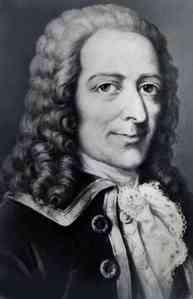
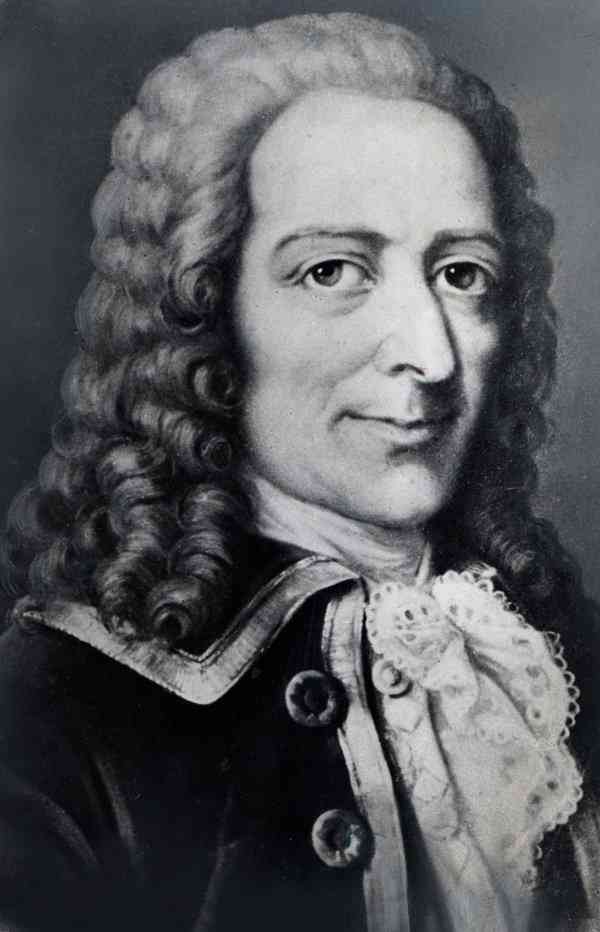
Voltaire

Voltaire was born in Paris, France in 1694. As a philosopher, historian and free thinker, he became a most influential and prolific writer during what has been called the Age of Enlightenment. From the beginning, Voltaire had trouble with the authorities for criticisms toward the government. He twice served brief prison sentences in the Bastille for being critical of a Regent. His first literary work appeared in 1718. During his life he wrote more than 20,000 letters and some 2,000 pamphlets and books and was a successful playwriter. While a Deist, he vehemently opposed the Christian faith and wrote many rather scoffing works expressing his disdain for the faith and the Bible. His railings against Christianity are filled with poisonous venom, calling the Christian faith the “infamous superstition.”

Several examples of his slanderous words against the Christian faith and the Bible are cited.

In 1764 he wrote, “The Bible. That is what fools have written, what imbeciles commend, what rogues teach and young children are made to learn by heart” (Voltaire, Philosophical Dictionary, 1764). “We are living in the twilight of Christianity” (Philosophical Dictionary). In a 1767 letter to Frederick the Great, King of Prussia, he wrote: “Christianity is the most ridiculous, the most absurd, and bloody religion that has ever infected the world…My one regret in dying is that I cannot aid you in this noble enterprise of extirpating the world of this infamous superstition.”[2] Voltaire ended every letter to friends with “Ecrasez l’infame” (crush the infamy — the Christian religion). In his pamphlet, The Sermon on the Fifty (1762) he attacked viciously the Old Testament, biblical miracles, biblical contradictions, the Jewish religion, the Christian God, the virgin birth and Christ’s death on the cross. Of the Four Gospels he wrote, “What folly, what misery, what puerile and odious things they contain [and the Bible is filled] with contradictions, follies, and horrors”[3] Voltaire regarded most of the doctrines of the Christin faith – the Incarnation, the Atonement, the Trinity, Communion – as folly and irrational.[4] And finally, “To invent all those things [in the Bible], the last degree of rascality. To believe them, the extreme of brutal stupidity!”[5]

Many more such quotes could be cited as to Voltaire’s disdain for Christianity, but those will suffice. Voltaire’s writings were so divisive that in 1754 Louis XV banned him from Paris. Relocating in December 1754 to Geneva, Switzerland, he purchased a beautiful chateau called Les Delices (The Delights). He lived there for five years until 1760 when as the result of his antagonistic writings and plays attacking Christianity, he was virtually driven from Geneva by the Calvinist Reformers. To escape the pressure from the Calvinists, Voltaire moved across the border to Ferney, France, where the controversial Frenchmen lived for eighteen years until the end of his life in 1778 at age 83. He continued to write until his hand was stilled in death.

Now the question arises as to the veracity of what some call an “apocryphal story.” While Voltaire’s disdain for the Bible is evident, did he ever make such a prediction and did any Bible Society ever use either of his residences, from where he wrote his blasphemous words against the Bible and the Christianity, as a warehouse to store Bibles? The answer to that question is an emphatic, “YES!”

The second part of the story will be dealt with first.

In August 1836, only fifty-eight years after Voltaire’s death, Rev. William Acworth of the British and Foreign Bible Society saw with his own eyes Voltaire’s former residence in Geneva, Switzerland, Les Delices, being used as a “repository for Bibles and Religious tracts.” The house at this time was occupied by Colonel Henri Tronchin (1794-1865), who served as the president of the Evangelical Society of Geneva from 1834-39.[6] The Tronchin family had long had associations with Voltaire that could be traced back to the 18th century. One of Henri Tronchin’s ancestor’s, Francis Tronchin, was Voltaire’s doctor. The Tronchin’s were prominent and wealthy residents of Geneva and even helped finance Voltaire in the publishing of some of his works.[7]

Henri Tronchin

While the Tronchin family was prominent and wealthy citizens of Geneva, they were not predominately spiritual. However, though it is not known exactly when, Henri Tronchin came to faith in Christ and embraced Protestantism. Studying literature at the Academy of Geneva, he later served as artillery captain on horseback in the Dutch army. Eventually rising in ranks to lieutenant-colonel of artillery, he married in 1824. A superb organizer and a great leader, he helped found the Evangelical Society of Geneva (c1833). He served as president of the Society from 1834 to 1839. Born 100 years after Voltaire, and occupying the former home of the infamous infidel, Tronchin used the spacious house to store Bibles and Gospel tracts. Rev. William Acworth of Queens College, Cambridge, appointed an agent of the British and Foreign Bible Society in 1829, was an eye witness to the stored Bibles and Gospel tracts.[8]

In The Missionary Register for 1836 of the BFBS, Acworth is recounting his travels in the spread of the Gospel. Having traveled over 2,000 miles in France on the business of the Society, in the summer of 1836 his travels took him to Switzerland in August of that year. Acworth recounts: “I went through Geneva, and was much refreshed by meeting the Committee of the Evangelical Society, with whose proceedings and objects I was so much gratified, that I wrote to this Society to make a liberal grant of 10,000 copies of the French Scriptures to promote the objects of that Society. Our committee have only granted 5,000; but I have no doubt they will, err long, send the other 5,000. Before I left Geneva, my friend observed. “Probably you will like to see the house where Voltaire lived, and where he wrote his plays.” Prompted by the spirit of curiosity, so characteristic of an Englishman, to visit the house of the celebrated infidel, I was about to put on my hat to walk into the county, when he said, “It is not necessary you should put on your hat” and he introduced me over the threshold of one room to another, and said, “tis the room where Voltaire’s play were acted for the amusement to himself and his friend.” And what was my gratification in observing that that room had been converted into sort of Repository for Bibles and Religious Tracts. Oh! my Christ Friends, that the spirit of infidelity had been there, to witness the results of other vaticinations [acts of prophesying] respecting the downfall of Christianity! I know that Voltaire said, that he was living “in the twilight of Christianity” but blessed be God! It was the twilight of the morning, which will bring on the day of universal illumination.”[9]

Only fifty-eight years after his death the former home of Voltaire in Geneva, Switzerland, was indeed serving as a storehouse for Bibles and Gospel tracts. While the Evangelical Society of Geneva did not actually purchase the house, Henri Tronchin, president of the Society, resided in the house, and used some of the rooms to store Bibles which Voltaire so vehemently opposed and prophesied Christianity’s downfall! Yes, an ironic twist of divine Providence.

Let it also be noted, only sixteen years after Voltaire’s death, in 1794, the presence of the Bible began making in-roads in the town where he spent the last eighteen years of his life, Ferney, France. On the very printing presses which Voltaire employed to print his irreverent works was used to print editions of the Bible and, according to the eyewitness account of Hannah More,  were printed on paper that had “been especially made for a superior edition of Voltaire’s works. The Voltaire project failed, and the paper was bought and devoted to a better purpose [of printing Bibles]!”[10]

In the book Letters from an Absent Brother, by Daniel Wilson, Bishop of Calcutta, which chronicles his travels through parts of Netherlands, Switzerland, Northern Italy, and France, he writes to his sister from Geneva on Wednesday evening, seven o’clock, October 1, 1823, concerning the distribution of Bibles in the town where Voltaire once lived: When I arrived at Paris, one of the first things I heard was that a Bible society had been established at Ferney, chiefly by the aid of Baron de Stael. What a noble triumph for Christianity over this daring infidel. One of the first effect of the revival of true religion or even of sound learning in France, I should think would be to lower the credit of this profligate, crafty, superficial, ignorant, incorrect writer. What plea can wit or cleverness, or the force of satire or the talent of ridicule or a fascinating style, or the power of brilliant description, form, in a Christian country, for a man who employed them all, with a bitterness or ferocity, of mind amounting to almost madness, against the Christian religion and the person of our Saviour.[11]

That a Bible society had been established in Ferney, France to help financially in the printing of Bible’s in the town where Voltaire once resided, is confirmed in the 1824 Report of the Protestant Bible Society at Paris containing the following sentence: A newly established branch at Ferney formerly the residence of Voltaire, has sent its first remittance, a sum of 167 francs.[12]

Further proof that the printing presses being employed to print Bibles were the ones Voltaire once used to print his blasphemous works is contained in a transcript from the Quarterly Papers of the American and Foreign Bible Society of 1837: “A Bible Society was some years since established at Ferney, once the residence of Voltaire—the prince of infidels. This noble enterprise for the propagation of the Christian religion is said to have commenced by Baron de Stael, and a few zealous Christians in that place. In the history of Bible Societies, this is truly a memorial event. That the antidote should issue from the very spot where the poison of infidelity for so many years disseminated; and the advocates of Christianity should in that very place print and circulate the sacred volume, as a sufficient shield against misrepresentations sophistry which he had there assailed divine revelation, are the events which the brilliant Frenchman would have pronounced impossible….Oh! That the gifted infidel could have been there, to witness the result and repent of his ratiocinations [reasoning]  respecting the downfall of Christianity. But, there is a point beyond which even divine forbearance does not extend” [13]

In 1845 Bibles were still being printed on printing presses Voltaire once employed in Ferney, France. The 1846 anniversary address of The American and Foreign Bible Society, Rev. Charles G. Sommers gave a stirring report on how the Bible was making penetration into various places around the world. When speaking about the Scriptures advancements in countries around the world (including France) in the previous year of 1845, Rev. Sommers stated,
“Much has indeed been accomplished, but much more remains to be done for the millions who are still without God, without Christ, and without hope in the world. It is true, indeed, and we thank God, that in nine years this Society has printed one million of books in forty-nine different languages, but hundreds of millions must be distributed among the famishing myriads of our race. By what other means can we hope to arrest the progress of infidelity and Romanism; now marching in triumph over the fields of our fair inheritance? When Pythagoras and Confucius were filling Europe and Asia with heresies, God raised up Ezra, the prophet, to compile and publish the books of the Old Testament, as an antidote to their delusions. And when Voltaire, Diderot, D’Alembert and Rousseau were laboring to crush the bleeding cause of Christ, God raised up against them the standard of the British and Foreign Bible Society; and it is a cause for grateful exultation that the same printing press which was employed to scatter the blasphemous tracts of the prince of French philosophers, has since been used at Ferney (France), to print the Word of God. The black confederacy raised their bulwarks to impede the march of truth, but they would have been equally successful, had they forged chains to bind the lightning, that cometh out of the east, and shineth even unto the west, as the precursor of the coming of the Son of man. Voltaire boasted that he had seen the twilight of Christianity, and that the pall of an endless night would soon cover it forever. Yes, sir, he did see the twilight, but he was mistaken as to the hour of the day—it was the twilight of morning, pouring its effulgence over the brim of the horizon of the nineteenth century, which he mistook for the rays of a setting sun.”[14]

Having established that Bibles were actually stored in Voltaire’s former Geneva residence and were being printed on printing presses he once employed in Ferney, France, did he ever make such a prediction that one hundred years after his death the Bible would no longer be read? A man who wrote 20,000 letters in his lifetime, it would be impossible to know all the statements he wrote or spoke. However, it was generally acknowledged and understood by those near the time Voltaire lived that he had made such a prediction either verbally or in writing which may no longer exist. Rev. Acworth in 1836, only fifty-eight years after Voltaire’s death, referred to the infidel’s “vaticinations [act of prophesying] respecting the downfall of Christianity! Such a remark indicates it was common knowledge that such a bold prediction had been made by Voltaire. In 1849, only seventy-one years after Voltaire’s death, William Snodgrass, an officer of the American Bible Society, stated in the giving of ABS’s annual report that “the committee had been able to redeem their pledge by sending $10,000 to France, the country of Voltaire, who predicted that in the nineteenth century the Bible would be known only as relic of antiquity.”[15] Again, such a remark indicates it was commonly acknowledged that Voltaire had made such a prediction.

Found in an interpretative book on many of the works of Voltaire published in 1823, only forty-five years after his death, the author, a contemporary of the Frenchman, details the fact that he brutishly sought to inspire contempt for the Christian faith and saw himself more influential than Martin Luther and John Calvin! Voltaire wanted a “religion to be without code, without laws, without dogma, without authority” and “laughed all these Christians who believed their religion was truly divine.” The author states that Voltaire in his fight against Christianity would stop “at nothing to annihilate” the Christian faith.[16] It is obvious those in Voltaire’s day believed his efforts were for the purpose of dismantling Christianity.

While this writer could not find the exact quote that usually accompanies the story, similar quotes could be found. In an 1855 biography of Voltaire, the author quotes him as stating in a letter to a friend, “It is impossible that Christianism survives.”[17] In an effort to assist in bringing about what he perceived would hurry the demise of “Christianism,” in 1776, at age 82, Voltaire brought to a culmination his disdain for the Bible when he published La Bible Enfin Expliquée (The Bible Fully Explained).[18] The two-volume work was Voltaire’s commentary on the whole Bible. His purpose in writing was to “make the whole building [of Christianity] crumble.”[19] Writing with feigned credulity in a satirical and scoffing manner, he wrote viciously, mockingly critical and skeptically of practically every book and verse in the Bible. His sought to expose, as he saw it, the foolishness and irrationality of belief in the Bible. Of his massive tome, in which he derided the Bible on every page, he stated, “The subject is now exhausted: the cause is decided for those who are willing to avail themselves of their reason and their lights, and people will no more read this [Bible].”[20]

From such an arrogant declaration it is clear Voltaire delusionally believed as a result of his La Bible Enfin Expliquée, he had struck a death blow to the Bible’s believability and the sun was setting on the Book’s influence and in time the Volume would become irrelevant. However, instead of the Bible becoming irrelevant and no longer believed, the Inspired Volume begins to increase in circulation….his former house, only fifty-eight years after his death, being used as a storehouse to house Bibles and Gospel tracts and printing presses he once employed to print his anti-Christian sentiments was being used to print Bibles!

Like all stories that are repeated over the years, the exact details and wording may vary, but it seems clear the key components of the story are very much true. The story of Voltaire serves as an example and a reminder that the foolish predictions and efforts of man to extinguish the Bible will come to naught. No skeptic’s scoffing hammer has ever made a dent in the Eternal Anvil of God’s Word. To those who attempt to do so, Jesus emphatically declares, “Heaven and earth shall pass away, but my words shall not pass away” (Matthew 24:35).

Amen!

Blessings,
Dr. Dan

Notes:
[1] Norman Geisler and William Nix, Introduction to the Bible, (Chicago: Moody Press, 1968), 124.

[2] Sarah Coakley, Faith, Rationality and the Passions, (MA: Blackwell Publishing, 2012), 37.

[3] Voltaire, Trans. Joseph McCabe, Selected Works of Voltaire, “The Sermon on the Fifty,” (London: Watts & Co., 1911), 178-180.

[4] Voltaire, ed. H.I. Wolff, Philosophical Dictionary, “Arius,” (New York, 1924), 253.

[5] Quote of Voltaire from his work God and Man, chapter xliv, found in James Parton, Life of Voltaire, Vol. II, (Boston: Houghton, Mifflin & Co, 1881), 429.

[6] Stelling-Michaud, Suzanne, Le livre du Recteur de l’Académie de Genève (1559-1878) (Vol 6), (Geneva: Librairie Droz, 1980), 72; also, Jean-Yves Carluer, “Henri Tronchin,” December 16, 2017, http://le-blog-de-jean-yves-carluer.fr/2017/12/16/henri-tronchin/ (Accessed March 12, 2019). In 1929 the Les Delices property was purchased by the city of Geneva, and now houses the Institute et Musee Voltaire, a museum founded in 1952 dedicated to the life and works of Voltaire.

[7]On Voltaire’s relations with the Tronchin family, see Deidre Dawson, Voltaire’s Correspondence: An Epistolary Novel (New York: Peter Lang, 1994), 101–126; also, George Valbert, “The Genevese Councilor François Tronchin and his relations with Voltaire”, The Revue des Deux Mondes, 1895, 205-216

[8] William Canton, A History of the British and Foreign Bible Society, 1845-1926, (London: J. Murray, 1903), 98.

[9] The Missionary Register for 1836, William Acworth, “Bible Notices in Switzerland and Italy,” (London: L&G Seeley, 1836), 352.

[10] The Gentleman s Magazine, July, August, September 1794; Samuel Bagster, The Bible of Every Land, (London, 1860), 167. Curiously enough, Bibles were printed on paper, which, according to Hannah More, had been specially made for a superior edition of Voltaire’s works. The Voltaire project failed, and the paper was bought and devoted to this better purpose. Monthly Extracts, 1848, August, p. 793.

[11] Daniel Wilson, Letters from an Absent Brother, (London, 1824), 187.

[12]Report of the British and Foreign Bible Society, Vol. 7, 1822, 1823, 1824, (London: J.S. Hughes, 1824), 17-18.

[13] Quarterly Papers of the American and Foreign Bible Society, No 11, New York, July 1837, “Bible Society at Ferney,” 21-22; also,  Proceedings of the Bible Covention which meet in Philadelphia April 26-29, 1837, (New York: John Gray, 1837), 21-22.

[14] Ninth Annual Report of the American and Foreign Bible Society, Presented at New York, May 15, 1846, (New York: John Gray, 1846), 48.

[15] Annual Report of the American Bible Society, 1849, Appendix, 98.

[16] Claude Francois Nonnottee, Erreurs de Voltaire, (Paris, 1823), 285-305.

[17] Eugene Noel, Voltaire, (Paris: F. Chamerot, 1855), 99.

[18] Arnold Ages, “The Technique of Biblical Criticism: An Inquiry into Voltaire’s Satirical Approach in La Bible Enfin Expliquée,” A Quarterly Journal in Modern Literatures, September 6, 2013, 67-79.

[19] Voltaire, La Bible Enfin Expliquée, (Alondres), 1776, 2.

[20] Voltaire, La Bible Enfin Expliquée, (Alondres), 1776; also; James Parton, Life of Voltaire, Vol. II, (Boston: Houghton, Mifflin & Co, 1881), 543.

RECONCILING A GOD OF LOVE WITH THE PROBLEM OF NATURAL EVIL

Theologians and philosophers when engaged in explaining the mysteries of life, wrestle with two mysteries that challenge the mind and the soul. Those mysteries have to do with the problem of evil, which has two components: moral evil and natural evil. Of the two, moral evil poses the easiest solution, as we grasp that bad things happen as result of man’s capacity to choose between good and evil. The choices one makes brings about consequences; bad choices bringing about consequence that can adversely affect the individual who made the choice and have a ripple effect that affects the life of others.

It is a lot more difficult, though, to provide satisfactory answers in the face of natural evil. Natural evil would include “evil” or “acts” that is the result from natural events that would include floods, earthquakes, hurricanes, typhoons, tornadoes, disease and other “events” that occur which bring in our lives tragedy, pain, suffering and even death. Devastating natural disasters in life often leave one pondering: “Where is God in the midst of all this suffering, loss of life, and destruction? It is not fair or just that these often disastrous acts occur (insurance companies call them ‘acts of God’)!”

The age-old dilemma was posed by Epicurus (341-270 BC): “Is God willing to prevent evil, but not able? Then he is not omnipotent. Is he able, but not willing? Then he is malevolent. Is he both able and willing? Then whence cometh evil, is he neither able nor willing? Then why call him God?” While simplistic answers are not forthcoming, approaching the subject from a Christian perspective does yield some thought-provoking insights. Six will be considered.

First insight, the Bible teaches that the sometimes “bi-polar behavior” of nature is the result of The Fall. Natural evil is a result of man’s sin, the consequences having a ripple affect which reverberates throughout creation. The Bible teaches that natural evil is a consequence of deliberate rebellion of man against his Creator, the result being that in addition to man being affected by sin, creation suffered negative consequences, as well. The present world is not the way it was created to be. As a result of man’s disobedience to God, pain, suffering and death entered the world. Paul tells us that all creation was affected by The Fall and that all creation groans and is in travail from the consequences of man’s sin and awaits the time when it is freed from the bondage of sin and death (Romans 8:20-22). The sometimes-unpredictable acts of nature were not present prior to sin entering the world. The world is broken as the result of man’s rebellion against his Creator. Creation has been subjected to the curse of man’s sin and as a result the present world is functioning abnormally from God’s original design, bringing forth “acts” that are a distortion from the way God originally created the world and man.

Regarding the consequences of the curse of sin that affects man and creation, Francis Schaeffer succinctly writes, “I do not think Christians take the Fall and the present abnormality of the world with practical comprehension and seriousness. I mean by this that although Bible-believing Christians certainly do hold to a historical Fall and the present abnormality of the world as a theological truth, when it comes down to living, this is often forgotten. In other words, we forget that everything is abnormal today and that much of the sickness in the world and sorrows in other areas are a result of this abnormality. or to say it another way, there is so much in history that God did not mean to be there, in the way that He created the world and created man” (Schaeffer, Letters, IL: Crossway Books, 1985, 157). Schaeffer’s words are most insightful in regard to the “why?” of natural evil.

Second insight, God respects the freedom of man to choose, whose decisions can lead to dangerous acts of nature being destructive. It is understood there is natural evil/acts in nature that arise through no fault of man, but man’s choices, actions and neglect can sometimes put people in harm’s way when nature turns dangerous. When man builds houses and cities on fault lines in earthquake prone areas the inevitable will happen. When homes are built on the side of mountains that are prone to mudslides the house will eventually disappear from the mountain side. When one builds businesses and homes near flood prone areas or on the ocean front there is the risk that hurricanes will sooner or later bring devastation. Human freedom allows one to construct homes, businesses and cities being in places susceptible to earthquakes, floods, and hurricanes; however, when one does, acts of nature can result in grave damage and loss of life. Also, if corners are cut on building materials or construction in order to build quickly or cut expenses, the devastation can be even worse. The Lord respects our freedom to plan and create where we choose, even though eventual disaster may lurk in the future. We want the Lord to intervene in such cases, but for Him to do so He would have to suspend our freedom to choose (John Hick, Evil and the God of Love, London: Saffron House, 1966, 12).

Third insight, God created the world to operate according to certain laws, and even though sin may have skewed some of nature’s laws as originally designed, there is a cause and effect in nature in regard to how the world works. These are more than impersonal forces, behind it all there lays the Creator God. Scientist-theologian John Polkinghorne advocates that God has created a universe with particular natural laws that make life on earth possible for the existence of humanity. Polkinghorne states that while our “knowledge of the physical world is patchy and incomplete,” the same weather systems that creates F-5 tornadoes also creates rainstorms that bring water to the needed soil and plants. The same wind patterns that refresh us on a hot day can turn into destructive gale force winds. The same earthquakes that destroy buildings are part of the very dynamic in the regulation of soils and surface temperatures needed for human life. The same kinds of bacteria that can make one sick and even bring death, also yields substances that are used to bring healing. As Creator, God has created the world to work in a certain way and even though creation has been affected by sin, what we assume to be inherently bad or unjust contains within its processes that which also brings about good and sustains life (Polkinghorne, Science and Providence: God’s Interaction with the World, Boston: New Science Library, 1989, 3-7). That our Creator God doesn’t change the laws of nature to coincide with our idea of what is good and just brings us to our fourth thought-provoking insight

Fourth insight, in addressing the problem of “natural evil” one must approach it from the perspective that the problem is not with God, but the problem begins with our assumptions about who we think God ought to be, what God ought to do, and how we determine what is just or unjust. We expect God to act in a certain way according to the way we perceive Him. We presuppose that if God is good and omnipotent then “bad” shouldn’t happen, that God should be and act in the way our mind conceives Him to be. However, we define just and unjust from a near-sighted, sin tainted perspective. Basing whether something is good or bad, just or unjust on the premise of whether it fits into one’s own understanding what those terms mean is not the basis on which such a judgement should be made. One is not to affirm the goodness of God’s character according to one’s own experience and presupposing. Surely God, who sees all thing from the beginning to the end, sees the bigger picture. His thoughts and ways are not our ways (Isaiah 55:8).

What appears to be unjust or bad from our rationale, experience and perspective, could actually be something that is very good from a longer-range perspective, but we are only seeing from our short-sighted perspective. In our view of God, we tend to project our narrow-sighted view and experiential definitions of good and bad onto God and assume that if He is good, He must be good by our own limited standards of what constitutes good and just. When one says God needs to be “just,” most often one makes such a statement in terms of what one thinks justice ought to be or in relation to what one perceives to be just from one’s restricted viewpoint. In the process, one doesn’t grasp how justice for one might be injustice to someone else in a different setting or vice-versa. After all, do we only want a God that fits into our box of understanding or One whose basis for what is just and unjust goes beyond one’s limited intellectual capacity?

We also impose within our narrow scope of God’s omnipotence, that He should use His power to conform to our understanding of how His power ought to work in the world and in individual lives. When we superimpose our concept of how God’s omnipotence should operate in the world, we have reduced Him to our level. God’s power is not subservient to our thinking or our whims of how we perceive He ought to operate in the world and in our lives. Our conception of God too often projects our preconceived assumptions onto God whose omnipotence we contend should be within the scope of our control. What we actually want is to manipulate God to fit into our parameters of how we think He ought to flex His powerful muscle over the forces of nature. How much better it is to come to terms with the understanding that God desires to work in us and with us in the world, and help us to better reflect the image of God He has stamped on each soul even when we encounter “acts” that from our perspective are deemed unfair, unjust, or bad (Dennis R. Bratcher, The Problem of Natural Evil, The Voice, http://www.crivoice.org, 2018).

Fifth insight, “Natural evil fulfills a higher divine purpose” (Augustine) (Robert Francis Allen, “St. Augustine’s Free Will Theodicy and Natural Evil,” Ars Disputandi, 3:1, 2003, 84-90). Pain, suffering, and disorder associated with natural evil providentially bring about a higher divine purpose in the larger plan of the Lord. Natural disasters often bring out in humanity the very best of human character, as neighbors and strangers aid one another in recovery. While natural disasters are often tragic, glimpses of the marred image of God within us is seen sparkling in the wreckage. As well, it is only after such natural disasters that some people actually have their hearts made tender enough to call on the Lord for help and strength in daily life. Many times only when one’s present situation is drastically changed does one find themselves thinking about the brevity of life, eternity and one’s accountability before the Lord. Further, it is in the aftermath of “acts of God” that one develops positive and strong character traits that would not have been formed if the disaster had not occurred. In difficult times one is prompted to grow stronger and become better human beings. So, even in the midst of disaster the Lord can direct what appears to be bad or unjust to fulfill a higher divine purpose (Romans 8:28) (Barry L. Whitney, What are they Saying about Evil?, NY: Paulist Printing, 1989, 6, 25)

Sixth insight, one whose skeptically reasoned reaction to the calamitous effects of natural disasters, instead of disproving the existence of a benevolent and omnipotent God, is in reality strong evidence for His existence. In his book Mere Christianity, former atheist C.S. Lewis acknowledged he thought the injustice he perceived in the world was an ironclad argument against the truth of Christianity. But as he reflected on what he considered injustice in the world, he asked himself, “My argument against God was that the universe seemed so cruel and unjust. But how had I gotten this idea of just and unjust? A man does not call a line crooked unless he has some idea of a straight line.” He concluded, how can one appeal to an objective standard of just and unjust, if there is not a standard outside of one’s self? For if there is no God and we are only the sum total of a collection of random atoms, one’s appeal to events or acts being declared just and unjust is no better or worse than that of anyone else. Such deducing resulted in C.S. Lewis becoming a Christian and one of the great Christian thinkers and writers of the twentieth century. (Lewis, Mere Christianity, NY: Harper Collins, 1952, 38-39).

While we have sought to look at six insights in regard to the problem of natural evil, ultimately we must acknowledge our inability to answer every question posed. Our finite minds can only take us so far, and we will never be able to penetrate the infinite mind of our benevolent and omnipotent God. It is not a weakness to admit that we do not have all the answers, but this know…in the midst of disastrous acts of nature God is able, willing and desirous to bring comfort, hope, and encouragement to the hurting heart. He is a God who walked among us in Jesus Christ and He is not oblivious to our pain. Having wept through human eyes (John 11:35), He comes to embrace us in our pain that in His divine providence will bring treasure out of tragedy.

Blessings,
Dr. Dan


THE WONDER OF JESUS

I wish there was some way I could sufficiently describe the wonder of who Jesus is, but there aren’t words yet created that will allow me to express His wonderous character. Ever since our God took upon Himself flesh and walked among us, men have tried to express the magnificence who Christ is. But like the many facets of a sparkling diamond, one can never describe the gleaming brilliance of His personhood. While my effort to communicate the wonder of who Jesus is in all His splendor will prove to be woefully inadequate, yet for a few brief moments an attempt will be made to express what Jesus means to me.

Jesus is my Sin-bearer, who bore all my sins. He is Arm of the Lord who rescued me when I was lost and undone. He is the High Priest who not only offered the Sacrifice for my offenses, He was the Sacrifice. He is the Atoning One who forever paid the debt I could never pay. He is my Friend who sticks with me through thick and thin. He is the Advocate who pleads my cases before God’s throne. He is the Door who invited me to walk through the door of salvation. He is the Light when darkness invades my life. He is the Way when my feet want to wander astray. He is the Carpenter of Galilee who is constantly constructing in my life to make me what I could never be in my own power. He is the Great Physician and Healer who has brought spiritual healing to my soul and has more than once restored me physically. He is Honey out of the Rock who nourishes me with the sweet taste of His presence. He is the Strong Root who gives stability in the adverse winds of life. He is the Bright and Morning Star in my darkest night. He is the Vine from whom I draw life and who without Him I can do nothing.

He is the Rock made without hands who in the uncertainty of life I can with certainty stand upon. He is the Water of Life who quenches the thirsting of my soul. He is the Bread of Life who satisfies the hunger of my heart. He is the Everlasting Father who never leaves me or forsakes me. He is my Beloved who loved me when I was and when I am unlovable. He is the Word who speaks to me through the Scriptures. He is the Good Shepherd who searches for me when my soul roams from the fold. He is the Rose of Sharon whose beauty never fades. He is the Lilly of the Valley whose fragrance fills my life. He is the Kinsman Redeemer who redeemed me when I could not redeem myself. He is the Prince of Peace who gives peace in the midst of life’s restlessness. He is the Divine Counselor whose advice never fails. He is the Righteous One who gave me His Perfect Righteousness for my righteousness of filthy rags. He is the Accepted One in whom I find acceptance before a holy God. He is Emmanuel who is God with me. He is the Horn of Salvation who I hold on to on stormy seas. He is the Sun of Righteousness who shines through the clouds that seek to hide His face. He is the Hope of Glory when hope seems far away. He is the Ransom who paid the price when I was held captive my sin. He is the Lamb of God who after offering One Sacrifice for my sins forever, His work finished, sat down at the right hand of the Father.

He is the Keeper of the Covenant who when I failed, He was victorious. He is the Victorious One, who in my weakness gives me His victory. He is the Elder Brother who never lets me face a fight alone. He is my Life who grants me both spiritual and physical life. He is my Intercessor who carries my petitions to the throne of grace. He is Wisdom who I look to when confused which way to go. He is the Man of Sorrows who weeps with me in my suffering and pain, but he is my Comforter who seeks to lift me out of my suffering and pain. He is the All-Sufficient One who supplies my every need. He is the Mediator who took the hand of God and my hand to bring us together. He is the Chief Cornerstone who holds my life together. He is the Faithful One who remains faithful even when I fail Him. He is the King of kings who sits on the throne of my heart. He is the Lord of lords who replaces all other lords. He is the Ancient of Day who is from everlasting to everlasting. He is the Sweet-Smelling Savor who adds sweet aroma to my life. He is the Amen who none come before and none will come after. He is the Great I Am, He is whatever is my greatest need. He is the Resurrection and the Life who has promised me that by faith in Him I will never die, I will only be transported to a Land that is Fairer than Day.

O, I wish there was someway I could adequatley describe the magnificence and majesty of Jesus to you and the wonder of who He is. But words fail me. Hopefully someday I will be able to express in words worthy of who Jesus is the wonder of my Savior.

Blessings,
Dr. Dan

The Gospel of Christ vs the Gospel of Meism

One of the most dramatic chapters in the Bible is found in Acts 9. It is the story of the conversion of Saul of Tarsus, who after his conversion to Christ became known as Paul the Apostle. As Saul of Tarsus he was a zealous enemy of Christ. Acts 8 ends with Saul consenting to the brutal stoning of the Christian martyr Stephen. Fueled by his hatred of Christianity, the Scripture records, “And Saul, yet breathing out threatenings and slaughter against the disciples of the Lord, went unto the high priest, and desired of him letters to Damascus to the synagogues, that if he found any of this Way [Christians], whether they were men or women, he might bring them bound unto Jerusalem” (Acts 9:1-2). Saul’s plan was to see more Christians silenced and Christianity snuffed-out from the earth. Little did Paul know, as he made his way toward Damascus, his life was about to take an abrupt detour that would change the course of Christendom!

In Paul’s own words he recalls the life-changing incident, “And it came to pass, that, as I made my journey, and was come nigh unto Damascus about noon, suddenly there shone from heaven a great light round about me” (Acts 22:6). “And [I] fell to the earth, and heard a voice saying, Saul, Saul, why persecutest thou me? And [I] said, Who art thou, Lord? And the Lord said, I am Jesus whom thou persecutest: it is hard for thee to kick against the pricks” (Acts 9:3-5). The Resurrected Christ confronted Saul with his life and his kicking against the pricks. “Kicking against the pricks” was a Greek proverb, which was familiar to anyone who made a living in agriculture. An ox goad was a stick with a pointed piece of iron on its tip used to prod the oxen when plowing. The prick or goad was a pointed stick that was used to urge some stubborn animal to move. There were at least four pricks Saul kicked against: (1) The extraordinary life of the historical Jesus, (2) the bold life of the Christians, (3) the serenely, victorious death of Stephen (4) and his own dissatisfaction with the Jewish religion. Those four “pricks” were inescapable for the restless conscience of Saul, culminating into an encounter with Jesus Christ.

The rebellious heart of Saul, who became Paul, was captured and transformed by holy-love and there prostrate in the dirt the Bible records, “And he trembling and astonished said, ‘Lord, what wilt thou have me to do?’” (Acts 9:6). “And the Lord said unto me, Arise, and go into Damascus; and there it shall be told thee of all things which are appointed for thee to do” (Acts 22:10).  Later standing before King Agrippa, Paul recalled the Lord’s instructions to him, “For I have appeared unto thee for this purpose, to make thee a minister and a witness both of these things which thou hast seen, and of those things in the which I will appear unto thee; [for unto] the Gentiles, unto whom now I send thee, To open their eyes, and to turn them from darkness to light, and from the power of Satan unto God, that they may receive forgiveness of sins, and inheritance among them which are sanctified by faith that is in me” (Acts 26:16-17). Paul adds, “I was not disobedient unto the heavenly vision” (Acts 26:18). From that day forward Paul lived his life in obedience and service to Christ and reaching others for the sake of the Gospel. He put Christ and others first, with no thought of his own welfare, esteeming others above himself (Philippians 2:3).

When meditating on Paul’s encounter with the living Christ, one discovers differences in his response with those who today spout the Meism Gospel. The Gospel to which Paul surrendered was anchored in a Christocentric question, “Lord, what will you have me to do?” The Gospel of Christ, which Paul proclaimed, was first and foremost about obedience to the Living Savior who died for the sins of humanity and to whom all men owe a debt of gratitude. Paul’s encounter with Christ produced in him a profound obligation to share the glorious message of Christ’s redeeming holy-love with Jew and Gentile. The Gospel Paul espoused was about being a living sacrifice no matter the cost, even if it meant the loss of one’s own life. The Gospel Paul preached was not about being focused on saving one’s self from difficulties, but in spite of difficulties pointing others to the salvation in the resurrected Savior. The Gospel Paul declared was not about becoming comfortable in one’s sins, but repenting and forsaking the very sins for which Christ died. The Gospel Paul expounded was not about using people to get what one wanted, but helping others to discover their need of Christ. The Gospel which motivated Paul to sacrificially travel the globe proclaiming, was not about clinging to vanishing earthly possessions but admonished others to focus on the riches found in Jesus Christ. The Gospel for which Paul willingly gave his life was not about getting one’s way, but about walking obediently in His way. The Gospel that transformed Paul was not about self, but glorifying the name of Christ (I Cor 6:20).

On the other hand, the Meism Gospel preached in many circles today is Humanistic, it is all about self and putting self first. The Meism Gospel is about what can Christ do for me, not what I can do for Him. The Meism Gospel is more concerned with earthly possessions, not in laying up treasure in heaven. The Mesim Gospel is about Christ being my bell-boy, not me being His surrendered servant. The Meism Gospel is about Christ being accommodating of me in my sin, not about turning from my sin. The Meism Gospel is about other’s honoring and recognizing me, not me esteeming others above myself. The Meism Gospel is about how the church can benefit my life, not about how I can serve the church and benefit those who are members. The Meism Gospel is about giving excepting something in return, not giving out of gratitude because Christ saved my soul and if I happened to receive something in return that is an added bonus. The Meism Gospel is about God yielding to my will, not me in sacrificial obedience being yielded to His will. The Meism Gospel protects self at all costs, not about protecting the honor of Christ at all costs. The Meism Gospel is easily offended, not in extending forgiveness to others. The Meism Gospel puts self-interest first, not what is the best interest of the whole Body of Christ. The Mesim Gospel exalts self, it does not exalt the Name that is above every name, the name of Christ.

It is clear to see, the Gospel of Meism is so consumed with self-interest that it causes one to take their eyes off the true Gospel of salvation, surrender, sacrifice, soul-winning and service to the risen Savior. Since the Meism Gospel is self-absorbed it stifles one’s compassion, is annoyed with inconveniences, paralyzes evangelism, is at home with self-sufficiency, and is apathic about the welfare of the Church if it is not feeding their “needs.”

Without question we need a return to the glorious Gospel of the living Christ, which Gospel resulted in Paul in surrendered worship asking, “Lord, what would you have me do?” Paul writes to the Corinthians that “you do not belong to yourself” (I Cor. 6:19). Christ purchased us with the price of His own blood in order to set us free from the pursuit of the false gospel of Meism. “Or do you not know that your body is a temple of the Holy Spirit within you, whom you have from God? You are not your own, for you were bought with a price. So glorify God in your body” (I Corinthians 6:19-20).

Blessings,
Dr. Dan

THE TRANSGENDER DECEPTION

There are many aspects to being human. Being human means we possess a physical body that allows us to move about, to hear, see, touch, taste, and experience our surroundings. Being human means we possess a mind that enables us to think, be creative and reason. Being human means we possess emotions; we feel love, hate, sorrow, joy, etc. Being human means we possess volition/will; we have the capacity to say yes, to say no, and to make choices. While those aspects of being human no one would disagree, there is another aspect of being human which by and large is ignored in our culture today…there is a spiritual aspect of being human. The spiritual aspect is the most important part of being human, because it connects us to the One who created us. We were created with the capacity to fellowship with our Creator. When we neglect the spiritual aspect of our humanity we neglect that part us that makes us distinctly human and where one finds true significance, security and identity.

When we neglect and deny there is a spiritual aspect to us we are like a glove without a hand, we are not complete. When we deny our very connection to the One who created us, and we ignore and deny there is a spiritual aspect and reality to being human, we become less than what God intended for us to be. It is when we deny that we have a spiritual identity with our Creator that we construct new ways and identities to substitute for our disconnectedness to God. The morally unconventional movements we see unfolding in our society today are schemes of the Devil to further dismiss our created identity and obliterate the image of God that is stamped on our personhood. This battle is most clearly seen today in the rising tide of the transgender movement.

At the root of the transgender movement is a spiritual attack by the Devil that seeks to separate a person from their created identity and their created connectedness to the One who created them. It is a diabolical movement which seeks to convince that one can redefine who they were created to be. Unfortunately, most transgender people are unaware of the spiritual deceptive and destructive forces that push them onto such an unhealthy and harmful path. Well-organized groups whose sole agenda is to promote sexual immorality, the liberal news media, various politicians and political groups, apostate denominations, continue to exert pressure on society to accept such behavior as normal and belong in the mainstream of accepted cultural behavior. Sadly, in these last days we will continue to see this movement grow and escalate as satanic forces and radical activists seek to eliminate the concept of gender altogether. Such a downward moral spiral is evidence of a society that has forsaken and forgotten God (Romans 1).

May I say as lovingly as I know how, the notion that one is something other than what they are biologically is a lie perpetrated by the Devil in order to further distort and destroy ones connectedness to their Creator and that spiritual aspect of their personhood. The transgender movement in reality is a direct assault on the personhood of God in that it declares you can disconnect from the identity of who you really are and who God created you to be with no negative consequences. When a child is born they are either xx or xy, which is determined genetically and physiologically. When a child is born they are immediately identified anatomically as either a boy or a girl. However, transgenderism says you can cut yourself off from the reality of who you were created by God to be and you can be otherwise than God intended. To do so is to disconnect oneself from the identity they were given by God, denies ones created existence, and insists one can be someone other than God designed one to be.

One in the transgender world has denied their identity as a person and has created a world other than what God intended for them. Transgenderism allows one to create an existence that divorces themselves from the reality of who they really are. It creates a delusional world that isolates one from discovering one’s true spiritual and physical identity that was gifted to them at birth. It is personal abandonment of one’s God given identity and divine createdness. Transgenderism in reality rejects in its lifestyle the notion that God alone can define who I am and says I will determine my own gender and identity. The damage by accepting such a deceptive lie is far reaching. It invites extreme isolation, loneliness, rejection and depression as one seeks to confusingly live apart from their created existence and purpose.

Suicide among transgenders is nineteen (19) times more likely to occur than that found in the general population. Statics released in September 2018 by the American Academy of Pediatrics revealed, “Fifty-one percent of transgender male adolescents reported at least one suicide attempt — the highest rate in the study. The second highest was among young people who are non-binary — those who do not identify exclusively as male or female — at 42 percent, while 30 percent of transgender female adolescents reported attempting suicide. The study, ‘Transgender Adolescent Suicide Behavior,’ analyzed data drawn from a ‘Profiles of Student Life: Attitudes and Behaviors’ survey, which collected information from 120,617 young people, ages 11 to 19, across three years beginning in 2012.” (The Washington Post, Isaac Stanley-Becker, “More Than Half of Transgender Male Adolescents Attempt Suicide, Study Shows,” September 14, 2018).

These are most alarming statics, but reveal the deceptive, dark, and destructive path Satan takes one down as he convinces one they can create an identity other what they were created by God to be. To do so only creates confusion and chaos in one’s life and results in serious and significant problems to which a godless, secular society has no answers. There is only one answer, and that answer is found in the transforming power of Jesus Christ. And as Christians what is to be our response to one caught in the confusion of the transgender world?

First, we must not get caught up the cultural push to accept such behavior as normal. While the pressure to accept transgenderism as mainstream persists, we must lovingly, but firmly, point out that transgenderism is a deceptive perversion of God’s intended purpose for each individual. We must continue to lovingly share that God made each individual exactly the way He intended, and true purpose in life is found, not in denying our identity, but embracing our identity and developing a relationship with God through Jesus Christ who desires we walk in the purpose for which He created us.

Second, Instead of passing judgement on individuals caught in the transgender world we must in love pray for them. They are caught in a destructive world that the average person can’t identify with or understand, yet the redemptive power of Christ can restore one to their created purpose and a re-embracing of their created identity. We must, again, lovingly and firmly point them to Christ. We must strive to affirm them in who they were created to be in Jesus Christ. It is admitted there is a fine line the Christian must walk between confronting one caught in destructive lifestyles and extending compassion for those caught in transgender confusion, but it is a line we must ask God to empower us to walk in truth and loving grace.

Let us always remember, no one is ever outside the reach of God’s amazing, transforming and redemptive grace. It is to this end we must pray for those caught in behavior that destroys one’s identity of who they we created to be and the relationship He desires to have with each of us.

Blessings,
Dr. Dan