THE IMPORTANCE OF THE TRINITY AND THE ERROR OF MODALISM

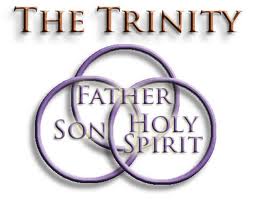
When is the last time you heard a message on the importance of the Trinity? The Trinity is one of the cornerstone doctrines of the Christian faith. The teaching of the Trinity is one God in three eternal coexistent persons: The Father, the Son and the Holy Spirit. The Bible teaches God as one God (Deuteronomy 6:4), but then speaks of three Persons—the Father, the Son, and the Holy Spirit (Matthew 28:19). While the Bible clearly teaches that there are not three Gods, but one true God, the Scripture also teaches that there are a plurality of persons in the Godhead. How to harmonize these two truths is inconceivable to the finite human mind.

One sees clearly the Trinity in Jesus’ baptism: Matthew 3:16-17,  As soon as Jesus [the Son] was baptized, he went up out of the water. At that moment heaven was opened, and he saw the Spirit of God [Holy Spirit] descending like a dove and alighting on him. And a voice from heaven [the Father] said, “This is my Son, whom I love; with him I am well pleased.”

As one reads the Epistles of Paul it is clear he was Trinitarian. It becomes evident by reading the epistles of Paul that the Trinity is indeed the unity of three persons in one, the Father, the Son, and the Holy Spirit. Three times we find Paul using the term Godhead (Acts 17:29, Romans 1:20, Colossians 2:9), a term of reference to God’s trinue nature. While the truth of the Trinity can be discovered throughout Paul’s writings, when one reads his masterful and majestic letter to the Romans one clearly sees the nature of the relationship between God the Father, God the Son and God the Holy Spirit. In the first four verse of chapter one of this magnificent epistle, Paul refers to all three. This is one of the mysteries that makes God such a Holy Triune Being, as throughout Romans the work of the all three are interwoven in the redemption story. Neither God the Father, God the Son or God the Holy Spirit can be taken out of the salvation equation.

First John 5:7-8 is more than clear in regard to the Trinity: For there are three that bear record in heaven, the Father, the Word, and the Holy Ghost: and these three are one. Never a more concise verse can be found regarding God’s trinue nature. (See endnote)

In Trinitarianism, God is one being who reveals Himself in three eternally co-existing persons. The doctrine of the Trinity is important because it describes the very essence of God which is beyond our limited intellect. When one attempts to understand that which appears unfathomable to one’s limited knowledge, one may conclude such harmonization is untenable. But Scripture is plain: God exists in three co-eternal, co-equal Persons. The fact that the Trinity is difficult for our minds to comprehend is evidence of its truth, for if we could fully understand it, it would lend credence against our Triune God’s transcendence and His “wholly otherness” (Isaiah 55:8-9).

One of the first heretical views that arose in the early church dealt with an attack on the Trinity. It was called Sabellianism. While the seeds of the heretical teaching began to be sowed soon after the close of the canon, the third-century Roman teacher Sabellius is credited with propagating the view. Before defining Sabellianism, which is better known as Modalism, second and third-century church leaders like Tertullian (160–220), Origen (184–254), Dionysius (3rd century), and others clearly denounced it. In the fourth-century the Councils of Nicaea (325) and Constantinople (381), denounced Modalism as falling outside the boundaries of biblical orthodoxy.

What is Sabellianism or Modalism? Sabellius taught that those who embrace the Trinity are teaching three gods. Modalism contends that God is a single person who throughout history has manifested Himself in three forms or modes (thus, Modalism). Stephen Nichols writes: “[Modalism is a] heretical view that denies the individual persons of the Trinity. It views biblical terminology of God the Father, the Son, and the Holy Spirit as merely modes of existence or manifestations of the one God… [Sabellius] held that there is one God who can be designated by three different names— ‘Father,’ ‘Son,’ and ‘Holy Spirit’—at different times, but these three are not distinct persons. Instead they are different modes of the one God. Thus, God can be called ‘Father’ as the Creator of the world and Lawgiver; he can be called ‘Son’ as God incarnate in Jesus Christ; and he can be called ‘Holy Spirit’ as God in the church age” (Nichols, For Us and For Our Salvation: The Doctrine of Christ in the Early Church, IL: Crossway, 2007, 153, 235-236).

So, according to Modalism God first manifested Himself in the mode or role of the Father in the Old Testament. In the incarnation the mode God manifest Himself was the Son. After the Jesus’ ascension, the mode God manifest Himself was the Holy Spirit. These modes are never simultaneous…the Father, the Son and the Holy Spirit never all exist at the same time. Thus, God the Father, the Son, and the Holy Spirit are all the same person, just playing different roles or in different modes or forms. Once God manifests Himself in a new mode, the old mode no longer exists; or in other words, when God existed as Jesus, God the Father was no longer existing. Modalism denies the distinctiveness of the three persons in the Trinity, God is one person and has merely manifested Himself in the three modes at various times. Modalism undermines the Scriptural teaching that God never changes (Mal 3:6: Jas 1:17) as it portrays a God who changes his modes. Without doubt Modalism denies the Trinity.

Modalism has been universally understood throughout Christendom as heretical. The Athanasian Creed (500 A.D.) attributed to Athanasius, the fourth century bishop of Alexandria, who was an ardent defender of the doctrines of the Trinity and the divinity of Christ, in clear and unmistakable language defines the doctrines of the Trinity and the nature of Christ:

     Whosoever will be saved, before all things it is necessary that he hold the [universal] faith. Which faith except everyone do keep whole and undefiled, without doubt he shall perish everlastingly.      And the [universal] faith is this: That we worship one God in Trinity, and Trinity in Unity, neither confounding the persons, nor dividing the substance.
     For there is one Person of the Father, another of the Son, and another of the Holy Spirit. But the godhead of the Father, of the Son, and of the Holy Spirit, is all one, the glory equal, the majesty co-eternal.
     Such as the Father is, such is the Son, and such is the Holy Spirit.     The Father uncreated, the Son uncreated, and the Holy Spirit uncreated. The Father incomprehensible, the Son incomprehensible, and the Holy Spirit incomprehensible.
     The Father eternal, the Son eternal, and the Holy Spirit eternal. And yet they are not three eternals, but one Eternal.
     As also there are not three incomprehensibles, nor three uncreated, but one Uncreated, and one Incomprehensible. So likewise, the Father is Almighty, the Son Almighty, and the Holy Spirit Almighty. And yet they are not three almighties, but one Almighty.
     So, the Father is God, the Son is God, and the Holy Spirit is God. And yet they are not three gods, but one God.
     So likewise, the Father is Lord, the Son Lord, and the Holy Spirit Lord. And yet not three lords, but one Lord.
     For as we are compelled by the Christian verity to acknowledge each Person by Himself to be both God and Lord, so we are also forbidden by the catholic religion to say that there are three gods or three lords.
     The Father is made of none, neither created, nor begotten. The Son is of the Father alone, not made, nor created, but begotten. The Holy Spirit is of the Father, neither made, nor created, nor begotten, but proceeding.
     So, there is one Father, not three fathers; one Son, not three sons; one Holy Spirit, not three holy spirits.
     And in the Trinity, none is before or after another; none is greater or less than another, but all three Persons are co-eternal together and co-equal. So that in all things, as is aforesaid, the Unity in Trinity and the Trinity in Unity is to be worshipped.

Truly the Athanasian Creed is masterfully written in its defense and explanation of the Trinity. While today there are some groups within Pentecostalism, such as United Pentecostal or Oneness Pentecostalism, United Apostolic Churches and a few leaders within the Prosperity Gospel movement that adhere to Modalism, to hold to the heretical view presents serious problems. A person’s view of Christ cannot be divorced from one’s view of the Trinity. Modalism is considered heresy because it necessarily means that Christ did not actually become incarnate, but God only assumed the mode of Son. Modalism undermines the mediatorial work of Christ, as the Scripture teaches that Jesus is the mediator between God and man (1 Tim 2:5). The Scripture is clear that the Father sent the Son and the Son sent the Holy Spirit, all three are co-eternal yet One (John 10:3). In unity the Triune God brought about the unfolding of the plan of redemption in unity. One who denies the Trinity and embraces Modalism ignores the clear teaching of the Bible.

The truth of the Trinity is seen from the first verse in the Bible until the last chapter of the Bible. In Genesis 1:1 we read, “In the beginning God created the heavens and the earth.” The word God in Hebrew is Elohim, which is used some 2,600 times in the Old Testament. Elohim is a masculine plural noun for “gods.” In Hebrew, the ending im indicates a masculine plural. In the very first verse in the Bible we see the Trinity. The Creator (Elohim) is one God in three eternal co-existent persons working in unity to create. All three persons of the Godhead were eternally at work simultaneously, in unity as One.

It has already been pointed out we see the witness of the Trinity at Jesus’ baptism. As well, Trinitarianism is clearly found in the writings of Paul and John. And in the last book of the Bible we see the Trinity — Revelation 22: God (v. 1, 3, 9); Jesus (1, 3, 12-13); Spirit (v. 17). From the first verse in the Bible until the last verses of the Bible the work of the Triune God is interwoven throughout the Sacred Text. Before creation our Triune God inhabited eternity and when earth and time merge into the eternal kingdom our Triune God will continue to inhabit eternity; the glory equal, the majesty co-eternal, yet One.

While there will always be an unexplainable mystery surrounding the Trinity, to deny it finds one straying from the clear teaching of Scripture. It has been said that in one’s attempt to understand clearly everything about God’s personhood it is possible to lose one’s mind, but to deny the clear teaching regarding His personhood one is in danger of losing one’s soul! This writer is most thankful that our God is bigger that our feeble minds can explain or comprehend. In the Old Testament one of the names given to God was El Shaddai, translated “God Almighty” or “Almighty God,” meaning the All-Powerful One. And that He is! As the first verse of the song “Holy, Holy, Holy” reads, let us sing:

Holy, holy, holy! Lord God Almighty!
Early in the morning our song shall rise to Thee;
Holy, holly, holy, merciful and mighty!
God in three persons, blessed Trinity!

Blessings,
Dr. Dan

Endnote: While I John 5:7-8, known as the Johannine Comma, gives clear support for the Trinity, it must be noted there are notable scholars who argue the verse is not genuine to the original text having been inserted by well-meaning copyists to support the teaching of the Trinity. It is not this writer’s purpose to address the issue here, but suffice it to say there are equally notable scholars (e.g., Johann Bengel, John Fell, Edmund Calamy, Matthew Poole, John Gill, Charles Foster, John Wesley, John Calvin, Edward Hills) who argue convincingly for its authenticity. This writer has no hesitation of referencing the verse, believing it to be part of the Inspired, Sacred Text. But even without I John 5:7-8, the Bible clearly teaches the truth of our Trinue God. (It is the contention of this writer that if divine providence has not ensured the Scripture has been kept pure in all areas, how can one be assured another inauthentic passage hasn’t “slipped” into the Bible!) If one was to exclude I John 5:7-8, in I John chapter 4 John repeatedly makes reference to God the Father, God the Son, and God the Holy Spirit; God in three persons yet One.
THE FUTILITY OF ATHEISM

I have always been intrigued by those who claim to be an atheist. It is amazing atheists will fight so emotionally hard against something that they say doesn’t exist! That is the futility of atheism, one must continually rationalize and present arguments as to why something that doesn’t exist, doesn’t exist! I have learned through the years it takes more faith to be an atheist than to accept the existence of God!! One truth I have found to be true is that the problem with those who don’t believe in God, it is not a head problem but a heart problem. The evidence that an Intelligent Designer exists is so overwhelming, one has to purposely and intentionally ignore the evidence to come to any other conclusion, yet many dismiss or ignore the abundance of evidence for many reasons.

Let me share with you eleven reasons I have observed over the years as to why one may claim to be an atheist: (1) Desiring moral independence, they are clinging to some behavior which they know if there is a God to whom they must give an account, they will have to change their behavior, so they find it convenient to dismiss His existence; (2) Some negative event has occurred in their lives which has resulted in the individual becoming angry at God (but how can you be angry at someone whose existence is denied!?); therefore, they on emotion dismiss the abundance of evidence which clearly declares His existence; (3) One narcissistically depends on their inflated perception of their own intelligence and because their finite reasoning cannot explain every facet of the majesty of who God is or fit Him into their preconceived box, they conclude He must not exist; (4) One is puzzled at the tension which exists between good and evil; therefore, in their estimation, belief in a benevolent and omnipotent God is an irrational contradiction; (5) Self-determination, men want to be their own god; therefore; they purposely will not entertain the existence of a Supreme Being who usurps their self-autonomy; (6) One intentionally adopts philosophies which dismiss God’s existence because it appeals to their rebellious nature which seeks a subjective morality over an objective morality of a Creator; (7) One sees themselves as a “macho-man” type of person who can handle all of life’s difficulties on their own, and they dismiss belief in a God as an imaginary crutch that helps individuals limp through life; (8) One has been hurt or treated unfairly by someone who called themselves a Christian or hurt by a church; therefore in their hurt they throw the baby out with the bathwater and dismiss His existence; (9) One declares that science and belief in a Supernatural Being are not compatible; therefore Divine Being is dismissed as a superstitious explanation for the world’s existence; (10) One is raised in an environment where from birth they are taught there is no God and they embrace such a view without questioning or investigating the reality of His existence; (11) One reasons since there are so many religions, and since they can’t all be right; therefore; belief in God is a concoction of man’s imaginative mind.

Every person who claims to be an atheist has their own reason for embracing non-belief. Time nor space does not permit me to address each of the eleven objections. Over the years I have studied all the stock arguments atheists offer, and may I say as lovingly as I can, I have observed that all the reasons given for dismissing God’s existence are more emotionally driven than intellectually founded. Evidence that there exists, as Paul Tillich says One who is the “infinite and inexhaustible depth and ground of all being,”  is overwhelming for the honest inquirer. One might ask, “Well, if there is a God, why would He be interested in us humans who are but specks of dust in a vast universe?” That is the marvel of the Creator, He loves you and me and even though we have been marred by sin, He has revealed Himself in Jesus Christ and has provided a way for us to be forgiven and the image of God He stamped upon our souls to be restored. His desire is that each person be saved and embrace Him in relationship (2 Peter 3:9).

Christianity is not founded on blind faith, but built upon historical facts, reason, logic and an abundance of evidence for the seeker who honestly inquires what is truth. Pilate, in his self-autonomy, asked Jesus, “What is truth?” (John 18:38). Sadly, the Roman ruler did not recognize that he was looking into the very face of Truth. The Good News of Christ is that even though we all have sinned and come short of God’s glory, God seeks through His atoning cross to remove all barriers of separation whereby we can have communion with the Creator of the universe.

In my over six decades of sojourn on this earth, I am more convinced than the rising morning  sun that an Intelligent Designer exists and He has revealed Himself in Jesus Christ, and He desires to enter into a daily relationship with us. Yes, we may be a speck of dust in this vast universe, but that is the marvel of God’s love for humanity. To those who will honestly bring their arguments to Jesus Christ and sincerely ask Him to reveal Himself in all His splendor, will find themselves confessing the declaration of Simon Peter, “Lord, to whom shall we go, thou hast the words of eternal life” (John 6:68). O, what a Savior.

Blessings,
Dr. Dan

DISTINGUISHING BETWEEN JOY AND HAPPINESS

Is it possible have joy in a world filled with sorrow and brokenness? We come into the world crying, and leave with weeping loved ones seated by our bedside. On one hand the Bible declares that the joy of the Lord is our strength (Neh. 8:10) and on the other hand we often feel like the Jews who found themselves in captivity, “By the rivers of Babylon, there we sat down, yea, we wept, when we remembered Zion. We hanged our harps upon the willows in the midst thereof. For there they that carried us away captive required of us a song; and they that wasted us required of us mirth, saying, Sing us one of the songs of Zion. How shall we sing the Lord’s song in a strange land?” (Psalm 137:1-4).

The circumstances and events of life have a way of putting us in a “strange land” and our tears water the willow trees and our harps remain silent. Is it possible to have joy amidst so many tears? Is it possible for one to sing a joyful song in a “strange land?” How can one sing the Lord’s song when the warmth of His smiling face seems to be hidden behind storm clouds filled with rain? We associate the words “sorrow” and “pain” with that which is negative, and we associate the word “joy” with that which is positive. The Bible tells us that joy is the power by which we should live, which enhances love, awakens our senses, and energizes our body and spirit. Is such joy only an elusive butterfly which flutters about us but can never be captured…..and if we do it vanishes like a shooting star in the night sky.

From many years in the pastoral ministry it is the observation of this writer that too often people confuse happiness with joy. There is a huge difference between the two. The terms “happiness” and “joy” are thrown into the same blender, blurring the difference between the two. Tossing the terms around like salad in a bowl, there needs to be a clarification of the meaning of the two terms for they are not the same. One can be happy but have no joy, and one can experience joy even when they are not happy. What is the difference between the two?

You see, happiness is based on circumstances. The word “happiness” is related to the Latin “happenstance.” Broken down you have “happen” (lucky, happy) and “stance” (short for circumstance). So, happiness is associated with temporary circumstances of elation. Happiness is determined by outside stimulus. If circumstances happen to be favorable then one is happy, if circumstance are contrary then one is not happy. Happiness is associated with good fortune and is based on that which is outside one’s self. Happiness is often temporary since it depends on circumstances outside one’s inner-self.

Biblical joy is not based on circumstances. Christian joy is anchored in a healthy relationship with Jesus Christ and is an inner state of being rather than a fleeting emotion. Joy, from the Greek word chara, means “to rejoice, be glad, full of joy.” The word chara is related to charis which means “grace.” Such joy is an everlasting reality of exceeding cheerfulness or gladness anchored in the grace of the resurrected Christ. Joy resides in the inner-self of a person and is connected with the life source of Jesus. Joy is not fleeting like happiness, but is derived from one’s relationship with Christ. One can have joy even though circumstances may prove contrary. While such joy enhances ten-fold one’s encounter with happiness, it also anchors the soul when tears cloud the eyes.

It says of Jesus as He faced the cross, “For the joy that was set before Him He endured the cross, despising shame, and hath sat down at the right hand of the throne of God” (Heb 12:2). This verse is a enigmatic mystery, as it speaks of joy and the agony of the cross in the same sentence. The key word in the verse is “for.” The Greek word is anti, which has several meanings…one being “in exchange for” in the sense of “to obtain.” This means that Christ willingly endured the horror, agony and shame of the cross in anticipation of the joy of providing atonement for the sins of humanity. Christ endured the shame of the cross for the joy of bringing salvation to fallen humanity. In spite of enduring the worst capital punishment devised by man’s cruel mind, He did so with joy that was anchored in His fellowship with the heavenly Father and in union with heaven’s will for His life. As one can readily see, the joy Jesus experienced was not based on favorable circumstances, but was a deep-seated joy that resided inwardly from His relationship with His Father.

Yes, the universal symbol of Christianity is the cross, a symbol of horrific suffering and death, but behind the cross of Christ the shining sun of the resurrection arises. Christianity is a faith uniquely characterized by joy…joy in the celebration that Christ’s substitutionary death on the cross was perfect provision for the vilest of human sin; joy in the celebration that Christ arose from the dead, joy in the celebration that Christ has sent His Holy Spirit to abide with us and in us; joy in the celebration that Christ will never leave us or forsake us no matter how dark the night; joy in the celebration that all things, good and bad, work together for our good; and joy in the celebration that when we draw our last breath we will find ourselves dwelling in an Eternal City whose Builder Maker is the God who became flesh and dwelt among us. It is a joy that sustains us when our ship is tossed about on the raging waves of life’s fiercest storms.

It is His joy Christ desires to impart to all who will embrace Him. On the night of Jesus’ arrest, as the disciples were about to face the most difficult circumstance of their lives, the Master told them, “These things have I spoken unto you, that my joy might remain in you, and that your joy might be full” (Jh 15:11). Circumstances were about to become unfavorable, but Jesus assured His disciples that by being in union with Him, His joy could sustain them in their darkest hours.

The Apostle Paul exhibits this joy in his writings to the church at Philippi. Some seventeen times he talks about joy while writing from a dungy and dirty prison cell. His unfavorable outward circumstances were not conducive to happiness, but because of his daily, personal relationship with Christ he had an inward joy that transcended his circumstances (1:4-5, 18-19, 15, 2:2, 17-18, 28-29; 3:1; 4:4; 4:10). Paul had discovered the only lasting and eternally sustaining joy flowed from Christ’s cross and resurrection. It was a joy he told his readers was available to all who were in union with the Savior.

This joy which Paul wrote about, I know of no one who would not long to experience such deep seated joy in the midst of contrary circumstance. Such joy resides in Christ alone. However, the key is not making a priority the pursuit of happiness for the sake of happiness or joy for the sake of joy, for to do so is to chase a temporary mirage. Our priority is to pursue Jesus Christ, to develop an intimate relationship with the Risen Lord, then all these other “things” will be added unto us (Matt. 6:33). Such joy is a byproduct of one’s relationship with Jesus Christ.

Joy which is found in Christ is enduring and affects one’s attitude in living. While in suffering we want our pain to disappear, because of joy in Christ we can victoriously endure. Why can we victoriously endure, because by the death of Christ and His glorious resurrection we find strength and the radiance of His splendorous presence enables us to embrace our humanness which our God identified with in Christ who fills our hearts with an eternal hope by Him “who hath abolished death, and hath brought life and immortality to light through the gospel” (2 Tim 1:10).

So, let us embrace Christ wherein lies a supernatural joy which He desires to impart to us. And let us remember, that someday all suffering and brokenness will be swallowed up in His eternal presence, all despair clothed with hope realized, and death abolished in victory.

O, what a Savor!

Blessings,
Dr. Dan

A CONTRAST BETWEEN GRACE AND WORKS

In the Parable of The Pharisee and The Tax Collector (Luke 18:9-14), Jesus teaches us some valuable lessons regarding our attitude towards our own sins and the grace and mercy of God. We see a huge contrast between the Pharisee and the Tax Collector. It is a contrast that serves as a distinguishing difference between those who seek salvation by their own works and those who rest in the grace and mercy of the Lord. You are either arrogantly trusting in your own good works and your own perceived goodness to save you, or you are trusting in the Lord’s mercy and grace to save you. Before delving into the text, Luke 18:9-14 reads:

9 And he [Jesus] spake this parable unto certain which trusted in themselves that they were righteous, and despised others: 10 Two men went up into the temple to pray; the one a Pharisee, and the other a publican. 11 The Pharisee stood and prayed thus with himself, God, I thank thee, that I am not as other men are, extortioners, unjust, adulterers, or even as this publican. 12 I fast twice in the week, I give tithes of all that I possess. 13 And the publican, standing afar off, would not lift up so much as his eyes unto heaven, but smote upon his breast, saying, God be merciful to me a sinner. 14 I tell you, this man went down to his house justified rather than the other: for every one that exalteth himself shall be abased; and he that humbleth himself shall be exalted.

Let us examine in this passage six contrasts that are most evident.

First, we see a contrast in their Position in Society. The Pharisee was considered to be religious, well-to-do, loyal to Jewish heritage, steeped in knowledge of the Torah, and held a place in society few would ever reach. The publican or tax collector was considered a traitor as he was employed by the Roman Empire to collect taxes, he was considered to be dishonest as he overcharged what the taxes actually were and kept the rest for himself, he was considered to be unreligious as most tax collectors lived without restraint. They were polar opposites in the eyes of society.

Second, we see a contrast in their Posture in Prayer. Both entered the Temple to pray. The Pharisee proudly stands (v. 11). The word translated “stand” could be rendered “posing himself” for everyone to see. Standing with arms outstretched with palms turned upwards was the ordinary Jewish Pharisaical posture in prayer. His arms were stretched toward heaven with palms turned upward, as he proudly felt he deserved to receive something from God. He, as well, prayed by himself to avoid being “contaminated” by coming in contact with lesser people than himself. The posture of the Pharisee was one of idolatrous pride.

The tax collector, in contrast, standing afar off, would not lift up so much as his eyes unto heaven, but smote upon his breast (v 13). His posture was one of humility. He stood afar off, not because he was fearful he would be contaminated by others, but because he felt unworthy. He was not praying to be seen of others, but to “do business” with God. He didn’t feel worthy to lift his eyes toward heaven, his posture being that of a mourner grieving. His eyes were turned downward and he smote his breast. The posture he took was the custom of one expressing grief.

Third, we see a contrast in the Person to whom they Prayed. The Pharisee “prayed thus with himself” (v. 11). He prayed, so to speak, to himself. It was only a façade that he was praying to God, he was the object of his on idolatrous prayer. His prayer went no higher than the ceiling in the Temple.

By contrast the tax collector prayed to God. The Greek word for God is theos (θεός). He prayed not just to any god, but to the God who became a Man and came to earth as a Babe. We find in Matthew 1:23, “Behold, the virgin shall conceive and give birth to a Son, and they shall name him Emmanuel, which translated means “God (theos θεός) with us.” The Person to whom the tax collector prayed was the One who in Christ became “God (theos) with us.” The Pharisee’s prayer was a humanistic prayer to himself, but the prayer of the tax collector was Christocentric, it focused on One outside himself.

Fourth, we see a contrast in their Pleas. The Pharisee’s “prayer” contained no plea, but was a reciting of all his good works, “I thank thee, that I am not as other men are, extortioners, unjust, adulterers, or even as this publican. I fast twice in the week, I give tithes of all that I possess” (v. 11-12). The Pharisee bragged on his empty ceremonialism.

The plea of the tax collector was simple and to the point, “God be merciful to me a sinner.” He did not appeal to the Lord on the bases of his good works, but he appealed to the Lord on the bases of His mercy (v. 13). He didn’t approach the Living Word with a proud heart like the Pharisee. He was sorrowful for his sin, and saw no good within himself. He had nothing of which to boast; therefore, he pleads for mercy. The Greek word for mercy is hilaskomai (“be propitious to” or “merciful”), and was a word used to refer to atoning blood sprinkled on the mercy-seat in the Old Testament on the Day of Atonement which mercifully appeased or satisfied the holiness of God. The same word (hilaskomai) is used in Hebrews 2:17 where the inspired writer says Jesus came to make atonement (hilaskomai) for our sins. The tax collector cried out, “Lord be propitious/merciful toward me through sacrifice, let an atonement be made for me. I am a sinner and cannot be saved in any other way than by a satisfactory sacrifice offered in my place.” Of course, that satisfactory sacrifice was Christ.

Fifth, we see a contrast in their Plight. The Pharisee didn’t see his plight, that he was a sinner. He was blinded by his pride, arrogance, haughtiness, egotism, conceit, spirit of superiority, and self-righteousness. He saw no need for forgiveness, no need for mercy, and thought he was worthy to come into the presence of God by his own good works and self-righteousness.

The tax collector recognized his plight, he saw and sensed he was a sinner. The Pharisee thought of others as sinners. The publican thought of himself alone as a sinner. The Greek word “sinner” means to miss the mark, and the tax collector knew he had missed the mark and that all have sinned and come short of the glory of God and none were righteous, no not one(Romans 3: 10, 23). He recognized he had failed to comply with God’s holy law, and was unworthy to ever save himself or come into God’s holy presence by his own good works. Like the tax collector, only those who rely upon the substitutionary grace and mercy of God as found in Jesus Christ can find forgiveness. One who doesn’t recognize their plight can never receive or experience Christ’s atoning mercy and grace.

Sixth, we see a contrast in the Pronouncement by Jesus. The Master made a distinction between the two men, “I tell you, this man [the tax collector] went down to his house justified rather than the other: for every one that exalteth himself shall be abased; and he that humbleth himself shall be exalted” (v. 14). We see clearly the reason why the Lord said that the tax collector went down to his house justified (forgiven) rather than the Pharisee – he sought for mercy through an atonement for sin, which was the only way in which God had from the foundation of the world purposed to save sinners (Rev. 13:8).

As the Pharisee depended on his good works and observing the ordinances of religion for his acceptance with God, his inability to comply with the holy and perfect demands of God and his blindness to his own sinfulness, he found himself rejected. Scriptures declare, “All have sinned and come short of the glory of God” (Romans 3:23). The Bible is clear, no man can make an atonement for his own sins, we must take refuge in Him who God’s mercy has provided in Jesus Christ. One who trusts their own good works will find themselves excluded from the kingdom of heaven.

The tax collector knew his need for a substitutionary sacrifice was no new doctrine, it was the doctrine publicly and solemnly preached by every sacrifice offered under the Jewish law. Without the shedding of blood there is no forgiveness, was the loud and constant cry of the whole Mosaic sacrificial system. From this we may see what it is to have a righteousness superior to that of the scribes and Pharisees. To be saved, to have our sins forgiven, to find acceptance in the presence of the holy-love of God, one must humble themselves before the God who has provided atonement in Christ. Christ invites those who, like the tax collector, recognize they are sinners and come before Him with a meek and humble heart, there finding eternal refuge in the perfect provision of the cross.

O, what a Savior!

Blessings,
Dr. Dan

THEODICY AND THE CROSS OF CHRIST

What in the world does the word theodicy mean? The word theodicy comes from two Greek terms: theos meaning “God,” and dike meaning “justice” or “justified or right.” Dale Moody informs, “The word was coined by G.W. Leibnitz in 1710 to explain why there is evil in a world created by and under the Providential care of a God both good and omnipotent” (Moody, The Word of Truth, Grand Rapids: Eerdmans, 1981, 153). Theodicy seeks to respond to questions of how a benevolent and omnipotent Creator can be true in the light of the existence of evil and suffering. Theodicy is the endeavor to justify and defend the reality of a good and powerful God amidst evil in the world.

When God created man He did so by giving man the ability to make choices. There is a risk that comes with such freedom, as one can make good or bad choices. There are consequences that come from good choices and consequences that come from bad ones. Unfortunately, bad choices bring consequences that can manifest evil and bring about suffering and pain. We often ask, “Why did not God stop that evil act?” If God intervened to stop the evil choices of man, then He would have to suspend man from being a free moral agent. If that happened we would then ask, “Why does not God give me the freedom to choose?” We cannot have it both ways.

Being created with freedom to choose means man has the capacity to love and freedom is necessary for one to give and experience love. For love to exist that is not mechanical there must be a choice not to love. Love that is compelled or forced has no meaning. God wants us to freely love Him and in turn love others, but if one is compelled to love it is only a mechanical response that is devoid of emotion. One can program a computer to say, “I love you” but it does so without emotion because it had no choice to do otherwise. Such love is valueless. For genuine love to exist and be experienced there must be freedom of choice and that also means freedom to choose otherwise. Being created with the freedom to choose between loving and not loving, freedom to choose good or bad, there comes with such freedom the possibility of evil, suffering, pain and sorrow becoming a reality. And we know all too well the unfolding of evil’s reality in our individual lives and the world around us.

In the face of the evil we see and experience, developing an adequate Christian perspective on theodicy is the best and deepest way to strengthen one’s faith. Such a perspective must reconcile (justify) both the divine and human. When one seeks to develop a philosophical theodicy, one takes on a daunting task. Too often men have sought to develop a theodicy on rationality apart from a personal and relational perspective. P.T. Forsyth (1848-1921), the Scottish theologian stated, “No reason of man can justify God in a world like this. [God] must justify Himself, and He did so in the cross of His Son….[the cross being] God’s own theodicy” (Forsyth, The Justification of God, London: Independent Press, 1917, 14, 122). How does God defend His love and goodness in the face of evil and suffering? Forsyth answers, “He does so through the cross; the supreme theodicy is atonement” (Justification, 174). “God’s work of atonement on the cross is His self-justification in the face of evil and suffering” (Kenneth Surin, Theology and the Problem of Evil, Oxford: Blackwell, 1986, 112),

Forsyth contends that the only way one can reconcile God’s righteousness and goodness with the horrors of sin and suffering is to consciously place at the center of any theodicy the cross of Christ. It is in the cross where we find the supreme revelation of God. In the cross we don’t have to justify God, for in the cross God justifies Himself. In the cross “God shows Himself to be righteous and good in spite of the existence of evil in our world” (Forsyth, Justification, 122).

For Forsyth, the cross must be at the heart of any biblical approach to theodicy. A theodicy based solely on intellectual speculation that is devoid of a biblical foundation will prove futile and frustrating. For any theodicy to be biblical it must be centered in the cross of Christ. For it is at the cross we see God in Christ interacting with and becoming identified with man and suffers with him. God’s interactions with human sin and suffering culminate in the cross where the Creator took upon Himself the burden of and suffering with those He has created. Forsyth writes, “[Christ] brings God’s providence to the bar of God’s own promise. In Christ, God is fully justified by Himself. If any man thinks he has anything to suffer in the flesh, God more. In all their afflictions He was more afflicted” (Forsyth, Justification, 127).

Echoing Forsyth’s thoughts, Milton Crum writes, “Portraying God as fully in Christ portrays God as suffering all that Christ suffered on the cross, but it implies more than that. It implies that God suffered and has always suffered all that humanity suffers” (Crum, Evil, Anger, and God, Livermore, CA: WingSpan Press, 2008, 185). Yet through it all Christ was victorious over the worst man sought to do to God’s best. Forsyth’s theodicy is “an extension of the doctrine of the atonement” whereby Christ was victorious (Justification, 174). Christ’s victory on the cross and in His resurrection is our assurance there will be realized in actuality what was secured at the Cross.

Of theodicies’ mystery Forsyth writes, “The tactics of Providence cannot be traced, but in the cross His purpose we have, and His heart. We have Him” (Justification, 23). God’s own theodicy is a theodicy of reconciliation and relationship that comes through the victory won on the cross, a theodicy that enables trust in God in spite of unanswered questions, which in His time will be answered and every wrong righted. While all mysteries of Providence cannot be answered, the cross of Christ is God’s answer to the problem of evil and human doubts that may surround God’s righteousness and goodness.

Karl Barth seems to hitch his wagon to Forsyth’s theodicy, writing that “the unaided mind of man cannot devise a theodicy that establishes the idea of the goodness of God” (Barth, Church Dogmatics, T & T Clark, 1957, III-1, 368). Like Forsyth, Barth contended that what human theodicies could not do, on the cross God in Christ “gave Himself that He might bear and suffer what man himself had to suffer” (Barth, Church Dogmatics, II-2, 165). In the cross Barth saw a twofold justification, as he interpreted the cross as both our justification and “the justification in which God justifies Himself” (Barth, Church Dogmatics, IV-1, 564). For Barth, Christ’s cross and resurrection affirm that evil, sin and death have been overcome, and the ultimate victory over evil and suffering has been secured.

In the Event of the cross, followed by the resurrection, humanity finds the solution to a proper theodicy whereby one gains confidence that God will take action to right all wrongs and vindicate all undeserving victims of evil. One can be assured that God, through His self-justification in the Christ Event (the cross), is moving all history towards His glorious goal which the victory on the cross foreshadows (Justification, 125). “The Christian message is that the answer is [the cross], and is the gift of God….The solution is practical, not philosophical. It is not really an answer to a riddle, but a victory in battle” (Justification, 220).

The Christian with confidence can rest in the victory secured at the cross on behalf of humanity, and can take comfort in the truth that we serve a God who is not detached from our suffering but is touched with our hurts and sorrows. For when God in Christ clothed Himself in human flesh, He identified Himself with us, enabling Him to empathize with all human suffering as history marches toward its divinely ordained climax; the climax already secured because of the victory won on the cross and in the resurrection.

While some questions in this life will never be adequately answered, Christ’s victory on the cross and HIs resurrection assures us we are on the winning side…for Christ’s victory is our victory. O, what a Savoir.

Blessings,
Dr. Dan

UNDERSTANDING WHY THERE IS A HELL

When is the last time you heard a sermon on Hell? Hell is a doctrine that in the majority of Christendom is dismissed today as being an archaic belief that is ripped right out of the pages of mythology. To speak of hell today is considered to be an unnecessary figment of over religious minds that seek to scare someone into submitting to an ogre-like God who takes delight in throwing someone who “steps out of line” into an eternal lake of fire. After all, it is said, a loving God would never banish anyone to suffer the fate of eternal flames.

Interestingly, Jesus spoke more on hell than He did heaven. That being true, teaching about hell must not be dismissed as being antiquated, but is of the utmost importance to understand why there is a hell…and even more so how to avoid such a place. While discussing hell is a topic we like to avoid and dismiss, if it is a real place to neglect attention to its existence is at our own peril.

The bottom line is this, when one understands the holiness of God one understands why there is a hell. And when one understands the holiness of God and sees their own sinfulness in the Light of His pure and perfect holiness, one understands that hell is what we all actually deserve. When one grasps the majestic, perfect holiness of God, like Isaiah (Is. 6), one will realize they are sinfully-unworthy to EVER encounter the presence of One so holy-other.

Come, let us reason together.

The Bible is clear that God is holy and that God is love…He is holy-love. While Christendom puts great emphasis on God’s love, His love cannot be properly appreciated if one doesn’t understand His holiness. Holiness denotes the absolute majesty and splendor of God, that He is distinctly transcendent from any other being or thing He has created. He is holy-other. Holiness describes the essence of God. He is holy; divine holiness of character being who He is in all of His perfect ethical and moral authenticity and truthfulness. Holiness is His self-affirming purity; He cannot be other than holy. Holiness is God’s perfect righteousness. Habakkuk says, “Thou art of purer eyes than to behold evil, and canst not look on iniquity” (Hab. 1:13). Holiness is God’s infinite value and worth as the One who is absolutely unique and morally pure and perfect. God’s holiness pervades His entire being and shapes all His attributes and His actions with humanity. That God is holy means that His very being is completely devoid of even a trace of sin, unrighteousness or moral deviation.

In the Creation Story, it was God’s desire that holiness be the atmosphere which would pervade the Garden of Eden, and man through fellowship with his Creator was to cooperatively conform to the order of His holiness. All of creation was to reflect the nature of a holy God, reflect the holiness of the Creator. God created the world where His holiness was woven into the very fabric of creation. When man willfully sinned, he defied God’s holiness. The doctrine of Original Sin means that each of us have inherited a sinful nature from disobedient Adam. Our inherited sinful nature means we are more than children who have gone astray, but we possess a nature that is consciously and actively rebellious against God’s holiness and our rebellion is directed against the holy God who created us and who is the true Source of all spiritual and ethical morality and reality. We are sinners by nature and by choice. Sin is that which seeks to undermine God’s rightful place in our lives and in mutiny disregards the very holiness of God. Sin in its very nature, is an assault on God’s holiness. When His holiness is violated, nature and man convulse with consequences which repulses holiness and invites holy justice.

For our holy God there can be no compromise with sin. Sin must be dealt with. Judgement is holiness’ reaction to sin. Hell is where all sin that is not adequately dealt with will be banished; banished to a place of eternal alienation from God because holiness’ reaction to sin is just judgment. Since I am guilty before a holy God, since my sinful and rebellious nature has willfully rebelled against His pure and perfect holiness, unless my sin is dealt with, then holiness will justly deal with sin in judgement. When one sees their sin in the Light of God’s perfect and pure holiness, they realize that they are undeserving to ever come into the presence of His majestic holiness and justly deserve judgment. A holy God owes sin nothing but well-deserved judgment. God would deny His own holy nature if His holiness did not react to sin in judgement.

Now remember, God is holy-love. Though God’s love desires to extend forgiveness, the offensiveness of sin and sin’s assault on holiness must first be satisfied and dealt with. While holiness cannot overlook sin, it must judge it, His love provided the means were by His holiness was satisfied and our sins could be forgiven!! Our holy God in love took upon Himself our flesh, and becoming the Representative Man, becoming our Substitute, He lived that perfect holy life which holiness demands but to which we cannot comply, therefore deserving judgement. Christ, as your and my Representative perfectly complied with God’s holy demands which I could never do, thus satisfying the demands of holiness. Then on the cross, the perfect Son of God took the sin of humanity upon Himself and confessed holiness’ just judgment on sin, which judgement you and I deserved, thus demonstrating love that goes beyond our comprehension. Christ lived a life I could not live, then paid a debt I could never pay (Romans 5:8; 2 Cor. 5:21). Now that is LOVE….and when you and I understand the holiness of God and the just judgment upon sin for violating God’s holiness, then one bows in awe and wonder at such love demonstrated in the Christ Event that makes it possible for sinful man to escape our sins deserved fate. When one grasps what Christ willingly did for us in His life and death, then the word “grace” takes on a depth of meaning that results in praise forever flowing from our lips.

Yes, there is a hell. Hell is a reserved place for divine justice in the face of willful defiance to Divine Holiness.   Holiness’ judgement is justified reactional justice on sins violation of God’s pure and perfect holy nature. Yet His Divine love, as seen in the Christ of the Cross, is offered and available to all who see their sinfulness in the Light of his Divine holiness and embrace the indescribable provision that is found in Jesus Christ. While the Bible clearly teaches there is a hell, the Word invites guilty man to kneel before the wonder of Christ’s loving provision who has made a way of escape from our much-deserved fate. O, what love. As Paul stated it, “Thanks be to God for His unspeakable Gift” (2 Cor. 9:15).

Blessings,
Dr. Dan

UNDERSTANDING THE AGENDA OF EVIL IN THE LAST DAYS

Paul in his swansong letter of II Timothy writes to his son in the faith, “This know also, that in the last days perilous times shall come” ( 2 Tim. 3:1). The aged Apostle warns that perilous times will mark the last days. The Greek word translated “perilous” refers to times that will be fierce, violent, hostile, savage, and dangerous. It was a word that was used in connection with an animal savagely or violently attacking its prey. The word was used by Greek secular writers to speak of destructive results that were brought about by severe winds, hardships or sufferings. The word was used to speak of someone who was violently hostile and aggressive in their actions. It was a word associated with a nature or disposition determined to fight or kill (like a solider) and leave in their wake terror and chaos. The term “perilous times” doesn’t paint a pretty picture of the last days.

Some of the attitudes and behavioral characteristic of “perilous times” are “men shall be lovers of their own selves, covetous, boasters, proud, blasphemers, disobedient to parents, unthankful, unholy, without natural affection, trucebreakers, false accusers, incontinent (living without moral restraint), fierce, despisers of those that are good, traitors, heady, highminded (conceited), lovers of pleasures more than lovers of God; having a form of godliness, but denying the power thereof” (2 Tim 3:2-5). Paul is vivid in his description of the negative characteristics that will be prevalent and rampant in the last days.

Another characteristic that Paul says will define the last days is that those who seek to live for Jesus will suffer persecution (3:12) and that evil men will grow worse and worse (3:13). It is important Christians understand the agenda of evil in the last days. Let’s examine what is meant by the agenda of evil. There are two kinds of evil mentioned in the NT. It would do us well to know the difference between the two.

In the New Testament there are two words translated “evil.” The Greek word kakos, which is used over 50 times in the New Testament, refers to one who does evil, bad or wrong and is content to perish in their own sinfulness without dragging anyone else into their evil behavior or actions. In other words, you do your thing I will do mine, but I will not drag you into my corruptive behavior or lifestyle.

However, there is another word translated evil which Paul uses in 2 Timothy 3:13 when he says in the last day “evil men” will grow worse and worse. Paul uses the Greek word poneros,  which is used over 70 times in the NT. Poneros which refers to one who is not content or satisfied unless they are corrupting others along with themselves and seducing others into the same destructive behavior, actions or lifestyle. In other words, the poneros person is not interested or content in practicing or living out their sinful actions alone, their vicious and aggressive nature seeks to actively ensnare others in the same corruption they are involved in. When Jesus calls Satan the Evil One, He uses the word poneros because Satan wants to seduce us into his web of corruption and destruction. Paul in I Timothy 4:1 informs us that such evil (poneros) that will be witnessed in the last days will be energized by demonic forces. So, in the last days there will be those under demonic influence, who are not content to perish in their own corruption, but seek to seduce  all men down into their cesspool of death and destruction.

When Paul states in the last days “evil men” will grow worse and worse (2 Tim 3:13), a characteristic of their actions is that they will aggressively seek to seduce and involve everyone else in their own corrupt, abnormal, perverted and destructive behavior and actions. Paul warns that Christians who seek to live opposite of evil men and agendas and oppose them are persecuted and defamed (2 Tim. 3:12). He also informs that in the last days such evil (poneros) men and agendas will increase.

Now honestly, is that not where we are in our culture today? Evil men and agendas are being pushed in society today that seeks to ensnare everyone in their web of destruction and if you dare challenge or speak against their diabolical agendas you are slandered and demeaned unmercifully. Christians are persecuted for being unyielding if they don’t get on the poneros train that is heading for derailment.

The examples are endless of poneros agendas and subsequent efforts to silence opposition. The goal of a poneros agenda is to silence the Christian voice. The abortion agenda has brought us to the place where advocates gleefully applaud legislation that allows the taking of a life up until the moment of birth. If one speaks out against the atrocity of abortion and stands up for life in the womb, one is seen as old fashion, castigated for their stance and are said to hate women. Those who endorse the agenda for the abolishment of traditional marriage between a man and a woman and embrace same sex unions, brand those who oppose their agenda as bigoted, unloving and not in touch with reality. Those who embrace the agenda seeking to force the acceptance of gender fluidity and one can be whatever gender they desire to be regardless of their gender identity at birth, belittle those who oppose their agenda as being mean-spirited and lacking sympathy. Those who support the agenda to legalize marijuana in every state and put everyone’s brain in a fog, regard those who oppose them as conservative fanatics who are against freedom of expression. Those whose agenda is to infiltrate America with radical and extremist religions and groups that want to destroy this nation, categorize those who warn of the danger of such infiltration as intolerant, prejudicial and are shamed into silence. Those who have an agenda to establish a secular, godless and socialistic society, are vicious in their attacks upon those they label as right wing rabble-rousers who are the real enemies of America. Again, the goal is to silence the Christian and all objecting voices and force and seduce everyone into accepting their poneros agenda.

Those who support agendas of death and push agendas to make acceptable abnormal morality as normal, are not content to engage in destructive life choices alone. Their goal is to aggressively push their destructive agendas on everyone and seduce all into their destructive ideology. They want all to join their ranks…and if one dares speak out against or is not accommodating to their agendas one is persecuted and labeled as a deplorable. May I say as clearly as I know how, publicly accepting and seeking to normalize that which is sinful in the sight of a holy God will NEVER make it right.

My dear Christian, we need to understand the nature and agenda of evil we see sweeping our land today. And it is growing faster than a speeding locomotive out of control. It is poneros evil which we are witnessing being unleashed, evil that characterizes the last days. If we believe the words of Paul (which I do), it is only going to get worse. And if you seek to live for Christ without compromise you might as well accept the fact you are soon going to be in the minority and you can expect the persecution to silence the voice of Christians to only grow worse and worse. In days not too far away, I predict that it will be against the law to speak on moral issues from a Christian perspective without being fined or put in jail.

As the last days unfold, Christians are needed who will stand true, pray, seek the Lord’s face and continue to lovingly shine the Light of Christ uncompromisingly. No matter how much poneros evil seeks to enlist us among its destructive ranks, we must echo the words of the Reformer Martin Luther, “My soul is captive to the Word of God. Here I stand I can do no other.”

Blessings,
Dr. Dan

IN WRATH HE EXTENDS MERCY

We are living in a day when the truth is being suppressed that there is a holy God that has created the universe, has created humanity, and holds each of us accountable for our lives. Paul writes in Romans that men are without excuse when it comes to having sufficient evidence that a Supreme Being exists who has established moral order in His creation and holds us responsible for our actions. The Apostle points out that man knows there is a Creator behind all of life as evidenced through (1) creation, (2) man’s own conscience, (3) reason, (4) the moral law, and (5) by way of revelation as unfolded to us by God in the Bible and Jesus Christ (Romans 1: 20, 21, 28, 32, 2:15).

Yet in spite of sufficient evidence of a transcendent, holy Creator, men seek to distort, suppress and deny the truth of His existence, that He requires conformity to His moral order and that He holds us accountable for our lives. What happens when the truth is suppressed, what is the outcome of such suppression? There is a downward spiral that has dire consequences. Paul tells us in Romans that there are three downward steps when men suppress the truth.

First, when men reject the truth, they inevitably create their own god to replace our holy Creator. They replace His glory with a god of their own image (Rom 1:23), a god that is corruptible like unto himself that has affinity with “animals and creeping things” (1:23). Why does man gravitate toward constructing a god that has affinity with the animal kingdom? Because men seek to create a god that will allow them to live out their basest desires and passions of their lower nature like animals without restraint.

Humanity was created to worship their Creator and since man can’t live in a vacuumless existence without some kind of god; therefore, sinful men, not wanting a God who is holy and moral, creates a god in his own image that allows him to live according to his lower animal nature without moral restraint and accountability. Man creates his own moral compass that is different from the holy, moral North of His Creator. Interestingly, when men move the compass needle from God’s holy and moral North, the spiral downward in moral behavior finds humanity lost in a wilderness of confusion and decadent behavior. This is evidenced today by the culture of death that pervades society which is manifested in abortion, mayhem in the streets, lying, stealing, adultery, living together without benefit of marriage, loss of the sanctity of life, incivility, and the list goes on.

We have grown comfortable with the gods we have created. Our man-made gods don’t require us to conform to God’s holy and moral order. Our Creator is holy, which holiness is the source of all morality, yet we embrace tightly our gods that permits us to live as we please without accountability or consequences.

Second, when men reject the truth, the progressive downward spiral results in men focusing upon the creation instead of the Creator. If we can create our own god, then we can just as easily dismiss the truth that there is a God. Paul speaks of those who suppress the truth by exchanging the truth of God for a lie, and worship and serve the creation rather than the Creator (Rom 1:25). Rejecting clear evidence that an Intelligent Designer created the universe and requires conformity to His moral order, men dismiss that creation needs a Creator. That is the underlying premise of evolution, that the universe just happened and needs no Creator. Worshipping at the altar of Darwinism, those who hold this position insist creation doesn’t need a Creator, creation just came into existence on its own. Since something can’t come from nothing, no matter one’s theory of how the universe began there must be at some point a First Cause (Thomas Aquinas) or an Unmoved Mover (Aristotle) or a Designer, who like the intricate design of a watch, designed all things (William Paley).

In the skewed logic of man, if there is no Creator, then there is no moral order and man is free to determine for himself what is right and wrong. Philosophy labels such a belief as Existentialism. I am my own boss; therefore, objective truth doesn’t exist and is subjective and determined by each individual.

Then there are those who embrace pantheism and similar philosophies, contending that nature is “God” and “God” is nature and we will all one day be absorbed into energy of nature and the universe, all becoming one. But whether it be evolution, existentialism, pantheism or any other philosophy, the purpose is to hold a belief that denies there is a Divine moral order that exists and one day we must all give an account of our lives before a holy God. Reasoning that if there is a transcendent, holy God who demands we conform with His moral order, men go to great lengths to dismiss that such a God exists. If He doesn’t exist then I am off the hook and can live as I please without fear of future accountability. I have learned through the years, that the fact men don’t believe in God is not because of a problem of insufficient proof. It is a not a head problem, but a heart problem. Men don’t want to believe, because of their rebellious and sinful nature.

Third, when men reject the truth, the spiral downward finally leads to the blurring and removing of barriers in regard to sexuality. When men create their own God, then dismiss that there is no God, then there is nothing left but to declare that our identity of who we are sexually doesn’t exist and any roles that existed in regard to matters of sexuality can be removed.

Paul speaks of those who give themselves over “to uncleanness through the lusts of their own hearts, to dishonor their own bodies between themselves”…who are engaged in “vile affections: for even their women did change the natural use into that which is against nature: And likewise also the men, leaving the natural use of the woman, burned in their lust one toward another; men with men working that which is unseemly (unnatural), and receiving in themselves that recompense of their error which was meet” (Romans 1:24-27).

We see Paul’s words are prophetic, as that is where we find ourselves today in our society, as we see the agenda to make sexual perversion normal behavior, the destruction of traditional marriage between a man and a woman, to embrace same sex unions as natural, and even declaring one’s gender is fluid, one can just be whatever gender one decides they want to be discarding their sexual identity as created by God. We have arrived at such a decadent state, as Paul says, because we did not like to retain God in our knowledge (Romans 1:28).

Sadly, when society spirals downward to a place of such moral decadence and depraved self-indulgence, Paul warns when men continue to fail to listen and abandon the truth, there comes a time when the Lord “gives them over” (Rom 1: 24, 26, 28) to the consequences of their own destructive behavior. Have we not reached that place in our culture today? Have we been given over to choke on the consequences of our own moral collapse? The worst place a society or an individual can find themselves is that God leaves them alone to experience the consequences of their machinations. One of the saddest verses in the Bible concerns the deliberate choices of Samson, “And he knew not the Lord had departed from Him” (Judges 16:20).

Because God is holy and righteous, sin must be dealt with and judged. There is a price to pay when we violate the holy and moral order which God has established. Judgement is simply holiness’ righteous reaction to sin.

But as Paul Harvey used to say, “Now the rest of the story.” The Good News is that if men and women will turn from their sin, our God of holy-love, because of the work of Christ on the cross, will forgive, restore, and put us on a path of restoration and reconciliation. In wrath he remembers mercy (Habakkuk 3:2). Peter tells us, “The Lord is not slack concerning his promise, as some men count slackness; but is longsuffering to us-ward, not willing that any should perish, but that all should come to repentance” (2 Peter 3:9).

It behooves every Christian not to compromise with the downward spiral of society, to stand unapologetically for the truth, and pray for the eyes to be opened of those who have been blinded by sin. There is hope in the Christ of the Cross. There is change that can be found in the resurrected Savior. Christ is the only answer to the reversal of the downward spiral that has and is taking place around us. He is the only answer…and again I say, “Christ is the only answer.”

Let us cry out with Habakkuk, “In wrath remember mercy.”

Blessings,
Dr. Dan


THE RETURN OF MOLOCH

Since 1973 over 60,000,000 babies have been ripped from their mother’s womb. With the technology of today it amazes me that someone can’t see that abortion is taking a life. That is more than a “fetus” in a women’s womb, it is a life that God has given. Interestingly, the Bible records that John the Baptist leaped in the womb of his mother, Elizabeth, when Mary announced to her she was bearing the Christ Child (Luke 1:41), clearly indicating the child she carried was a life.

Every person who values the sanctity of life ought to in brokenness weep over the despicable and inherently evil Reproductive Health Act signed into law recently in New York that allows abortions up to the very minute of birth. Legalizing the right to kill a baby up to the moment of birth, the New York governor praised the passage of the legislation, calling it a “giant step forward.” Of course, abortion advocates are applauding and rejoicing calling it a “great day.” No, it is not a giant step forward or a great day, it is a giant step backward and a sad day. It is a horrifically sad day when taking the life of a baby is celebrated with such jubilant exuberance by supporters of this legislation.

Mother Teresa once said, “A nation that kills its children in the womb has lost its soul.”  America has lost its soul. We have become a culture of death.

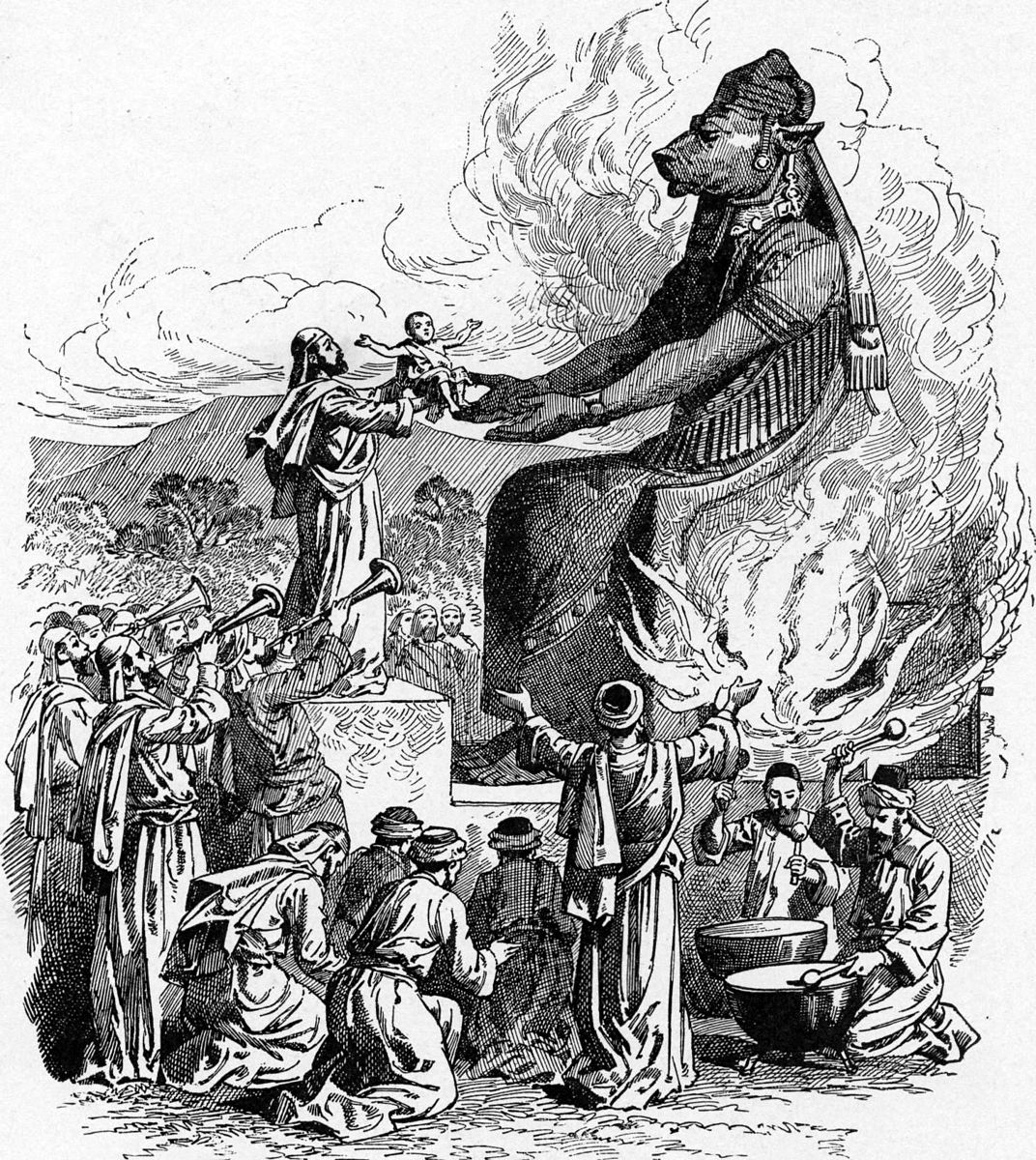
Americans in their obsession with support of abortion have reduced themselves to the level of the barbaric pagan Canaanites who worshiped the god Moloch which was associated with child sacrifice. Such legislation as seen is New York is akin to modern day worship of Moloch. We are all familiar with the phrase “wailing and gnashing of teeth.” Coming from the very lips of Jesus, what was He referring to when using such vivid terminology? In the Parable of the Sower in Matthew 13 Jesus is explaining that the wheat (genuine believers) and tares (false believers) grow together, and when the harvest is come the tares, whom He calls “children of the wicked one,” “are gathered and burned in the fire.” Of that harvest day Jesus states, “The Son of man shall send forth his angels and they shall gather out of his kingdom all things that offend and them which do iniquity, and shall cast them into a furnace of fire. There shall be wailing and gnashing of teeth” (Matthew 13:41-42).

Jesus in his picturesque words was alluding to a horrific practice which would have conjured up terrifying images in the minds of His hearers. One of the pagan gods of the ancients was the god Moloch/Molech, which in the Jews past had crept into their worship being introduced by evil kings. The worship of Moloch involved child sacrifice. The huge, hideous looking idol was made of metal, shaped as a man with a bull’s head. The gigantic idol had a hole in the abdomen and outstretched arms where a child could be placed. A blazing fire was lit in and around the metal statue. By offering a child sacrifice to Moloch it was believed that it would bring financial prosperity to the home and future blessings. Babies would be placed in the statue’s arms or they were placed in the furnace-hole. If a child was old enough to walk, they were forced by using whips to drive the child into the white-hot fire, all the while listening to the horrid cries of the children, the “wailing and gnashing of teeth.” One can only imagine the horrible shrieks and painful screams of those innocent children as they were forced or thrown into the fire, the “wailing and gnashing of teeth” would have been indelibly burned into the minds of those who witnessed such terror. What a horrid picture Jesus painted by using that phrase.

May I say the legislation that New York has recently enacted as law is just as evil, pagan, barbaric and horrific as the scene Jesus was painting for his hearers in Matthew 13. We are repulsed at such barbaric paganism of the child sacrifice involved in worship of Moloch, but our culture is not repulsed at the neo-paganism of laws that permit the snuffing out of a child’s life up to the moment of birth. While those who gleefully applauded the passage of legislation that will allow the murder of a child to the very moment of birth are deaf to the “wailing and gnashing of teeth” of all the innocent victims that will be sacrificed, it behooves caring Christians to hear those cries and earnestly pray for ears to be opened to stop this evil madness. And may I say, those who support such barbaric legislation the day will come when they will hear the very cries which they have inflicted.

By embracing the destruction of life, we are inviting consequences upon ourselves that will not be escaped. American society continues to dive deeper into the cesspool of death, destruction and perversion, gleefully thumbing their noses in the face of a holy God. Morally we as a nation are moving in the wrong direction. “Righteousness exalteth a nation: but sin is a reproach (disgrace) to any people” (Proverbs 14:34) …and the nation that forgets God is turned into hell (Ps. 9:17). Oh, how we need across our land today genuine repentance and to pray for a culture that once again will embrace respect for life and value the God given right to life. Only then can we hopefully avert the consequences of our atrocious actions. May God have mercy upon us.

Blessings,
Dr. Dan

THE BLESSING OF PAIN

In Acts 17 we find the Apostle Paul in Athens where he encounters certain philosophers of the Epicurean and Stoic sects. He  engages them in a debate about Jesus and the resurrection (Acts 17:18). Paul could not have entered a discussion with two philosophies more opposite of one another. Epicureanism held the belief that the chief end of life was to experience nothing but happiness and pleasure, with the absence of pain of any kind, whether it be pain of the body, mind or soul. Stoicism held the opposite view, life was not allowing oneself to be controlled by the desire for pleasure, but embracing pain and enduring pain (or pleasure) with indifferent emotions. The Stoic was one who sought to be unmoved by joy or pain; firmly restraining responses to pain or distress.

While Epicureanism and Stoicism are certainly two opposing views on how to approach life, of the two it seems unknowingly most people today embrace the philosophy of Epicureanism. We are living in a day when people want to embrace only pleasure and the pursuit of happiness without any interruption from pain or grief visiting our lives. People will go to great lengths to avoid all pain and embrace only that which brings no discomfort.

While the philosophy of the Stoics is harsh in their embracing pain and grief with indifferent emotions, grasping a Biblical understanding of pain reveals that one’s life can receive blessing from the pain we experience. Viewing pain through the lens of the Christian faith gives value to the pain and discomfort we so often experience in life. The pain of life divorced from a Biblical perspective leaves one asking with George Bernard Shaw, “Are the trials of life nothing more than moral gymnastics?” The pain of life can either make us bitter or make us better. So, just how can pain be called a blessing?

First, it is through pain we grow. An athlete will never improve if they never push their body out of its comfort zone. To “grow” as an athlete one must push their body to do what it does not want to do. A student will never “grow” academically if they don’t push their mind and exert effort to learn and expand their intellectual capacity. A solider must be pushed through hard training in order to be a good soldier and learn how to survive when bullets are flying through the air.

As Christians we would never learn how to forgive if we did not know the pain of mistreatment. We would never learn how to be kind if we have not experienced unkindness. We never “grow” in treating people fairly if we have not experienced the pain of  being treated unfairly. We would never grow in giving if we have not been taken advantage of. We would never grow in prayer if painful circumstances didn’t drive us to our knees. We would never appreciate joy if we didn’t know the pain of sorrow. We would never experience the Lord’s comfort if we didn’t know grief. We learn what is involved in being in a good relationship by having been in a bad one. A tree grows stronger as the winds bend it back and forth, and in like manner we grow stronger to face life as the winds of pain buffet us. In Christ we learn the winds of adversity may bend us, but they will not break us. So, there can be no growth in our lives if we never experience any pain.

Second, it is through pain we develop positive character traits that could have never been developed otherwise. The naturalist Aldous Huxley once witnessed a butterfly trying to wiggle out of a cocoon. He cut the cocoon to let it out. To Huxley’s dismay the butterfly died. He learned that the butterfly gained strength in its wings to fly and its beautiful colors through its struggle to be freed from the cocoon.

In the same respect, we must admit some of our best character traits were developed in the struggles we encounter in life. One’s compassionate heart, sensitive spirit, capacity to love, caring temperament, ability to sense when others are lonely or hurting, was developed in the struggles one experienced.

In the summer of 2013 I was diagnosed with prostate cancer and had to undergo forty-three radiation treatments. It was a journey that interrupted my life and turned my world upside down. Yet if I could go back and undo the diagnoses I would not. Traveling the road of dealing with cancer developed in me qualities that I could never have gained otherwise. The journey created in me a more sensitive and caring spirit, a more compassionate heart, a greater appreciation for the gift of life, and a closeness to the Lord that I never would have experienced otherwise. Like a butterfly, struggling and painful circumstance help us gain greater strength in our wings and develop brighter colors whereby we can be a blessing to others.

Third, it is through pain we learn what is truly important in life. When we only experience pleasure and happiness it is too easy to become self-absorbed and we lose sight of what is truly important in life. If we only experience pleasure and good we would soon take for granted those priorities that should be the most important. Too often we place material possessions at the top of the heap of our priorities, but a knock at the door delivering bad news or a telephone call from the doctor informing you that you or a family member has cancer stops us in our tracks and causes us to do inventory of our priorities. It is in time of pain that we realize our most valuable possessions are not in the material realm, but in the relationships we have with others, the love we share with family and friends, and our relationship with Jesus Christ. Pain causes to realize that laugher, love, a greater awareness of the frailty of life, the coo of a baby, a sunrise and sunset are more valuable than a pocket full of money.

Fourth, it is through pain we learn the promise of Romans 8:28 is true. The Lord has given us a promise in Romans 8:28 that all things, good and bad, work together for the good of those who love the Lord. That promise means the good and bad, the joy and sorrow, our Lord takes the threads of our life and weaves them together to work out His master plan for our lives.

Joseph is an excellent example of the truth of Romans 8:28. Joseph had a dream that he would be a great leader. Yet his dream turned into a nightmare. Beaten by his jealous brothers, they sold him to a caravan of nomads who in turn sold Joseph into slavery in Egypt. Because of his honesty, he became overseer of Potiphar’s affairs. Potiphar’s wife sought to seduce Joseph but he rejected her advances. Feeling slighted, she lied on Joseph that he tried to seduce her. Potiphar had Joseph thrown into prison where he stayed twenty years. Oh, the pain he went through. But now the rest of story, because Joseph could interpret dreams, he was called to interpret a disturbing dream of Pharaoh. Joseph told him there would be seven years of plenty, followed by seven years of famine. Joseph was released from prison, made vice-regent of Egypt and was instructed to devise a plan to help the land through the time of famine.

To make a long story short, when famine broke out across the land, Joseph’s brothers who had beaten him and sold him into slavery, had to travel to Egypt for food. While Joseph recognized his brothers they did not recognize him. When he eventually revealed himself as the brother they mistreated and sold, they were fearful Joseph would seek revenge. Instead of bringing harm to his brothers, we find in Genesis 50:19-21 Joseph stating the truth contained in Romans 8:28. He said to his brothers, “Do not be afraid, for am I in the place of God? But as for you, you meant evil against me; but God meant it for good, in order to bring it about as it is this day, to save many people alive. Now therefore, do not be afraid; I will provide for you and your little ones.” And he comforted them and spoke kindly to them.”

Wow! “You sought evil against me, God meant it for good.” What a statement. If we are the Lord’s child, He has promised to do the same for us if we don’t lose our faith and focus. Time and space fail me to give you examples of how in my own life the Lord has taken what were painful events and circumstances, to bring about good in my life whereby I thanked Him for what I went through. Nehemiah stated, “God can take a curse and turn it into a blessing” (Neh. 13:2). After all, that is what Romans 8:28 promises.

Fifth, it is through pain we learn our own frailty and our dependence upon the power of God. When pain comes it drives us beyond ourselves. There are some things in life we can’t handle on our own. There are times pain brings us to the end of ourselves. What do we do during such times? Where do we turn? The Apostle Paul clearly points us to our source when we come face to face with our own fragility. In 2 Corinthians 12:9-10 he prayed to the Lord three times to remove a “thorn in the flesh” he was experiencing. Paul records the Lords answer and his response to the Lord, “And he said unto me, ‘My grace is sufficient for thee: for my strength is made perfect in weakness.’ Most gladly therefore will I rather glory in my infirmities, that the power of Christ may rest upon me. Therefore, I take pleasure in infirmities, in reproaches, in necessities, in persecutions, in distresses for Christ’s sake: for when I am weak, then am I strong.”

Paul learn that God’s power was sufficient for his weakness. He would have never known that if not for the pain of his “thorn in the flesh.” For the Christian, we possess the Holy Spirit who indwells us that enable us to be strong even when the pain of life seeks to make us weak.

Sixth, it is through pain we learn that this world is not our home that heaven is our ultimate destination. The pain of loss and grief come to all our lives. We lose through the doorway of death family and friends. Each time we lose someone we loved pain pierces our hearts. We weep much because we loved much. Such times remind us that death is only a breath and heartbeat away for all of us. The pain of losing someone we love reminds to make preparation for that day the Grim Reaper will knock at our door. It is in such pain we hear the voice of Jesus whispering to us the same words he spoke to Mary and Maratha at the loss of their brother, Lazarus, “I am the resurrection, and the life: he that believeth in me, though he were dead, yet shall he live: And whosoever liveth and believeth in me shall never die. Believest thou this?” (John 11:25-26).

Paul stated, “For I reckon that the sufferings of this present time are not worthy to be compared with the glory which shall be revealed in us” (Romans 8:18). Life is short at it longest, and whatever pain we may go through in this life is only temporary compared to the eternal bliss that awaits all those who have put their faith in Jesus Christ. While pain can temporarily fill our eyes with tears, He has promised to one day dry all tears from our eyes in a Land where there will no longer be any suffering and pain. Yes, we are pilgrims and strangers in this world, but we have the promise that heaven is our ultimate destination.

While our first inclination is that all pain and suffering is bad and to be avoided at all cost, the teaching of the Bible is that is not the case. Our Lord sees the end result as the most important aspect of what we experience in any event or circumstance. Let us remember, the value of any experience is not necessarily in the experience itself, but in the results that come from those experiences. As Christians, let us be thankful that even in the midst of our pain we serve a Savior who wept through human eyes who has the power to weave both the good and bad into a Masterpiece that when it is all said and done will amaze us.

Blessings,
Dr. Dan