WHY I AM A CHRISTIAN

christianForty-four years ago this week I trusted Christ as my Savior. I realized I had sinned against a holy God, but our Creator God became the Redeemer of humanity in Jesus Christ. He who knew no sin became sin for me that I might become the righteousness of God in Him. Ah, amazing grace!!

Over the last forty-four years I have been asked many times, “Why are you a Christian?” I will answer that question with a story from the days of the Roman Empire.

There was once a wealthy Roman senator who had become most influential in the political arena. He desired that his only son follow him into politics, but his son was not interested in governmental affairs. His son was more interested in living a life without restraint and indulging in behavior that brought heartache and shame to his well known father.

In time the young man left home with his partying companions to live a life of reckless abandonment. For a while he kept in touch with his father, but as time passed their relationship become more and more strained and all contact was discontinued. That broke the father’s heart, but what could he do.

He continued to faithfully serve as a Roman Senator, but he realized as time passed he would not see his wayward son again. As the wealthy senator grew older he decided to change his will, which had stated everything was to go to his only son. Presuming his son was dead, he rewrote the will and left his vast wealth to his trusty servant who had been with him most of his life. However, he made one stipulation in the will, that if his son ever returned he was allowed to choose one thing from his estate.

Not long after revising his will the Senator passed away. A most influential man, word of his passing spread throughout the Roman Empire. Word of his passing eventually made it to the ears of his son. Heartbroken at hearing of his father’s death, he realized how he had wasted his life and had broken his father’s heart. Repentant, he made his way back home. Upon arriving he was told of his father’s change of the will. He was informed his father’s vast wealth was to go to the faithful servant, but he was allowed to choose one thing from his father’s fortune.

His heart raced as he thought to himself, “What shall I choose?” He pondered and he pondered. Then suddenly, like a flash of light, it came to him what should be his choice. Twirling around and pointing at the faithful servant, the son exclaimed, “I will take him.” For the young man realized that wrapped up in the faithful servant was all that his father possessed and to possess the servant was to possess all that belonged to his father.

That story is the answer to “why I am a Christian.” Forty-four years ago my heart cried out, “I will take HIM.”  For I realized that wrapped up in the Faithful Servant, Jesus Christ, is all the Heavenly Father possesses and to possess Christ is to possess all that belongs to the Father!

For in Christ, the Suffering and Faithful Servant, I discover all my heart longs for. In Him I have found forgiveness for all my sins. He, as my Substitute, paid the sin debt I could never pay and His perfect provision on the cross paid in full the debt owed by all humanity. In Him I have found fulfillment and satisfaction. He gives a peace, purpose and satisfaction this world can’t give, a peace that passes all understanding. In Him I find a Friend that sticks by my side no matter what I go through in life. He never leaves me nor forsakes me. In Him I find a strong tower that I can run to in life’s darkest and toughest hour. In Him I find faith for standing when I don’t understand. Faith means I don’t have to have all the answers, but I hold the hand of One is the Answer when I don’t understand. He is the Rock that holds me up in a world of sinking sand. In Him I have a future hope that is sure. This old life will one day cease, but He has promised, “I am the resurrection and the life. He that believes in me shall never die.”

And in the Faithful Servant is found so much more. All that the Father has for us to experience is wrapped up in Him.  As Paul wrote, “Blessed be the God and Father of our Lord Jesus Christ, who has blessed us with all spiritual blessings in heavenly places in Christ” (Ephesians 1:3). All that the heart longs for is found in Christ. He waits for you to exclaim, “I will take HIM.”

My dear friend, He waits your response. I am so thankful that I responded forty-four years ago to His invitation. The most important words I ever spoke were on that life changing night over four decades ago when I emphatically said, “I will take HIM.”

Blessings,

Dr. Dan

MEETING THE LORD ON THE WINGS OF A POPCORN HULL

This past Friday night I thought I was a goner. I honestly thought my time was up, that my number had been called. And it happened so quickly. “What happened?” you ask.popcorn

My wife and I were sitting on the couch watching a movie on TV and eating popcorn. All of the sudden a popcorn hull shot down my windpipe as if it had wings. It immediately took my breath away. My air supply was cut off to the place that the thought raced through my head, “This is it!” I managed to get up, but quickly fell to my knees gasping for a breath that wasn’t there. As my knees hit the floor I could feel myself blacking out. My thought was, “I am going to die.” Before I completely blacked out my wife slapped me on the back and I managed a weak cough that was just enough to clear my air passage to keep me from checking out. Another cough, a little stronger than the last one, enabled me to inhale more air into my lungs. Slowly raising to my feet it took me a bit to get my bearings back and get to where I could breathe normal.

It all happened in a matter of seconds. I was stunned. I was shaken. It all happened in the time it takes to snap one’s finger. I was concerned last year about being a victim of prostate cancer, but I have survived that and seem to be doing very well. I never dreamed I might be meeting the Lord on the wings of a popcorn hull!

Oh, the uncertainty of life.

Life is so fleeting. James wrote, “For what is your life? It is even a vapor, that appears for a little time, and then vanishes away” (James 4:14). The Psalmist wrote, “Man’s days are as a shadow that passes away” (Ps. 144:4). They are right, that is for sure.

When you are down on your knees gasping for a breath that isn’t there you realize how quickly you can be removed from the land of the living and those you love. Since we know not when our last breath will be, let us be about letting those we love know we love and care about them, for the day will come when we no longer can. While those we love and care about can at times get on our “last nerve,” as we do theirs, let us pause during such times and ask ourselves the question, “Would I say this or act like this if it was the last time I was with them?” I think we all know the answer to that question.

Too often we think we are going to live forever. Life is so fleeting, fragile and uncertain we should never take it for granted. Life is a precious, precious gift not to be misused or abused. Treasure each day as a gift from heaven, for it could be your last one and someday there will be that last one. We need to learn to live in the awareness of the fragility of life. Because life is like a vapor we need to invest our life in being a blessing in the lives of others for that is what enriches life for others and ourselves.

As well, because life passes quicker than a text message traveling through space, we need to be prepared for when the time comes to meet our Maker. The inspired Author of Hebrews reminds us, “And it is appointed unto men once to die, but after this the judgment” (Heb. 9:27). That is one appointment we cannot cancel. I am thankful that over forty years ago I took care of that eventual meeting I will have with the Lord by accepting Christ as my Savior. “There is now no condemnation to them that are in Christ Jesus” (Rom 8:1). While I have fallen woefully short of what I should be I am most grateful that I will be able to stand before our holy Lord uncondemned for my sin, not because of anything that I have done, but because of what the Lord did for me in Christ’s perfect life and His provision on the cross for all my transgressions. Every day I stand amazed that he paid my sin debt for me.

My dear friend, be thankful for every breath the Good Lord grants you. Don’t just assume you will have another one. No one is guaranteed another second of life. Rejoice in the gift of life you have been gifted this minute and use it wisely, lovingly and productively.

And first and foremost, be sure you have made preparation that when that day does come for you to take flight from this life you will be prepared to meet the Creator of us all. And the wonderful truth is our Creator became our Redeemer in Jesus Christ that when that day comes those who have embraced Him as Savor He will usher us into His presence…even if it is on the wings of a popcorn hull!!

Blessings,

Dr. Dan

THE ETERNAL THOU IS EVER NEAR

To those who say there is no God or if there is He can’t be known, I was rereading a book recently that remind me how close the atheist/agnostic is to encountering the Divine. They are always on the fringe of encountering Him. The book I was reading was written by the Jewish religious philosopher Martin Buber (1878-1965) in 1923 and is entitled I and Thou. It can make for difficult reading but it is worth wading though his deep waters of insightful thinking to unveil his thoughts. I will do my best to give clarity to Buber’s philosophical thoughts. If you are an atheist/agnostic you are closer to encountering Him than you may think.   DIVINENCOUNTER

Buber contends that all meaningful living is derived from relationships. The “I” of each individual seeks meaningful living and longs to come into the reality of a meaningful person by way of one or another of two distinct ways or relationships: the I-It or the I-Thou. What really determines the being of a person is the way they relate themselves to the beings, objects and events around them. In I-it relationship one detaches themselves from the “object” experienced and uses it as a tool for personal benefit, while in the I-Thou relation one participates in a dynamic and mutually shared and embraced relationship.

The I-it relationship, while the most comfortable and familiar relation, is not the primary relationship that discovers true meaning in life. The I-it relationship is one where one’s primary world is one of subjective experiencing. In other words we treat beings and events as objects or “its,” which we only experience with our natural senses, and such relations have limitations as to life’s meaning. In the I-it relation we use objects as tools for accomplishing personal goals and desires. In the I-it relationship experiencing takes place within the individual and not between persons. In the I-It relationship one sees everything and everyone as objects or “its” to be used for one’s personal benefit. As a result we miss the deeper meaning and fulfillment that can be found in life. Buber says that one “who lives with the ‘It’ relation alone is not a man.” In the I-It relation a person does not respond but only reacts to what is concrete and external, what is being experienced with the senses and mind.

Can life fully be known when we only approach life and others as objects or its? Real fulfillment and meaning requires participation, embracing, openness and involvement. It involves a real encounter, openness and genuine mutuality, which is the relationship of I-Thou. The I-Thou relation is one in which each person confirms the other as of unique value and not just an “it” or an object for one’s subjective benefit. An I-Thou relation requires openness on one’s part. We fail to experience the I-Thou relation because we become secure in the I-It relation where we find comfortableness. One involved in an I-Thou relationship experiences life on a higher plane of existence.

What Buber says about the I-It and I-Thou relationship has great significance for our encountering the Divine. As Buber writes, “One can have I-Thou relations with nature, with men, and with the divine…I-Thou is the living vitality of a meeting of spirit… between man and his Thou, like the air around him and in his lungs.”

Buber contends that reality is relational and that this flows from God, who is the Eternal Thou. The connecting thread between all relations is found in our openness to the Eternal Thou. In every earth-bound relationship that we experience there is an inner sense that there could be something more, something more lasting and more fulfilling. This “more” is an encounter with the Eternal Thou. Buber insightfully states, “In every sphere in its own way, through each process of becoming that is present to us, we look out toward the fringe of the eternal Thou; in each we are aware of a breath from eternal Thou; in each Thou we address the eternal Thou” (Buber, 1958). Buber is saying that in our every activity and relationship, His breath is present with us. Without an encounter with God life is but a shadow of what it was intended to be, only a fading reflection of the reality that could be.

Our safeness, however, with the I-It relationship hinders our encountering the Eternal Thou. Just as in the relationship of I and It we can never truly know another person and, as well, we can never know God. When we seek to prove His existence as an object among other existing things we will never encounter Him. To encounter an I–Thou relationship with the divine an individual has to be open to the possibility of embracing such a relationship.

Only when we open ourselves to One whose existence is beyond existing “things” and reach out and risk an encounter with the Eternal Thou does He reveal Himself. It is when one enters into an openness that is beyond the I-It with respect to what lays outside of one’s self, then one encounters the Eternal Thou. Such openness is uncomfortable because it requires one moving beyond the concrete of the familiar and reaching beyond the earth-bound relation of the I-It. But only as one does will one encounter the Divine.

As one opens themselves up unto the possibility of encountering in a relationship the Eternal Thou He will reveal Himself in the sparkling eyes of a child, in the glowing beauty of a sunrise or sunset, in the blossoming of a flower, in the fluttering of a beautiful butterfly, in the love shared between a friend or loved ones, in the stars twinkling in the sky, the myriad of colorful leaves on an autumn day, in the sun resting its warm rays upon your shoulders, and in the gentle breeze kissing your cheek. The revelation of Himself is a gift of grace which enhance one’s life beyond the I-it relationship.

Buber writes, “Meeting the Eternal Thou occurs in the full acceptance and hallowing of the ordinary and everyday… if you hallow this life you meet the living God… Existence will remain meaningless for you if you yourself do not penetrate into it with active [and embracing love and openness]. Everything is waiting to be hallowed by you, it is waiting to be disclosed in its meeting and to be realized in it by you. Meet the world with the fullness of your being and you shall meet Him.” If one desires the greater life hidden within life one encounters, as Buber says, “the unfathomable.” If one denies the greater life hidden within life one stands before “nothingness.” If one is open to the I-Eternal Thou relation, He will eventually be encountered in response to one’s openness.

Having an encounter with the Eternal Thou which is beyond the concrete existence of other existing “things,” is the cry of Isaiah, “Seek ye the LORD while he may be found, call ye upon him while he is near” (Is. 55:6). And it is in openness and embracing the reality that such a relationship is possible that one encounters the Divine Being behind all of life.

The Eternal Thou is near you today. He has revealed Himself in history in the person of Jesus Christ. Open the door of your heart to Him. Embrace the possibility of knowing Him and in so doing He will make Himself known to you. He is as near you as the air in your lungs.

Blessings,

Dr. Dan

THE INCOMPARABLE CHRIST

This week I read an article by someone who claimed that Jesus Christ was a myth and probably never even existed. Such delusional writing must be dismissed as rubbish and historically inaccurate. Jesus was not only a historical person, there is no one who ever lived before Him or after Him who compares. He is the Incomparable One. Incomparable-Christ

In the book of Revelation Jesus makes this astounding claim, ” I am Alpha and Omega, the beginning and the ending, saith the Lord, which is, and which was, and which is to come, the Almighty” (Revelation 1:8). What an amazing and remarkable statement by Jesus. The alpha and omega are the first and last letters of the Greek alphabet. From the alphabet we make words, and Jesus Christ, who is the living Word of God, is God’s full revelation and communication to humanity. He is the only alphabet we need to reach the Father. If you and I are going to reach our Holy God, we must go through Jesus Christ, the Alpha and Omega.  He is the Incomparable One.

An examination of Scripture clearly reveals Jesus Christ is our all in all; He is the all sufficient One; He is the Incomparable One.

A – Advocate (I John 2:1). “And if any man sin, we have an advocate with the Father, Jesus Christ the righteous.” Jesus alone is qualified to plead the case of sinful man before the Holy Father.

B – Burden Bearer (I Peter 5:7). “Casting all your care upon him; for he careth for you.”

C – Crucified Lord of Glory (I Corinthians 2:8). Jesus was more than a mere man dying on the cross, He was the “crucified Lord of glory” giving Himself for you and I.

D – Desire of all nations (Haggai (2:7). All that humanity seeks after and longs for is found in Christ who is “the desire of all nations.”

E – Emmanuel (Matthew 1:23). The One conceived in the Womb of a Virgin was more than a babe, but “they shall call his name Emmanuel, which being interpreted is, God with us.”

F – Faithful Witness (Revelation 1:5). “Jesus Christ, who is the faithful witness,” is One we can trust unreservedly His every word and way.

G – Gift of God (John 3:16; 4:10). To the Samaritan woman Jesus revealed Himself as the “gift of God” and to Nicodemus He spoke the eternal words of Good News, “For God so loved the world, that he gave his only begotten Son, that whosoever believeth in him should not perish, but have everlasting life.”

H – High Priest (Hebrews 4:14). Jesus, as our “great high priest,” not only offered the Sacrifice for our sins, He was the Sacrifice.

I – Intercessor (Hebrews 7:25; Romans 8:34). Jesus “ever liveth to make intercession” for us. He is “at the right hand of God, who also maketh intercession for us.”

J – Justifier (Romans 3:26). Job asked, “How can a man be just with God” (Job 25:40)? Paul declares that He is “the justifier of him which believeth in Jesus.”

K – Kings of Kings (Revelation 17:14; 19:16). Kings come and kings go, but Jesus, as the “King of Kings” has had more declare allegiance to Him than all kings of all the ages combined. And when all is said and done He will be only King standing victorious.

L – Lamb of God (John 1:29). As Jesus came walking down the dusty road toward the Jordan River John the Baptist proclaimed, “Behold, the Lamb of God which cometh to take away the sin of the World.”

M – Messiah (John 1:41). Jesus fulfilled perfectly every Old Testament messianic prophecy that spoke of the Messiah’s coming. The words of Andrew echo down through the ages, “We have found the Messiah.”

N – Never changes (Hebrews 13:8). “Jesus Christ is the same yesterday, and today, and forever.”

O – Omniscient One (John 1:48). Just as Jesus told Nathanael, “When you where under the fig tree, I saw thee,” He, as well, sees and knows our every situation.

P – Prince of Peace (Isaiah 9:6). As the “Prince of Peace” He alone can bring peace to our troubled hearts in turbulent times.

Q – Qualified One (II Corinthians 5:21). Jesus lived without sin and “knew no sin” which makes Him the Qualified One “to be made sin for us..that we might be made the righteousness of God in him.”

R – Risen from the Dead (Mark 16:6; Revelation 1:18). The angel proclaimed to the women who searched in vain for Him at the borrowed tomb, “Be not affrighted: Ye seek Jesus of Nazareth, which was crucified: he is risen; he is not here: behold the place where they laid him.” And two thousand years after the proclamation of the angel, Jesus assures us, “I am he that liveth, and was dead; and, behold, I am alive for evermore, Amen.”

S – Savior (Matthew 1:21). And Mary called “his name JESUS: for he shall save his people from their sins.”

T – Truth (John 14:6). Jesus said, “I am the way, the truth, and the life, no man comes to the Father but by me.”

U – Unfailing Love (Psalm 119:41; Mark 10:21; John 11:5; Romans 5:8). His love is unfailing and He demonstrated unfailing “love toward us, in that while we were yet sinners, Christ died for us.”

V – Vine (John 15:5). “I am the vine, ye are the branches: He that abideth in me, and I in him, the same bringeth forth much fruit: for without me ye can do nothing.”

W – Word (John 1:1-3). Christ as the Word is the eternal expression of God, our Creator becoming a Man and dwelling among us and “all things were made by him and without him was not anything made that was made.”

X – eXalted One (Philippians 2:8-11) Because Christ “became obedient unto death, even death of the cross, For this reason also, God highly eXalted Him, and bestowed on Him the name which is above every name, so that at the name of Jesus every knee will bow, of those who are in heaven and on earth and under the earth, and that every tongue will confess that Jesus Christ is Lord, to the glory of God the Father.”

Y – Yoke (Matthew 11:28-29). To the weary Jesus issues a timeless invitation, “Come unto Me, all who are weary and heavy-laden, and I will give you rest. Take My yoke upon you and learn from Me, for I am gentle and humble in heart, and you will find rest for your souls. For My yoke is easy and My burden is light.”

Z – Zion’s King (Psalm 149:2; Zechariah 9:9). “Let the people of Zion be glad in their King.” We can rejoice and “Zion; shout…behold, thy King cometh unto thee: he is just, and having salvation.”

What a Savior we have! He is the All-Sufficient One…and more!! “Blessed be the God and Father of our Lord Jesus Christ, who hath blessed us with all spiritual blessings in heavenly places in Christ” (Ephesians 1:3).

Yes, truly Christ is the Incomparable One.

Blessings,

Dr. Dan

THE CROSS – THE FOUNDATION OF OUR CHARACTER AND CONDUCT

The cross towers over the wrecks of time as God’s eternal plus sign. The cross stands at the center of all spiritual and moral reality.  The longer I live the more the cross becomes burned in my soul. While I will never be able to fully plumb the depths of its divine mystery, I am fully persuaded that the answer to the woes of humanity is found in the redemptive cross of Christ. Our God has acted in the affairs of humanity, providing throuLightFromCrossgh His Son on the cross all that man needs for forgiveness of his sins and the reconciling of man unto his Creator. Nature reveals that there is a Supreme Being; the cross reveals the holy and loving character of the Being of which nature is a witness. God’s first creation creates in us awe. His second creation of a New Humanity bought in the cross creates in our souls worship. The Light that shines on the Babe of Bethlehem, finds its Source in the cross that awaited Him. When I speak of the event of the cross, I refer to all that surrounds it – the death, burial and resurrection of Christ.

We live in a world that is a philosophical maze where people seem to have difficulty choosing a proper ethic that determines what is right and wrong. As Christians we must realize spiritual and ethical truth is anchored in the Cross of Christ and the inspired Word that tells us of our eternal God’s visitation to earth. The cross is the foundation of our conduct and character. The guiding ethic of the Christian faith is found in the loving righteousness of the One who hung upon the atoning cross. The ethic of fallen man is anchored in his own selfish whims apart from Christ. For the Christian the atoning cross is our true magnetic North and we must ever keep our eyes upon it and seek to understand the marvel of its mystery, its practicality for daily living, and the grace found in the holy-love of the Father that ever flows freely from Christ and His redemptive work on our behalf.

The cross must never be stripped from its relation to the holy-love of God and His judgment upon our sin and its regenerating power that can deliver us in the midst of our sin. We are not saved and kept by the sentimentality of some mystic ideal, but by the historical Act of God in the Christ of the cross which is the ground of our salvation. Salvation never means escape from the world, but it means God’s coming to earth in Christ to deal with our sins that we might experience fellowship with Him so we can walk uprightly while in this world. When the cross becomes devoid of God’s holy judgment upon our sin and His atoning work in the midst of our sin, then the cross has lost its power in our daily lives.

The Christian has but one ethic, and its source flows from the Christ of the cross. The cross is more than a humanistic relic of religion, but it’s the eternal instrument that reconciles sinful man with a Holy God. It was at the cross judgment upon sin and grace met. It was on Calvary’s Hill that Christ in grace offered His perfect life for us, which life we could not live; and it was there, as our Substitute, He took upon Himself the judgment we deserved.

The cross has invaded the historic affairs of humanity with an act of both mercy and judgment. By faith we are connected to this historical Act, an Act which declares us to be righteous as well as empowers us to live in a relationship with the Righteous One. By faith we are born into a New Humanity anchored in the holy-love of the Father who calls us to walk in newness of life. When one is guided by the Light of the cross there burns within their soul a passion that longs for all humanity to find connection in the all-sufficient finished work of Christ to the glory of the Father.

All of creation groans for the manifestation of the crucified Son of God, and the bringing forth of His loving judgment upon our sin wherein lies our victory. The cross is not an instrument just to bless us but to redeem us. True spiritual and moral truth flows from the cross whose goal is to make men holy. When the cross is our compass we strive to live in obedience to the One who was obedient even unto death on that wooden tree. The cross teaches us that divine love is not based upon  human emotion, but is based upon biblical righteousness  working within the sphere of our daily world– first in our relationship to  God and then to our fellowman.

Christ’s work on the cross was for the purpose of God’s holy-love dealing with our sin, and is so doing, by faith, it shapes our character and conduct. As the Christ of the cross becomes the object of our focus we find our daily ethic becoming more in-tune with the One who acted in history. As P.T. Forsyth has stated, “We are only really, finally, morally right only as God’s grace has its way with us, as the immoral thing, sin, is judged, doomed, and replaced by that which is moral, – faith in the Christ of the cross.”

In a day when the humanistic winds of what is deemed right and wrong is ever changing, let us uncompromisingly keep our eyes on the Christ of the cross. It is in the crucified Savior where we find an unchanging ethic that amidst the sinking sands of this world will keep our feet on solid ground.

In Christ,

Dr. Dan

OUR LIGHT IN THE DARKNESS OF DISEASE

CrossLightIt has been a year since I had the first of 43 radiation treatments for prostate cancer. While I am doing very well since those treatments began last September 10 and ended on  November 7, 2013, what has not ended is a question that has repeatedly been asked of me  over the last year. It is a question that about a year ago challenged the very core of my philosophical and theological belief regarding God’s dealing with His children. The question often asked of me is, “Do you believe God gives people sickness and disease?” I realize there are those who would contend that because God is sovereign, which He is, and that He is in control of all things, which He is, that God does indeed give people cancer. A student of theology and philosophy for over forty years, I know all the theological and philosophical arguments regarding this subject, but it moves from theory to the practical when it involves you personally – as it did me.

From my biblical understanding of God I cannot adopt the position, nor do I believe for a moment, that God gives people cancer, sickness and disease. If God is the Author of sickness and disease then what right do we have to seek healing? If God is the Author of sickness and disease, then if I seek medical healing from my present condition then I am acting contrary to the will of God who gave it to me. If God is the Author of sickness and disease then did not Jesus act contrary to the will of God when He healed those afflicted?

To me there is a big difference between saying God gives one cancer and the Lord, because of the sinful world we live in, allowing the natural processes of the world’s abnormality negatively affecting the world and our individual lives. One of the gifts God has given to humanity is the gift of freewill. With that gift comes the risk and possibility of making wrong choices, choices that oppose God’s best intentions for humanity. As the result of humanity collectively making wrong choices sin has a ripple effect that touches all of our lives in a variety of ways.

One of my favorite theologians, Francis A. Schaeffer, says it well, “I would say that I do not think Christians take the Fall and the present abnormality of the world with comprehension and seriousness. I mean by this that although Bible-believing Christians certainly do hold to a historical Fall and the present abnormality of the world as a theological truth, when it comes down to living, this is often forgotten. In other words, we forget that everything is abnormal today, and that much of the sickness in the world and sorrows in other areas are a result of this abnormality. Or to say it another way, there is much in history that God did not mean to be there, in the way that He created the world and created man.”

Sin has infected the world and as a result there is the possibility that it can affect all of us in a negative way. Sickness, disease, and the ills that we encounter are the abnormal flow of sin’s effect. The fallenness of the world means no one’s life is perfect and it means no one is exempt from fallenness disrupting their lives. Fallenness can temporally disrupt our lives visiting us with sickness and disease. This abnormality invaded my body, but with prayer and the Lord’s help I have and am using available medical means to fight against it.

While I do not believe God gave me or anyone else cancer, I do believe He can use such situations to bring about great good in our lives and in the lives of those we would not otherwise have come to know. God’s overruling providence overcomes the destructiveness the fallenness of the world seeks to bring into our lives. The Lord is able to bring treasures out of tragedy. He can always take a curse and turn it into a blessing (Duet. 23:5). He can always bring beauty out of ashes (Isaiah 61:3). He can always bring life amidst death (Jh 11) He can give us joy in place of sorrow (Isaiah 61:3). That is what we see at the cross. At the cross of Christ we see what looked like defeat turned into victory. The cross of Christ shines  Light into the midst of our darkest night. At the tomb we see a sealed grave turned into a doorway of hope.

In the Christ of the cross is found the redemptive and resurrection power to overcome all that sin seeks to inflict upon humanity. The cross is our light in the darkness of sin, sickness, disease and evil. In the cross is found the reestablishment of all that is good, right and godly, which the goodness found in the holy-love of God desires us to experience in Christ. God in Christ weeping at the tomb of His friend Lazarus (John 11) reveals to me He is not the creator of sin, sickness, disease and evil, but He is the Empathizer with human suffering and at the cross, as our Emancipator, He beckons us to come and experience His resurrection and restorative power amidst sin’s scars.

In the Christ of the cross and His resurrection we have the guarantee that sin, evil, sickness and disease will not win at last. That is the message in the cross event: God’s holy-love and grace are more powerful and able to overcome death, defeat and destruction. While the world is abnormal as the result of sin, it is possible to bring all our situations and circumstances under the finished work of Christ knowing that in Him it is possible to live a life that has fullenness and beauty amidst the world’s fallenness.

We should not, and I did not, resign ourselves to the abnormality that visits us. What I believe honors and glorifies the Lord is when we bring that which is abnormal under the blood of Christ and let Him bring forth beauty. In so doing we are able to show forth His sufficiency in a fallen world, influencing others by our experiences that He alone can turn our scars into shining stars.

Blessings,

Dr. Dan

WHAT DID JESUS GIVE UP WHEN HE BECAME A MAN?

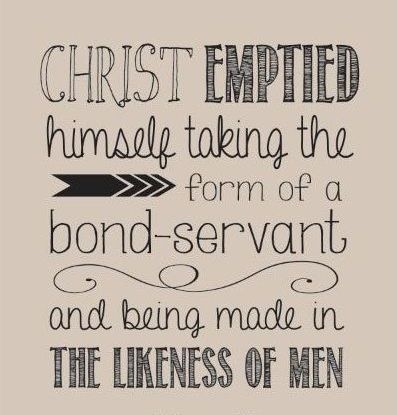
Not long ago someone asked me this question: “What did Jesus give up (empty himself of) when He came to earth as a man? Can you expound on this? christ-emptied-himself

While seeking to answer this question, it is recognized that we can only get a glimpse into a divine mystery which escapes our ability to fully comprehend. But we will seek to climb this spiritual Mt. Everest as far as our finite minds will allow us.

Paul writes in Philippians 2:5-11:  5Let this mind be in you which was also in Christ Jesus, 6 who, being in the form of God, did not consider it robbery to be equal with God, 7 but made Himself of no reputation, taking the form of a bondservant, and coming in the likeness of men. 8 And being found in appearance as a man, He humbled Himself and became obedient to the point of death, even the death of the cross. 9 Therefore God also has highly exalted Him and given Him the name which is above every name, 10 that at the name of Jesus every knee should bow, of those in heaven, and of those on earth, and of those under the earth, 11 and that every tongue should confess that Jesus Christ is Lord, to the glory of God the Father.

This passage speaks of the self-humiliation of Christ as He took upon Himself our likeness to come to earth to provide for us what we could not provide for ourselves. He left heaven’s glory to be clothed in human flesh to be our Savior. In Philippians 2:7, the phrase “made Himself of no reputation” in the Greek means “he emptied himself.” The question is: When he came to earth what did Christ empty himself of? The verse seems to indicate that Christ, who is the eternal Word (John 1:1-3), relinquished some aspects in the use of His divine power.

The question arises, if Christ gave up any of His divine attributes can His act on the cross be a saving act since only One who is the God-Man can save sinful man? The answer, Christ did not give-up any of His divine attributes on earth He only self-limited Himself in the use of them. While Christ didn’t relinquish His divinity, He limited Himself in the full use of the divine attributes He possessed. He “emptied” Himself of the full use of all His divine attributes and by His divine power self-limited Himself in their use in some instances.

It is only because Christ is God in the flesh, the eternal Word, that He can self-limit Himself in the full use of His Godness. More than an emptying or a loss of divinity, there was a choosing on Christ’s part, as the God-Man, a self-reduction or self-limiting of His full divinity while on earth. As an example, Jesus said to His disciples when speaking of when He would return, “But of that day and hour knows no man, no, not the angels which are in heaven, neither the Son, but the Father” (Mark 13:32). Jesus, though God in the flesh, relinquished and limited, while on earth, knowledge of the exact day and hour when He would return. While on earth Christ temporarily set aside His omniscience (ability to know everything), He didn’t actually empty himself of the attribute He just chose to self-limit His use of it.

As well, while on earth Christ, as a man, was limited in His ability to be at more than one place at one time. He limited His omnipresence (ability to be with everyone at the same time) which He had with the Father. As with His omniscience, while on earth Christ temporarily set aside His omnipresence, He didn’t actually empty himself of the attribute He just chose to self-limit His use of it.

Christ, while on earth, set aside the full use of His omnipotence in some instances in order to become a servant in our human likeness to dwell amongst us in order to provide salvation for us. He did not cease to be what He always had been but of certain attributes there was a self-limitation on His part in the use of them. One is truly omnipotent (all-powerful) when they can actually limit their omnipotence as Christ did!!

He who hung the stars in the sky, came to dwell in a lowly manger. He who created man became a man. He who created the earth came to walk on the earth. He who men bow to worship, stooped to wash His disciples feet. He who created the sun to shine, died in darkness that we could dwell in His light. He could never be the King of our eternal future if He was not King of the eternal past.

So my answer is that when Christ came to earth there was a self-limitation of His divine attributes rather than a self-emptying Himself of them. Because of His holy-love for humanity He limited Himself in the actual use of all His attributes though they remained in Him in potential, but not all were used in actuality. For in Christ dwelt all the fullness of the Godhead (Colossians 2:9); therefore, He was, by His power, actually able to self-limit Himself in the use of all His divine attributes. As the insightful theologian P.T. Forsyth wrote, “Christ’s emptying (self-limiting) of Himself is not regarded as the loss of true Godhead, but the condition of it. The freedom that limits itself to create freedom is true omnipotence, as the love that can humble itself to save is truly almighty.” In other words, God in Christ is truly powerful because He has the power to self-limit His power in order to act in the power of the cross and resurrection.

Having such a Savior resulted in Paul exclaiming, “At the name of Jesus every knee should bow, of those in heaven, and of those on earth, and of those under the earth, and that every tongue should confess that Jesus Christ is Lord, to the glory of God the Father” (Phil 2:10-11).

Blessings,

Dr. Dan

CHRISTIAN OBJECTIVISM

truthandliesA video that is circulating on the social media circuit is causing a stir in Christian circles. The video is of the wife of a well known televangelist (and I use the term “televangelist” loosely), tells those gathered in the Texas “mega-church” that one is to, and I quote, “do good for your own self” – for being obedient to God and worshiping Him are not for Him as much as for your own happiness.

When I heard her remarks on the video clip her words reminded me of the words of the atheist philosopher Ayn Rand (1905-1982). What does a Christian using words like “obedience,” “worship,” “God,” “church” have in common with an atheist? Stay with me and you be the judge of whether or not the mega-church starlet and atheist Rand subscribe to the same philosophy.

In the video, as the wife (and co-pastor) of the televangelist stands with her husband addressing the congregation, she says, “I just want to encourage every one of us to realize when we obey God, we’re not doing it for God—I mean, that’s one way to look at it—we’re doing it for ourselves, because God takes pleasure when we’re happy. That’s the thing that gives Him the greatest joy…So, I want you to know this morning: Just do good for your own self. Do good because God wants you to be happy. When you come to church, when you worship Him, you’re not doing it for God really. You’re doing it for yourself, because that’s what makes God happy. Amen?” (Click here to see the video).

Now let me get this straight, she is saying that the pursuit of the Christian life is to pursue your own happiness. When we go to church and “worship” we are doing it for ourselves not God. We are to do good for our own selves. What we do we are not doing it for God but we are doing it to make ourselves happy.

Please tell me where what she said is any different from the humanistic atheistic philosophy of Rand which is called Objectivism. In defining her philosophy of Objectivism Rand stated, “Man—every man—is an end in himself, not the means to the ends of others. He must exist for his own sake, neither sacrificing himself to others nor sacrificing others to himself. The pursuit of his own rational self-interest and of his own happiness is the highest moral purpose of his life.” Rand taught that one is to make choices on the basis of what makes one happy for everyone is entitled to their own happiness.

In Objectivism one’s love is not to be above self-interest, for man’s moral duty is not to sacrifice for others but for himself and his happiness. Man’s highest moral purpose is the achievement of his own happiness. Further quoting Rand “My philosophy, in essence, is the concept of man as a heroic being, with his own happiness as the moral purpose of his life, with productive achievement as his noblest activity, and reason as his only absolute “

Read that last quote of Rand carefully, as the only difference between her philosophy and that of the televangelist is you could substitute “God” in the place of “reason.” I call it “Christian Objectivism” as it focuses on the self-interest of man and his pursuit of his own happiness which is man’s highest moral purpose. Christian Objectivism is not about God and the Christ of the cross it is about the worship of my happiness. Is not that the lie the devil told Adam and Eve in the Garden of Eden, “It is not about God and your relationship and communion with Him,  it is about your self and your own happiness?”

Unfortunately the brand of “Christianity” being proclaimed by the Huston, Texas based “church” is humanistic to the core. It is a brand of Christianity that is not Christ-centered but man-centered. It is all about man’s happiness not God’s glory and the uplifting of the Christ of the Cross and the provision He has made for sinful humanity. Such Christianity is “me-centered” and exists for the sake of one’s self-interested happiness.  Making peace, contentment and happiness our existential pursuit is like trying to catch a butterfly, they are elusive. It is as we seek Jesus for who He is we discover in the process He is the source of that which our hearts long for. Christ is not to be proclaimed as One who is at our beckoning call for the purpose of our happiness, but we are to be at His beckoning call to be His faithful disciples in a world that is contrary to the Christian faith.

Christians must get away from a “me-centered” gospel and realize for the Church the Christ of the Cross is our only true magnetic North. When one substitutes as their guide a humanistic compass the needle will always point away from the atoning work of Christ and focus on man’s happiness not on man’s need for holiness that can only be found in the provision of the cross.

When Jesus issued the call to follow Him He pointed out there was a cross (Matthew 16) involved and that it was not about pursuing one’s self-interest, but it was about pursuing His interest in other people – and that interest was to proclaim His saving work on the cross which alone can forgive one of the blackness of their sin and deliver one from a lost eternity.

It is time the Church abandoned Christian Objectivism, a gospel of self-interest and me-ism, and returned to proclaiming the only hope for a sinful world – the finished work of God’s grace found in the Christ of the Cross who alone deserves all praise and glory.

Blessings,

Dr. Dan

A PERPLEXING QUESTION RECEIVES A PUZZLING ANSWER

An obscure book of the Bible sandwiched between the pages of the Old Testament which shouts insights for us of the twenty-first century is the Book of Habakkuk. The prophet Habakkuk, a contemporary of Jeremiah, asks a question that I am sure most Christians have asked at one time or another. Written around 612 B.C., the prophet, whose names means to “embrace,” looked around at the corrupt moral, social and spiritual conditions of the southern kingdom of Judah and asked, “How long Habakkuk15holy and righteous God will you let evil run rampant and not judge it? How long O Lord will you be silent in the face of rampant, unrestrained wickedness?” (1:1-4). After all, the prophet reasoned, if God is holy, how can He let sin continue unchecked like a polluted river that has spilled over its banks and is contaminating everything it washes over?

Habakkuk was perplexed, but the answer he received was even more puzzling. The Lord told the questioning prophet that the sins of Judah would not go unpunished. As matter of fact, the Lord told him He was not inactive against evil but was raising up a people called the Chaldeans (Babylonians) who were more wicked than those of Judah who would be used to punish them for their willful departure from their walk with Him and forsaking their spiritual heritage (1: 5-17)

The prophet scratches his head and incredulously asks, “You are gonna do what? Let me get this straight, you are going to use the wicked and cruel Babylonians who worship pagan gods and are more wicked and sinful than the people of Judah to bring judgment upon them?”

Waiting patiently for a clarification from God, Habakkuk is left alone with his thoughts (2:1-3). His being baffled is understandable, for the Babylonians slaughtered people without any remorse, plundered every city they invaded and left nothing but heartache and wreckage behind them. And God was going to use these evil people to bring judgment upon Judah! You got to be kidding? Surely, the prophet misunderstood.

At last the Lord communicates to Habakkuk these words,” No, you didn’t misunderstand me. I will use people more evil than those of Judah to bring judgment upon their sinful ways. However, the Babylonians will not escape judgment, as I will judge them as well. Just have faith and remain faithful, righteous justice will prevail.”

The prophet stands in awe at God’s power, holy-love,  majesty and His just dealings in the affairs of man. Instead of arguing with God, Habakkuk embraces Him in worship and begins to warn His fellow citizens of the coming judgment by a people more sinful and unrighteous than the inhabitants of Judah (Ch. 3). The majority laughed and mocked Habakkuk saying, “We are God’s people. He will not let those more sinful than us bring harm our way.” Very few believed the message of Habakkuk and continued on in their sin and their deliberate departure from God.

Too bad they didn’t listen and repent, for the time came when the words of Habakkuk and the active work of God came to pass. In time the Babylonians invaded the Southern Kingdom (605, 598, and 587), slaughtering people, looting, destroying and taking many citizens captive back to Babylon. Judah was left in flaming ruins.  As well, in 538 B.C. the Persians conquered the Babylonian Empire and they passed from the scene as a world power just as the Lord stated would happen (Daniel Ch. 5).  Events unfolded exactly as God said they would.

What relevance does the Book of Habakkuk have for us today? We find ourselves as a nation like Judah. We have forsaken the God of the Bible by continually stripping Him from the societal arena. We have defiantly abandoned principles of biblical morality and replaced them with “anything goes.” Those who embrace traditional marriage are mocked. Human dignity and worth is depreciated by abortion, debauchery goes unchecked, greed is rampant, injustice is widespread, perversion is celebrated, good is called evil and evil is called good, and ungodliness abounds.

How can a holy God, who opposes unrighteousness, seem to be silent in the face of such a cesspool of sin and defiance? Would He not be going against His own holy nature if correcting judgment doesn’t visit this nation? Let me offer some food for thought, we see being raised up in our very midst a group of people of the likes this world has never seen – ISIS –Islamic State of Iraq and Syria. They are demonic in their evil, ruthless, brutal, beheading individuals, slaughtering Christians by the thousands and all others who disagree with them. The world has never seen such evil like this that has not only vast financial backing but a fearless passion to conquer the world. They have stated they will not rest until they see the ISIS flag flying in Washington, D.C.

USA  leaders must  see ISIS as more than a regional problem and not be naive to dismiss that they will ever be a threat to the USA. However, they don’t appear to take the threats of ISIS seriously.  Just last week a US State Department spokesperson stated that the beheading of US citizen James Foley wasn’t about the US and ISIS isn’t Islamic. The State Department spokesperson stated that “this is not about the United States and what we do. This is about countries in the region coming together to fight a shared threat, and this is not about us. [ISIS] does not operate in the name of any religion. The president has been very clear about that, and the more we can underscore that, the better.”    It’s the blindness of Judah all over again.   Surely the Lord will not let a people as wicked, evil and demonic as ISIS bring harm to the USA for we are more righteous than they?  That was the thinking of Judah. Judah was wrong.

I wonder, have a people more unrighteous than the USA been raised up to bring correcting  judgment to a nation that has forsaken the spiritual foundation of our Founding Fathers? Like those in the days of Habakkuk we can laugh at and mock such a notion, or we can cry out to God in repentance and pray that God will have mercy upon us.

ISIS has one goal, which is to conquer the world and destroy the USA. It is time we fell to our knees in repentant prayer that this evil cancer of ISIS, with God’s help, be eradicated – if not we are going to be knocked to our knees in devastation.

The message of Habakkuk is clear: those who don’t learn from the past failures of other nations who have forsaken God are destined to experience His correcting hand. If we don’t believe it, just ask Habakkuk and Judah.

Blessings,

Dr. Dan

WHAT I LEARNED FROM A PICKLE JAR FALLING ON MY BIG TOE

Last Friday afternoon I walked toward the refrigerator to retrieve some fruit that lay within in hopes of having an afternoon snack. As I opened the refridge door I saw the delicious looking peaches I wanted sitting on the top shelf, partially hidden behind a full 48 ounce glass jar of hamburger pickles which was sitting on the edge of the shelf. Reaching behind the jar of pickles, I grabbed one of the peaches in hopes of enjoying the tasty treat. As I pulled the peach over the top of the pickle jar I must have hit it for it fell off the shelf and all 48 ounces of thPICKLESe full glass jar came crashing down on my big toe!! And you might know it, I was barefooted.

As the force of the heavy jar hit my exposed big toe I, without a telescope, saw every star in the solar system…and a few planets as well!! I let out a blood-curdling scream that would have frightened away Frankenstein. I cannot describe the pain I felt pulsate through my body. I may have and  have just forgotten, but I can’t ever remember in my 62 years anything hurting that bad. I was in excruciating pain to such an extent I grew sick on my stomach. I knew I had broken my big toe. My wife hearing my horrifying scream, hurried to where I was and asked, “Are you hurt?” I don’t know, but I thought my screams of death, my contorted face of agony, both hands wrapped around my big toe, a peach rolling across the floor and a 48 ounce jar of pickles laying beside my crumpled pain-riddled body made the question totally unnecessary!

I told her I thought I had broken my big toe. She offered to take me to the ER, but I was in too much pain and agony to go to the hospital! “Just get me a glass of water, two Advil and an ice pack,” I gasped between grunts and groans of pain. As she quickly responded to my request, she said, “Aren’t you being a little dramatic.” If I hadn’t remembered through the slowly subsiding pain that the penalty for strangulation was jail time, I would have responded in a most negative way!! I assured her what looked like an academy award winning performance was the result of pain and not an attempt to win an Oscar.

As I put the ice pack on my throbbing big toe the stars in the solar system begin to fade and the world around me came back into focus. My fear was that it was broken and I would not be able to run for awhile, which is my time of escape from planet earth. Time would tell.

The ice numbed the throbbing and the Advil begin to dull the pain, but my toe began to turn the multi-colors of the rainbow. To make a long story short, I never went to the ER and I didn’t break my big toe. Fortunately, the edge of the jar hit just above the toe joint, not on the joint, or it would have broken it. Thankfully, though the toe was sore and a little swollen, I was able to run the next morning.

And by the way, I never did get to eat that peach!

After my big toe began to return to some semblance of normalcy, I thought about what I had learned from the unsettling episode. Let me share with you some lessons I learned.

First, I learned if a pickle jar I had fallen on the big toes of Adam and Eve when they plucked the Forbidden Fruit from the tree of the Knowledge of Good and Evil in the Garden of Eden, they never would have eaten it and we wouldn’t be in the mess we are in today! But they did partake of the Forbidden Fruit, and in so doing  introduced sin into the world. Ever since that day man has sought a remedy for the sin problem. Our search comes to an end on a hill call Mount Calvary. The answer to our sin problem is found in God’s provision of the Christ of the Cross (I John 2:1-2).

Second, I learned things aren’t always as bad as they seem. I thought the worst, that my toe was broken, but it was not. Life is not always as bad as it seems, it could always be worse. Too often we think the worst. Mark Twain once said, “Ninety percent of what I worried about never came to pass.”

Third, I learned “this too shall pass.” While the pain that went through my body when that pickle jar landed on my big toe was excruciating, it eventually subsided. There are many kinds of pain we experience in this life: physically, emotionally and mentally. While for a time it may seem unbearable, it will eventually pass. Paul wrote, “For I consider that the sufferings of this present time are not worthy to be compared with the glory which shall be revealed in us” (Romans 8:18).

Fourth, I learned the next time I want a peach,  move the pickle jar first. What “pickle jar” is in the way of receiving the “sweet peaches” the Lord has for us. Our “pickle jar” could be bitterness, a lustful heart, negative spirit, clinging to a secret sin, a prayerless life, etc. We somehow think we can have the “sweet peaches” that the Lord has for us without removing the “pickle jar.” It will not happen.

Fifth, I learned that if I see someone laying in the floor screaming loud enough to raise Lazarus from the dead, holding their toe with both hands, a pickle jar laying beside them and a peach rolling across the floor, not to ask them, “Are you hurt!?’ We can safely assume there are hurting people lying all around us. Let us each day seek by our words and actions to help make their plight a little less painful.

Sixth, I learned that the next time I go to the refrigerator it will not be barefooted, but with steel-toed shoes on!!

Blessings,

Dr. Dan