TIMELESS TRUTHS FOR TURBULENT TIMES

When in seminary, over three decades ago, I took a course on the book of Philippians. One of the requirements of the course is we had to memorize the whole book. That was quite a task, but by reading the four-chapter book at least three times a day and listening to it being read on a cassette tape at least twice a day, I was able to commit it to memory. While I had the book in my mind, I have prayed through the years the many profound truths found within Paul’s marvelous epistle would become internalized. It is a book we should turn to time and time again when faced with issues, circumstances and obstacles that seek to defeat us, drag us down or destroy us. Found within the pages of Philippians, the Apostle seeks to combine the practical with the theological.

As much of America is under “stay at home” orders, Philippians becomes a book that contains many relevant truths which are worth revisiting. Being confined at home, many are searching for ways to cope. Well, Paul being confined in a Roman prison he was definitely under “stay at home” orders. What is so amazing, one of the key words in Philippians is the word “joy,” found some seventeen times. What truths can we glean from Paul’s marvelous epistle that will help us to have joy even in the midst of our confinement?

First, Rely on Prayer to the Lord. One truth which is paramount throughout Philippians is Paul’s emphasis on prayer, constant communication with the Lord. Prayer is talking to God, being on unbroken speaking terms with Him. Prayer recognizes our dependence on the Lord in every situation life brings our way. Paul exhorts us to pray about everything, good or bad (4:7). Philippians encourages us to pray with thanksgiving for others (1:3-11), to be like Christ (2:1-8), for the sick (2:26-30), for spread of the Gospel (3:1-14), for those who labor in the Gospel fields (4:3), and in all things (4:6). One truth I have learned over the years, you cannot carry on a conversation with the Lord and have a “woe is me” attitude very long. When we talk with the Lord the focus is off of ourselves unto the One who is our help in strength in times of “confinement.”

Second, Rest in the Peace of the Lord. Paul writes, “And the peace of God, which passeth all understanding, shall keep your hearts and minds through Christ Jesus” (4:7). Paul writes this after talking about praying about all things. Peace flows from prayer.  What a truth to rest in when fear and confusion seek to “break out” within us, divine peace stands guard over our hearts and minds to keep the “break out” from overtaking us. The word translated “keep” is the Greek word φρουρησει (phroureo froo-reh’-o),  a military term picturing soldiers standing on guard duty, the word also referred to the guarding of the city gate from within as a control on all who went out. His peace “passes all understanding.” The word “passes” refers “to that which is superior, surpasses and rises above” fear and confusion. The peace that is superior to fear and confusion is not found within ourselves but found by resting in Jesus Christ.

Third, Rejoice in our Position in the Lord. One of Paul’s favorite phrase found in all his epistles, and found multiple times in Philippians, is “in Christ” (εν χριστω, en Christo) (1:13, 26; 2:1, 5; 3:1; 4:4. 4:21). The little Greek word εν (en) is a primary preposition denoting a fixed position in place and time. What did Paul mean by “in Christ” or “in the Lord”? Being “in Christ” means we have an abiding relationship (a fixed position) with Christ that is not subject to time, place or circumstances. Paul says rejoice in that eternal truth (4:4). No matter what we are going through or what circumstances seem to confine us, our relationship with Christ is a fixed position not affected by time, place or circumstances. Our relationship in Christ transcends any earthly relationship or any adversity that may come our way. What a glorious truth to know and rejoice in!

Fourth, Realize the Power of the Lord. Paul writes, “I can do all things through Christ which strengthens me” (4:13). The Greek word  translated “strengthen” (ενδυναμουντι -endunamounti) means “to empower, to give strength to, to infuse strength into someone.” The power which enabled Paul to face “all things” was not strength found in himself, but it was found outside himself, infused in him by Jesus Christ. The Greek literally reads, “I have the strength to prevail over all things because of the power that has been infused into me which comes from Christ.” We, as well, need to realize whatever we face in life, we possess a strength to triumph because of a power that has been infused into us by Jesus Christ. What a wondrous truth!!

Fifth, Recognize our Plenty in the Lord. Paul writes, “My God shall supply all your need according to His riches in glory by Christ Jesus” (4:19). This verse speaks of the plenteous supply found in Christ to meet our needs. “Shall supply… according to His riches in glory” (4:19). The word “supply” is the Greek word pleroo, which means to fulfill or to make full. If we have any legitimate need in our lives, God has promised to supply that need. How does He supply it? By His riches in glory. The word “riches” is the Greek word ploutos, which describes immense wealth or riches beyond imagination. It is from where we get our word plutocrat, which describes a person who possesses riches so vast that they are immeasurable. God knows no lack and has a plenteous supply to meet our every need. What a glorious truth to recognize when we lift our petitions to the Lord.

Sixth, Recall the Promise of the Lord. One hope the Christian has is the promise of His return. In 1:10 Paul speaks of the “day of the Lord” and in 4:5 he says “the Lord is at hand (near).” It doesn’t take a rocket scientist to see we are living in perilous times, the kind of times the Bible teaches will be manifested in the days before Christ’s return. Paul calls this hope, this promise, “our blessed hope and His glorious appearing” (Titus 2:13). It is this “blessed hope” that bolsters our spirits and instills within us an eternal hope when evil, the oppression of that which is righteous and good, and times of confusion and chaos unfold around us. During such times, let us not resign to dejection, but recall the promise of Christ that such times only indicate that His coming again is near. Hallelujah, what hope we possess!

As can be seen, Philippians is a most relevant book for our current hour which is filled with timeless truths for turbulent times….truths not only relevant through this pandemic, but in all of life’s situations and circumstances. Knowing Christ infuses us with a joy that is not dependent upon right circumstance, but is anchored in the One who defeated death, hell and the devil, and who triumphantly says to us, “In the world ye shall have tribulation: but be of good cheer; I have overcome the world” (John 16:33). And in Him we will, too!

O, what a Savior!

Blessings,
Dr. Dan

SHOULD A CHRISTIAN COUPLE OBTAIN A MARRIAGE LICENSE?

We are living in a society where the government has redefined the traditional (biblical) definition of marriage – that being only between a man and a woman. As a result of the pandemic a question has emerged from the thinking of many Christians which has been waiting for the right occasion to be verbalized. Since in many states county clerk offices have been closed, which prevents couples who desire to be married from obtaining a marriage license, coupled with the government’s ever weakening definition of what constitutes a legal marriage, the question being posed concerns whether or not it is really necessary for a Christian couple to obtain a marriage license from the state? Seeing that marriage in essence is a covenant between the couple and God, is it important or even  necessary for a Christian couple to obtain a marriage license to have their marriage affirmed by the state?

In seeking to address this issue, it would prove beneficial to examine it from four perspectives: theological, historical, practical, and rational.

Theological
When was the first marriage? The first wedding is found in Genesis when God, who was not only the best Man who presented Eve to Adam, He presided over the first ceremony. Being pronounced man and wife, our first parents became one flesh. Marriage is presented as a relationship ordained by God, not a relationship instituted by man. The Bible declares marriage to be honorable among all relationships and since “God is the founder of marriage,” as John Calvin states, it is a holy covenant.
The word “covenant” is a word that is interwoven throughout the Bible. “Covenant” (Heb. berith) appears 286 times in the OT and 24 times in the NT (Gk. diatheke). The origin of the OT word “covenant” has been debated by scholars. Some contend it comes from a custom of eating together, while others have stressed the meaning has reference to the cutting or dividing of animals into two parts, and the contracting parties passing between them in making a covenant. The generally accepted meaning of the word indicates a bond or a binding, referring to two or more parties bound together. Covenant is used frequently to describe the divine-human relationship between Yahweh and Israel and God and His chosen people. Throughout the OT, Yahweh’s unique covenantal relationship with Israel is used as analogous to the special relationship that is to exist between husband and wife.

The corresponding word in the New Testament the Greek word διαθήκη (diatheke). Generally rendered “testament” in the Authorized Version, it has the same meaning as the word berith of the Old Testament, “covenant.”

Solomon and Malachi both state marriage is a “covenant” (Proverbs 2:17; Malachi 2:13-16), and is superior to all other human covenants or contracts. Marriage is a covenant because (1) it is ordained by God, and (2) it requires a mutual pledge from both the man and the woman in the presence of God. Malachi states that God is a “witness” when a man and woman enter into a marriage covenant and God expects the couple to honor the covenant between each other and the Lord. Malachi writes:
You cover the Lord’s altar with tears, with weeping and groaning because he no longer regards the offering and accepts it with favor at your hand. You ask, “Why does he not?” Because the Lord was witness to the covenant between you and the wife of your youth, to whom you have been faithless, though she is your companion and your wife by covenant. Has not the one God made and sustained for us the spirit of life? And what does he desire? Godly offspring. So take heed to yourselves, and let none be faithless to the wife of his youth. “For I hate divorce, says the Lord the God of Israel, and covering one’s garments with violence, says the Lord, the God of hosts. So take heed to yourselves and do not be faithless” (Mal. 2:13-16).

In the NT Jesus confirmed that marriage is a holy covenant relationship between a man and a woman. The Master stated, “Have you not read that He who created them from the beginning made them male and female, and said, ‘for this reason a man shall leave his father and mother and be joined to his wife, and the two shall become one flesh’? So they are no longer two, but one flesh. What therefore God has joined together, let no man separate” (Matthew 19:4-6).

Paul in describing the relationship between Christ and His Bride, paints the ideal picture of how the bond of marriage should be. He writes: “Husbands, love your wives, even as Christ also loved the church, and gave himself for it; That he might sanctify and cleanse it with the washing of water by the word, That he might present it to himself a glorious church, not having spot, or wrinkle, or any such thing; but that it should be holy and without blemish. So ought men to love their wives as their own bodies. He that loveth his wife loveth himself. For no man ever yet hated his own flesh; but nourisheth and cherisheth it, even as the Lord the church: For we are members of his body, of his flesh, and of his bones” (Eph. 5:25-31).

It is abundantly clear from Scripture, God created marriage and it is a holy covenant designed between a man and a woman. Any “partnering” other than the uniting of a man or woman is a perversion of God’s original design. A scriptural marriage is a covenant made by a man and a woman before God, a permanent commitment being vowed. Since God ordained marriage, it is much more than just a cultural idea. Since marriage was instituted by God and established apart from any governmental or state entity, there are those who say since God is the one who binds a man and woman together, and not the state, there is no reason that a state issued marriage license or state affirmation is necessary.

While Scripture is clear marriage was ordained by God, and marriage existed even before “governmental entities,” they, too, were ordained by God. But historically have societal entities generally sought to affirm marriages? A look at marriage from a historical perspective will prove beneficial in answering our original question, is it important or even necessary for a Christian couple to obtain a marriage license to have their marriage affirmed by the state?

Historical
Historically, practically every culture has had an event, action, covenant, or proclamation that has been recognized as affirming a couple as married. Yes, marriage is a covenant before God between a man and a woman, but through history marriage has also been a public declaration to society that a new relationship has been established. American jurist Joseph Story once wrote: “Marriage is treated by all civilized societies as a peculiar and favored contract. It is in its origin a contract of natural law. … [Marriage] is the parent, and not the child of society; the source of civility and a sort of seminary of the republic. In civil society it becomes a civil contract, regulated and prescribed by law, and endowed with civil consequences. In most civilized countries, acting under a sense of the force of sacred obligations, it has had the sanctions of religion superadded. It then becomes a religious, as well as a natural and civil contract; . . . it is a great mistake to suppose that because it is the one, therefore it may not be the other.” (Joseph Story, Commentaries on the Conflict of Laws, Foreign and Domestic, in regard to Contracts, Rights sand Remedies 100, at § 108 (1834)).

Historically, Jewish and Christian tradition have viewed the covenant of marriage as an integral part of the mosaic of society. The entering into the covenant relationship of marriage has historically been viewed by society as the positive intertwining of the commitment between a man a woman within social and community life. While marriage is a personal commitment before God, in Jewish and Christian tradition marriage has been both private and public, personally celebratory and community celebrated, and temporal and transcendent in quality.

Even going back to the time of Abraham, we find an agreement between families as a testimony to the particulars of the marriage. When Isaac married Rebekah, Abraham’s servant, Eliezer, presented a dowry, which was integral in the recognition of the marriage as being formally established in community life (Gen. 24:1-67). When Boaz desired to marry Ruth (Ruth 4), he publicly assembled ten elders of the city to declare his intentions. While Boaz didn’t obtain a marriage license from the elders, he sealed his intentions to marry Ruth by publicly taking off his sandal! (Ruth 4:9) When one reads the Song of Solomon, one can’t help but notice the interactions between the bride, groom, and the community. Joseph and Mary registered as a couple in their participation in the mandatory census, and in so doing they submitted themselves to the legal authorities and the community at large.

From Deuteronomy 24:1-4 we find Jewish law requiring a certificate of divorce to dissolve a marriage. The very fact that it was necessary to provide a certificate of divorce, indicates that marriage was a relationship under Jewish law which was more than a private matter but also had public ramifications.

Even before the time of Christ, Jewish Rabbis created the ketubah, or a marriage contract. The ketubah, derived from the Aramaic and Hebrew root “katav,” means “to write.” According to the Babylonian Talmud, the ketubah was enacted “in which the husband and the wife spelled out the terms and conditions of their relationship before, during, and after the marriage, and the rights and duties of husband, wife, and child in the event of marital dissolution or death of one of the parties” (Maurice Lamm, The Jewish Way in Love and Marriage, (New York: Jonathan David Co., 2008), 197-206). In a male oriented society, the ketubah was viewed as essential in the protection of wives and children in the event of divorce or death. While it is God who binds the man and woman together, the Rabbis contended that a ketubah was necessary for the integrity of the marriage. To not have a ketubah was the same as the woman being a concubine, as the difference between a wife a concubine is that the wife had a ketubah and a concubine did not. The rabbis considered not having a ketubah placed the woman at an unfair disadvantage, and put the woman on the level of a concubine. Though the terms of the ketubah were often privately contracted between the man and the woman and the two families, both families and the rabbinic authorities were usually actively involved in the creation of the contract and in the execution of the terms. The ketubah revealed that while marriage was a private affair it also had, as well, societal consequences which needed to be addressed before tying of the knot.  Again, not having a ketubah even reflected on how the woman was perceived in society, as a concubine and not a wife. According to Maurice Lamm, the Jewish rabbis thought the ketubah of such importance that “when the Jews of France were robbed of all their possessions and expelled by Philip the Fair in 1306, they moved en masse to Provence. Rashba, who was one of the most brilliant Talmudists of medieval Spain, ordered that no married life be resumed there until every man give his wife a replacement ketubah.” (Lamm, Love and Marriage, 197-206)

In John 2, Jesus’ first miracle was performed at a wedding in Cana. It is of significant interest that Jesus chose his attendance at a wedding to perform his first miracle. His attendance at the wedding celebration in Cana, where no doubt a ketubah had been agreed upon beforehand, indicates He approved of what was transpiring. Jesus’ presence at the wedding indicates His affirming of the wedding ceremony and its impact on community life.

Until the Middle Ages marriages, though they had communal ramifications, were usually private contracts between two families and the individuals involved. Beginning in the Middle Ages churches began keeping records of who was married to whom. Marriage licenses began to be issued during this period, for the purpose of permitting a marriage which would otherwise be deemed illegal.

During the Reformation, Martin Luther sought to turn over the recording of marriages to the state instead of the church. John Calvin, who has had much influence on Western thought, believed that for a marriage to be valid it needed to be both recorded by the state and officiated by the church. Calvin taught that God participates in the formation of the covenant of marriage through his chosen agents on earth. Calvin saw marriage as having four prongs. (1) The couple’s parents who instructed the young couple in the morals of Christian marriage and give their consent to the union; (2) at least two witnesses who testify to the sincerity and solemnity of the couple’s promises and attest to the marriage event; (3) the minister, holding “God’s spiritual power of the Word,” blesses the union and admonishes the couple and the community of their respective biblical duties and rights; and (4) the magistrate, holding “God’s temporal power of the sword,” registers the parties, ensures the legality of their union, and protects them in their conjoined persons and properties. This involvement of parents, witnesses, ministers, and magistrates in the formation of marriage was not an idle or dispensable ceremony. These four parties represented different dimensions of God’s involvement in the marriage covenant, and they were thus essential to the legitimacy of the marriage itself. To omit any of the four parties in the formation of the marriage, Calvin taught, was to omit God from the marriage covenant. For Calvin marriage was both a religious union as well as legal union (Herman J. Selderhuis, ed., The Calvin Handbook, (Grand Rapids, MI: Wm. B. Eerdmans Publishing Co., 2009), 455-465).

Calvin’s influence on theology, law and ethics cannot be denied upon the New World. Marriage licenses began being required in Massachusetts in 1639 and gradually expanded across colonial America. By the 19th century marriage licenses were available in most every state for couples to obtain. (Loretto Dennis Szucs and Sandra Hargreaves Luebking, The Source: A Guidebook to American Genealogy, (Provo, UT: Ancestry, 2006), 87-103).

Having briefly examined historically Jewish and Christian marriage traditions in regard to the intertwining of the civil and religious, it has been seen that cultures have through the centuries sanctioned events, contracts, covenants, declarations and licenses that affirm that a man and woman are married. Historically speaking, marriage has not been just a private and personal covenant, but has always been at least a three-prong covenant between God, the couple and the community. As has been seen, there is clearly a communal aspect to genuine marriage. While a marriage is foremost a vow before God, He has used these various public actions as a binding declaration or document made between a man and a woman that a new relationship has begun and is an integral part of community of life. One could surmise from Jewish and Christian traditions that marriage is necessarily both a spiritual and societal declaration, and in some way be affirmed by both for the marriage to be considered “legal.”

Having examined the historical aspect of marriage, a look at the practical needs to be considered.

Practical
While marriage is ordained by God and is a covenant between a man and a woman before God who unites the couple, the Bible teaches that governmental authorities are also ordained by God (Romans 13:1-2), and Christians should respect and be submissive in matters of the state, unless it violates the teaching of Scripture.

It is contended there are practical reasons for a Christian couple to obtain a state issued marriage license. Like the Jewish ketubah, a marriage license ensures protection for the couple and the assurance of benefits that are not available to those who are not “legally” married in the eyes of the state. Some of the practical benefits and protections are: Joint parental rights of children, Joint adoption, Status as “next of kin” for hospital and medical decisions, Right to make decisions about the disposal of loved one’s remains, Immigration and residence for partners from other countries, Crime victims recovery benefits, Domestic violence protection orders, Judicial protections and immunity, Automatic inheritance in the absence of a will, Public safety officers death benefits, Spousal veteran’s benefits, Social Security, Medicare, Joint filing of tax returns, Wrongful death benefits for surviving partner and children, Bereavement or sick leave to care for partner and children, Child support, Joint insurance plans, Tax credits including child tax credit, Deferred compensation for pensions and IRA’s, Estate and gift tax benefits, Welfare and public assistance, Joint housing for the elderly, Credit protection, Medical care for survivors and dependents of certain veterans, and there are many more such benefits and protections afforded to those married.

A couple who foregoes obtaining a marriage license may not “feel” any less married than someone who has a marriage license, but it will not meet governmental legal requirements as a state affirmed  marriage union. Some would consider such a decision to forego obtaining a license as without adequate rationale.

Rationally examining such a decision is not without merit.

Rational
Questions deserving honest answers are:
As long as the state does not blatantly violate God’s Scriptural tenants, is there good rationale for not obtaining a marriage license?
Can one be a good witness to the lost if one’s marriage union does not meet the legal requirements of the state?
Can one meet the standard of “living above reproach” if one neglects the legal requirements as to what constitutes a legal marriage?
If one doesn’t obtain a marriage license because one may be penalized financially, is that not showing a lack of trust in God to provide for one’s needs?
If one decides to live together without meeting the legal requirements of the land, will the world scoff at one being hypocritical?
If one decides to live without benefit of a marriage license, is that the kind of decision one would like their children to someday make?
If one foregoes obtaining a marriage license, will that make it easier for one of the parties to walk away when tough times come (and they will), since they are not “legally married? There is no doubt many marriages which have been saved as the “marriage license” held the couple together as they worked through the tough situation.
Is there good reason to not obtain a marriage license when the state has not taken specific measures to violate the law of God in regard to the union between a man and a woman?

These are just a few questions that those contemplating forgoing a marriage license should rationally and honestly think through.

However, there is a possible exception that needs to be very prayerfully considered before taking action. What if because of circumstances like the current pandemic, state offices are closed making it impossible to obtain a marriage license? There are two options: (1) The couple can wait until offices open again, whereby they can obtain one. For this writer that would be the preferred option. (2) The couple must prayerfully decide with a preacher who agrees to perform the ceremony, to go ahead and vow before a holy God their covenant of love, with the promise to obtain a marriage license as soon as possible, thereby in a celebratory ceremony affirming the final step in the three-prong covenant: the couple, God, and community (state). This is not the ideal option, and all avenues to obtain a license should be exhausted before proceeding. As well, not all pastors would agree to officiate a service without a license.  But this option is permissible under the law of liberty as Paul discusses in Romans 14 and I Corinthians 8 & 10.

Conclusion
Having looked at marriage from a theological, historical, practical, and rational perspective, is there an answer to our original question: Seeing that marriage in essence is a covenant between the couple and God, is it important or even necessary for a Christian couple to obtain a marriage license to have their marriage affirmed by the state?

On the strictest level, obtaining a state approved marriage license doesn’t mean a man and a woman who have sincerely vowed before God to covenant together in marriage, are any less married in the eyes of God because they didn’t obtain a “sheet of paper.” While there is no verse in the Bible that says one is not married in God’s eyes unless they have a license from governmental authorities; however, it has been seen theologically and historically that marriage is more than a private and personal covenant, but is clearly communal in nature and is an integral part of societal and community life. Marriage is not a purely private affair. Marriage has always been at least a three-prong covenant between God, the couple, and the community. The marriage license doesn’t determine whether the marriage is “legal” or not in the sight of God, but it affirms the marriage in the eyes of society.

Yes, marriage was/is ordained by God, and was the first institution established, but government entities have also been ordained by God. While it is admitted that our governmental laws are always in flux and the marriage relationship has been expanded by law to include relationships other than that which is between a man and a woman, unless our governmental laws specifically violate God’s laws in regard to the union of a man and a woman and it becomes impossible to no longer comply, a couple would not be wrong in obtaining a state affirming  license. For a couple to be “legally” married in the eyes of the state carries with it benefits and protections of the marriage covenant. Other than the possible exception stated above, unless the laws of the land specifically lead a couple to violate their obedience to the Word of God, believers should be encouraged to marry in accordance with the regulations and requirements of governmental authorities.

While technically a couple’s vows don’t need approval from the state to be married in God’s eyes, affirmation by the state is both encouraged in order to be a good witness for Christ and is advantageous for the protection of the marriage. It behooves Christian couples not to isolate themselves, but be before society the communal example which reflects the loving relationship of Jesus Christ for His Bride, the Church.

Blessings,
Dr. Dan.
BIBLICAL PRINCIPLES FOR MAKING DECISIONS WHEN THERE IS NO CLEAR-CUT ANSWER

Terrot R. Glover (1869-1943), former professor of classical literature at Cambridge University, once wrote, “Whatsoever thy hand findeth to do, do it with thy might—but remember that someone thinks differently.” In summary, that is what Paul is saying in Romans 14. In the church at Rome there was great diversity. There were Jews who had embraced Christ’s wonderous grace, and realizing that the Mosaic Law was no longer binding they no longer observed certain holy days and food restrictions. However, there were Jews who had also been saved who continued to observe special days and follow certain dietary laws. Then you had Gentiles in the church who had been saved out of idol worship, and realizing that an idol was no god had no problem eating a porter-house steak that had been offered to an idol. There were other Gentiles who had been saved, but because the meat at the local supermarket had been offered to an idol would not eat it. While Paul writes to help both groups understand and be in unity with one another, his comments are addressed more toward the mature believers exhorting them to be patient and understanding with Christians who thought differently and continued to hold to various holy days and food restrictions.

The instructions Paul wrote to his Roman readers gives us guidelines and principles for many choices Christians must make in matters regarding Christian liberty, questionable matters and problematic issues that the Scripture doesn’t specifically address. There are times we are confronted with decisions in our Christin life where there is not a clear-cut answer; so how do we make a decision that will honor the Lord? There are times we are confronted with decisions that leave us scratching our heads. What are we to do? There are principles found within Romans 14 that will guide us in making a decision that will honor the Lord. The principles of Romans 14 are applicable to all similar cases of difference of opinion or circumstances concerning what is right and the proper decision we should follow with a clear conscience and, again, honor the Lord.

The insightful writer G.K. Chesterton wrote, “We have found all the questions that can be found. It is time we stopped looking for questions and started looking for answers.” Found in Romans 14 are seven principles of conduct for Christians to consider when wrestling and praying for answers regarding questionable and problematic matters.

First, am I fully persuaded in my heart the decision I am making is right. Paul writes, “Receive one who is weak in the faith, but not to disputes over doubtful things. 2 For one believes he may eat all things, but he who is weak eats only vegetables. 3 Let not him who eats despise him who does not eat, and let not him who does not eat judge him who eats; for God has received him. 4 Who are you to judge another’s servant? To his own master he stands or falls. Indeed, he will be made to stand, for God is able to make him stand 5 One person esteems one day above another; another esteems every day alike. Let each be fully convinced in his own mind” (Romans 14:1-5).

When praying over a matter which we are wrestling to make a decision, Paul gives us two laws to consider the (1) the law of liberty and (2) the law of leniency. Regarding the law of liberty, is there any direct scriptural command or prohibition against what I am praying about? If there is, then that ends the discussion. However, if it is allowable within the law of liberty, while it is permissible doesn’t mean it is always a wise course of action to take. The law of leniency also needs to be considered. Will our decision cause division and disputing among other believers or the church; if so, then the law of leniency would prohibit from taking the course of action under consideration. It may be allowable under Christian liberty, but not wise if it will create confusion in an individual’s soul or corporately in the Body. If we are not fully persuaded in our heart we have made the right decision, then we don’t proceed.

Second, can I give thanks to the Lord for the decision I am making. Paul wrote, “He who observes the day, observes it to the Lord; and he who does not observe the day, to the Lord he does not observe it. He who eats, eats to the Lord, for he gives God thanks; and he who does not eat, to the Lord he does not eat, and gives God thanks” (Romans 14:6).

While Christian liberty may lead two individuals to make different decisions in questionable matters, Paul says the key is can we give genuine thanks to the Lord for the decision we have made. If we can’t give thanks to the Lord that our decision will honor Him and lift up His holy name, then it is not the path we should take.

Third, can I maintain a good testimony for Christ in my decision. Paul writes, “For none of us lives to himself, and no one dies to himself. 8 For if we live, we live to the Lord; and if we die, we die to the Lord. Therefore, whether we live or die, we are the Lord’s. 9 For to this end Christ died and rose and lived again, that He might be Lord of both the dead and the living” (Romans 14:7-9).

As Christians we cannot live our lives apart from Christ’s Lordship, neither do we live on an island, we live before others. As we consider a decision in a questionable or problematic matter, it may be allowable within our Christian liberty but will it enhance or diminish our testimony of his Lordship in our lives? Will the decision we make damage our testimony and influence before others? If there is an inner check in our spirit that the action may damage our testimony of His Lordship, then we should not engage in the activity or action.

Fourth, will my decision stand the test at the Judgment Seat of Christ. Paul writes, “But why do you judge your brother? Or why do you show contempt for your brother? For we shall all stand before the judgment seat of Christ. 11 For it is written: ‘As I live, says the Lord, Every knee shall bow to Me, And every tongue shall confess to God.’ 12 So then each of us shall give account of himself to God” (Romans 14:10-12).

As Christians someday we will have to stand before the Bema Seat of Christ to give an account of the Christian life we have lived and the decisions we have made. Is the decision we are about to make one we can stand before Him with confidence? John said, “Let us abide in Him that when he appears, we will not be ashamed before Him at His coming” (I Jh 2:28). If we are not confident our decision will stand the test of his penetrating eyes at the Judgment Seat, then it is a decision we should avoid.

Fifth, will my decision cause my brother to stumble. Paul writes, “Therefore let us not judge one another anymore, but rather resolve this, not to put a stumbling block or a cause to fall in our brother’s way. 14 I know and am convinced by the Lord Jesus that there is nothing unclean of itself; but to him who considers anything to be unclean, to him it is unclean. 15 Yet if your brother is grieved because of your food, you are no longer walking in love. Do not destroy with your food the one for whom Christ died. 16 Therefore do not let your good be spoken of as evil; 17 for the kingdom of God is not eating and drinking, but righteousness and peace and joy in the Holy Spirit. 18 For he who serves Christ in these things is acceptable to God and approved by men. 19 Therefore let us pursue the things which make for peace and the things by which one may edify another. 20 Do not destroy the work of God for the sake of food. All things indeed are pure, but it is evil for the man who eats with offense. 21 It is good neither to eat meat nor drink wine nor do anything by which your brother stumbles or is offended or is made weak” (Romans 14:13-21).

Paul is clear, his Christian liberty allowed him to eat meat that had been offered to idols since the idol is a meaningless image, but he says if my decision will cause my brother to stumble I will bypass eating the steak. Paul exhorts that more important than being right is walking in love (v. 15) and living righteously before the Lord and others (v. 17). “Let us pursue the things which make for peace and the things by which one may edify another” (v. 19). While decisions we are about to make may be allowable in our Christian liberty, will it cause our brother to stumble; if so, then it is a decision we need to steer away from making. For “it is good neither to eat meat nor drink wine nor do anything by which your brother stumbles or is offended or is made weak” (v. 21).

Sixth, does my conscience condemn me. Paul writes, “Do you have faith? Have it to yourself before God. Happy is he who does not condemn himself in what he approves” (Romans 14:22).

Augustus Strong called the conscience, “The echo of God’s voice.” If there is no peace in our conscience and we don’t hear his “still small voice” of assurance, then it is a decision we need to put on hold until we sense a clear conscience. If we are restless on the inside and no settled conviction, then that is clear indication that it is a path we should not take. There is nothing worse than going against one’s conscience and later look back and regret the action taken.

A renown nineteenth century British writer early in his career was praying about some tough decisions, when he received a letter from his mother who wrote to her son: “Let us not be careful what the world thinks of us, if we can say with good conscience with [Augustus] Toplady, ‘Care not, myself a dying man, of dying men’s esteem; Happy, oh Lord, if Thou approve, though all beside condemn.’ Be of good courage my dear son, and seek God for your guide.” [1] That is still excellent advice!

Seventh, if in doubt don’t do it. Paul writers, “But he who doubts is condemned if he eats, because he does not eat from faith; for whatever is not from faith is sin” (Romans 14:23).

The verse is clear, if there is any doubt in our mind about the decision before us, then we don’t act. If we can’t give our full heart to what we are considering, then we don’t embark upon that path. Vernon McGee writes, “You are to believe in what you are doing. If you don’t believe in it, you should not be doing it. Here is a new definition of sin for the believer. Any line of conduct or any act which is not the outflow of faith becomes sin. This is the Holy Spirit’s answer to questionable things.” [2]

We are living in days when the spiritual climate is such that Christians are facing more and more decisions that we must make that are not always clear-cut. But if we prayerfully consider the principles Paul sets forth in Romans 14, God will lead us to make a decision that will bring Him honor and glory and honor His Word.

Blessings,
Dr. Dan

Footnotes
[1] T.R. Glover, Poets and Puritans, (London: Methuen, 1915), 291.
[2] Vernon McGee, Romans – Vol. II, (El Camino Press, 1976), 270.

THE PATH TO INCREASED FAITH!

What Christian would not want an ever-increasing faith? Who would not what a faith that can “move mountains”? But how is one to achieve an increased faith? The disciples wanted to know the answer to that question, as well. Listening to the demands Jesus set forth to be one of His disciples and the opposition that would be encountered, the disciples realized in their own power they were not up to the task. They in unity approached Jesus with a request, “And the apostles said unto Lord, ‘Increase our faith.’” (Luke 17:5)

The request seems reasonable, but the answer of Jesus seems unreasonable in our culture today. And it especially goes against the grain of the Prosperity Gospel so popular in our day. Jesus is going to talk about “duty” and “obedience” and “surrender” and “God is not indebted to us.” That smacks in the face of our “do your own thing” culture and the “name and claim it” gospel that treats God as our personal bellhop. But let’s not get ahead of Jesus’ answer.

Upon the disciples requesting how to increase their faith, Jesus first tells them the result of an increased faith. “And the Lord said, If ye had faith as a grain of mustard seed, ye might say unto this sycamine tree, Be thou plucked up by the root, and be thou planted in the sea; and it should obey you” (Luke 17:6). Of course, Jesus is speaking figuratively not literally. He is using hyperbole to inform the disciples that an increased faith will allow them to face the obstacles and trying times they will encounter in confidence, assurance, and victory. Who would not want that kind of faith? But how is that kind of faith obtained?

Giving the disciples the result of an increased faith, Jesus proceeds to give them a parable that explains how such a faith is gained. Jesus spoke to His disciples saying, “But which of you, having a servant plowing or feeding cattle, will say unto him by and by, when he is come from the field, Go and sit down to meat? And will not rather say unto him, Make ready wherewith I may sup, and gird thyself, and serve me, till I have eaten and drunken; and afterward thou shalt eat and drink? Doth he thank that servant because he did the things that were commanded him? I think not. So likewise ye, when ye shall have done all those things which are commanded you, say, We are unprofitable servants: we have done that which was our duty to do” (Luke 15:7-10).

Summarizing what Jesus said: A certain master has a servant (the Greek word is δοῦλος (doulos), meaning a slave) who has worked hard in the field all day. He is tired, dirty, and hunger. When he reports to his master that the work is complete for the day, should the servant expect to sit down and eat supper? Not hardly. The servant must fix the master his meal and take care of his master’s needs, then he can sit down and have his supper. And should the servant expect some special reward for all his hard work? No…for the servant is only doing his duty and the master is not indebted to the servant.

One can rest assure that was not the answer the disciples wanted to hear. Jesus’ answer to how one can achieve an increased faith certainly smacks in the face of the “blab it and grab it” theology. Three truths emerge from the text: (1) Surrender of the will is Demanded; (2) Servants are to obey Dutifully; and (3) Service doesn’t put God in our Debt

First, Surrender of the will is Demanded. In the parable the servant (again, the Greek word is doulos, meaning a slave) belongs to the master, he has no will of his own. The servant has surrendered his will to the desire of his master. What the master desires, the servant attends to as if that was his desire. His will is no longer his, but has been placed in the  hands of his master. In like manner, if we have given our lives to Christ, we surrender our will to Him. We have been bought with a price, the precious blood of Christ and the desire of our heart is to follow His will. We serve him because we belong to Him and His will becomes our will. Too much of modern Christianity makes Christ our servant, when Biblical Christianity is we are his servants and our will is surrendered to Him. “Not my will but thy will be done” is to be the motto of one who has professed allegiance to Christ.

Second, Servants are to obey Dutifully. Whether the master thanked the servant or not, whether he rewarded him or not, the servant faithfully and dutifully continued to serve his master. He was not seeking some special reward or a soft and pampered life, but his desire was to obey dutifully regardless of the task. Wow! Such a notion, goes against the grain of much of cultural Christianity, which assumes if we follow Christ he will make our roads smooth and pot-hole free. John MacArthur has said “the point of the parable was that a slave, or servant should expect no special reward for doing what was his duty in the first place.” We too often expect some reward for our faithful service, when in reality the mercy and benevolence we experience daily is more than we deserve, and regardless of the task before us it is our duty and obligation to obey the Master.

Third, Service doesn’t put God in our Debt. The servant obeys and dutifully serves his master, and he never thinks for a minute that his master was indebted to him or owed him anything. A servant never expected a special reward for doing what he should have done in the first place. Our obedience to the Lord is not meritorious. God is not a vending machine, whereby we put in so much obedience then expect some “goodie” to fall our way. It is not that God does not reward obedience, but our obedience NEVER puts God in our debt. God owes us nothing. We can never repay God’s natural blessings which He has provided us, much less those bestowed by grace. Our very life, our salvation is totally dependent upon the Master. While we are always dependent upon His grace and mercy, He doesn’t owe us anything. Matter of fact if we received the justice we deserved, we would all be in a heap of trouble. God is not in our debt, we are indebted to Him. Thus, we serve Him devotedly.

The disciples in asking for an increased faith were looking for a magic wand or some magic words that would allow them to sail on the sea of life with minimal choppy waters. We are no different from the disciples. We want a short-cut to increased faith. But Jesus is clear, the path to increased faith is a daily surrendering of our wills,  faithful and dutiful obedience to Christ, and a realization that God in not in our debt. We trust and obey when life makes no sense, when our world is turned upside down, and when the rising waves of trial fill our ships with troubled waters. The goal of the Christian life is not focusing on great faith, but great obedience in all circumstances.

And the irony is, when we labor for Him obediently, patiently, trustingly, and dutifully; afterwards, according to the parable, we too shall eat and drink and we will discover the path to the higher faith we prayed for was born in the midst of our loyal service.

Blessings,
Dr. Dan

TRUTHS GLEANED FROM A PUZZLING PARABLE

The disciples always listened spellbound when Jesus spoke to them in parables. Jesus’ parables were for the purpose of relating spiritual truths contained in an earthly story. Some of His parables were easier to grasp the meaning than others. Of the all the parables the Master Teacher taught, the parable of the Unjust Steward no doubt left the disciples scratching their heads as to the truths Jesus was attempting to convey. Since it was first uttered from the divine lips of the Savior, the parable has left students of the Bible with a perplexed look on their faces as to what truths Jesus was seeking to convey. This is without question a difficult parable to interpret. Luke 16:1-13 is where we find this most interesting parable. The parable reads:

And he said also unto the disciples, There was a certain rich man, who had a steward; and the same was accused unto him that he was wasting his goods. 2 And he called him, and said unto him, What is this that I hear of thee? render the account of thy stewardship; for thou canst be no longer steward. 3 And the steward said within himself, What shall I do, seeing that my lord taketh away the stewardship from me? I have not strength to dig; to beg I am ashamed. 4 I am resolved what to do, that, when I am put out of the stewardship, they may receive me into their houses. 5 And calling to him each one of his lord’s debtors, he said to the first, How much owest thou unto my lord? 6 And he said, A hundred measures of oil. And he said unto him, Take thy bond, and sit down quickly and write fifty. 7 Then said he to another, And how much owest thou? And he said, A hundred measures of wheat. He saith unto him, Take thy bond, and write fourscore. 8 And his lord commended the unrighteous steward because he had done wisely: for the sons of this world are for their own generation wiser than the sons of the light. 9 And I say unto you, Make to yourselves friends by means of the mammon of unrighteousness; that, when it shall fail, they may receive you into the eternal tabernacles. 10 He that is faithful in a very little is faithful also in much: and he that is unrighteous in a very little is unrighteous also in much. 11 If therefore ye have not been faithful in the unrighteous mammon, who will commit to your trust the true riches? 12 And if ye have not been faithful in that which is another’s, who will give you that which is your own? 13 No servant can serve two masters: for either he will hate the one, and love the other; or else he will hold to one, and despise the other. Ye cannot serve God and mammon. (Luke 16:1-13)

In summarizing the parable: A rich man appointed a certain steward to be manager of his estate/business affairs. He was given authority and responsibility to manage all business dealings on behalf of his master. No doubt he was chosen because he was hardworking and appeared to be competent to run the estate. In time, though, it came to the attention of the man that the steward he appointed was not handling his affairs honestly, he was wasting his master’s goods. He calls in the steward and tells him he is going to fire him. The steward is worried if he is fired his income stream will dry up. So cleverly he hatches a scheme. He goes to the debtors who owe his master money and he reduces their bill in order to gain favor with them, in hopes when he is fired one of them might give him a job. Since the steward usually added a “fee” when making out a bill which he would pocket, he probably knocked off the percentage of the bill which would have been his. While the steward may have lost his kick-back, the debtor who received the discount was happy and his master was happy he got his money. While both parties were happy, the steward’s motivation in what he did was completely a selfish one he hoped would benefit him. But for his shrewdness his master commends him for acting so wisely.

Not only did the owner of the estate commend the unrighteous steward, it appears that Jesus commends the steward for his self-motivated shrewdness. Jesus stated, “For the sons of this world are for their own generation wiser than the sons of the light” (v. 8). What in the world did Jesus mean by that statement? From the moral character of Jesus, we know he is not commending his selfishly motivated behavior. What truths in this parable was Jesus trying to convey to his disciples? What truths can we glean from this puzzling  parable?

There are at least four valuable truths/principles that emerge from the parable of the Unjust Steward.

(1) The Christian is to seek righteousness with the same intensity the sons of the world seek unrighteousness (v. 8). Commenting on the shrewd actions of the unjust steward Jesus said, “For the sons of this world are for their own generation wiser than the sons of the light.”

It seems to this writer what Jesus is saying is that Christians need to be as dedicated and wise to live a righteous and holy life as the “sons of this world” are in their commitment to scheming and planning how they can selfishly use others, cut corners, and accumulate the “goods” of this world. If the Unjust Steward had been as conscientious to be an honest and trustworthy steward as he was to figuring out how he could beat his master out of money or scheming how he could save his hide, he would not have been in the predicament he found himself. Jesus it seems is teaching we need to give as much attention to matters related to the soul and spiritual matters, as the “sons of this world” give to earthly matters, which in most instances have no lasting or eternal profit. Jesus calls upon His followers to “seek ye first the kingdom of God, and his righteousness; and all these [other] things shall be added unto you” (Matthew 6:33).

(2) The Christian needs to be wise with money when it comes to spiritual investing (v. 9).  Jesus said, “And I say unto you, Make to yourselves friends by means of the mammon of unrighteousness; that, when it shall fail, they may receive you into the eternal tabernacles”

Jesus is in no way endorsing the shady and self-motivating business practices of the unjust steward, but He is seeking to teach us to think beyond ourselves in the use of money. We usually think of ourselves first when it comes to money and many of our decisions in regard to “mammon” are self-motivated and only profit ourselves. Jesus was seeking to convey to his disciples that as stewards of God’s “goods” that our money in reality isn’t ours, we are simply managing it for the real owner, the Lord. And while money can be used for unrighteous and self-motivating purposes, it can also be used in God’s service to spread the Good News of Christ, to support worthy purposes and help our fellowman. When the money the Lord has entrusted us to manage is wisely invested in worthy purposes for the Kingdom, the benefits are lasting beyond this life, having eternal rewards.

(3) The Christian is to be a faithful Steward even in the little tasks (v. 10-12). Jesus said, “He that is faithful in a very little is faithful also in much: and he that is unrighteous in a very little is unrighteous also in much. 11 If therefore ye have not been faithful in the unrighteous mammon, who will commit to your trust the true riches? 12 And if ye have not been faithful in that which is another’s, who will give you that which is your own?”

We are to be faithful stewards over all to which the Lord has entrusted to us and we are to be faithful in our service no matter how small the task may seem or be. Jesus teaches that our faithfulness in small tasks is the best indicator that we are capable of being entrusted with bigger tasks or assignments. Are we faithful stewards with our time, talents, money, or opportunities to be a witness for Him? Are we faithful stewards in matters that may seem insignificant? But as faithful stewards we are to be attentive to the task we have been entrusted with no matter the “smallness” of it. Too many Christians are seeking to serve in “limelight” positions or “grandiose” events, but if we are not faithful stewards in the small matters we have been entrusted with, then we should never expect the Lord to entrust us with “bigger” assignments.

(4) The Christian can’t serve two masters (v. 13). Jesus concluded the parable by saying, “No servant can serve two masters: for either he will hate the one, and love the other; or else he will hold to one, and despise the other. Ye cannot serve God and mammon.”

The steward in the parable belonged exclusively to the master, yet he was trying to serve two masters. It didn’t work out. The same principle applies to the Christian. Jesus poses to us the question, “Why do you call me Lord, Lord and do not the things I command you?” (Lk 6:46). If we say he is our Master, then being a Christian is not a part-time commitment. A servant/slave has no extra time to work for another master, he must attend to his master’s business. So it is with our Christian life, no matter the “other” master (in this parable the other master was the wrong use of mammon or money), it will prevent us from one day hearing our Master say, “Well done thy good and faithful servant.” Being a Christian is not a once-in-a-while commitment, but we exclusively belong to Christ and it is impossible to divide our time and energy trying to serve another master. We either belong to our Lord completely or not at all.

This parable when first heard by the disciples, no doubt left them perplexed and discussing among themselves what Jesus was attempting to teach. And yes, many a Christian upon reading this parable have had the same puzzling reaction as the disciples. But upon reflection, we have discovered from the parable of the Unjust Steward there can be gleaned many wonderful truths and principles that exhort us to be faithful stewards for our Lord. So, let us be about our Master’s business.

Blessings,
Dr. Dan

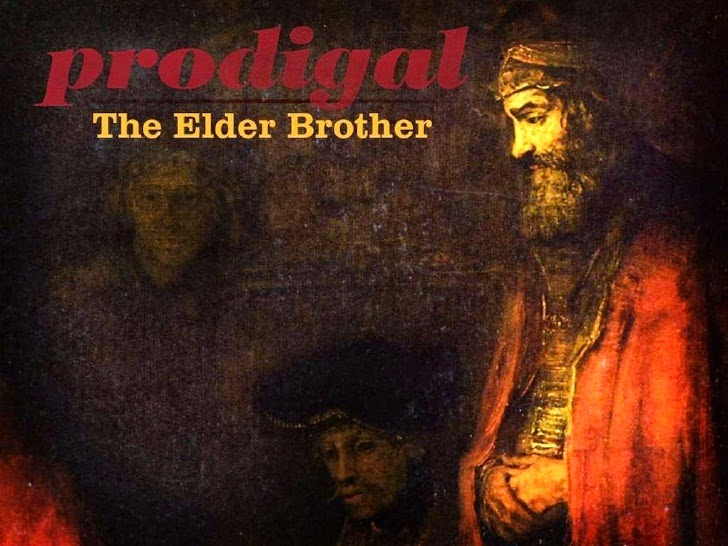
THE OTHER PRODIGAL SON

The parable of the Prodigal Son, found in Luke 15:11-32, is one of the most  familiar stories in the Bible. Charles Dickens called it the greatest short story ever penned. The story opens in dramatic fashion,  with a “certain man who had two sons” (v. 11) . The younger son wanted to be free and do his own thing, so he requested his inheritance in advance. He  left his father’s house, and went into the “far country” (v. 13) where he  squandered his inheritance with riotous living. After a time the younger Prodigal finds himself sleeping and eating with the hogs.  He decides to  make his way back to his father, who welcomes him home with loving arms of forgiveness, acceptance and a huge celebration. It is a wondrous story that paints the beautiful portrait of the hope of grace found in God the Father for all who find themselves tired of wallowing in the hogpen of sin.

It would be nice if the story ended there, but there is another Prodigal in the parable who is often overlooked. There is the elder brother found in verses 25-32. And the elder brother may be a far worse Prodigal. The verses read: “Now his elder son was in the field: and as he came and drew nigh to the house, he heard music and dancing. And he called one of the servants, and asked what these things meant. And he said unto him, Thy brother is come; and thy father hath killed the fatted calf, because he hath received him safe and sound. And he was angry, and would not go in: therefore came his father out, and intreated him. And he answering said to his father, Lo, these many years do I serve thee, neither transgressed I at any time thy commandment: and yet thou never gavest me a kid, that I might make merry with my friends: But as soon as this thy son was come, which hath devoured thy living with harlots, thou hast killed for him the fatted calf. And he said unto him, Son, thou art ever with me, and all that I have is thine. It was meet that we should make merry, and be glad: for this thy brother was dead, and is alive again; and was lost, and is found.”

Now there is no question the younger son was an outward Prodigal. He had been outwardly defiant, rebellious, disobedient and thoughtlessly wasted what his father had given him. But he eventually came to himself, and limping back to his father’s house on the jagged pieces of his broken life, was met by unconditional love and grace, being restored to fellowship. But the elder brother was a Prodigal, too…. an inward Prodigal. He got mad when his father accepted his brother back with grace and forgiveness. The elder brother never left the father’s house, but in his heart and attitude he, too, dwelt in the “far country.”

He was an inward Prodigal in at least six ways.

(1) He was a person of Pretense. The word means “an act or appearance that looks real but is false, act of pretending.” While he lived in his father’s house, his claim of being in fellowship with him was one of pretense, it was a false claim. When the elder heard the celebratory music, instead of asking his father what was going on, he asked the servants. It appears he was closer to the servants than to his father. Even though he lived in the house with his father, he didn’t maintain close fellowship with him. His fellowship with his father was one of pretense. Yes, it is possible for us to claim we  live in the father’s house in fellowship with Him, yet our heart dwells in the “far country.”

(2) He was Prideful. He thought more highly of himself than he ought. He thought his good behavior and works earned him favor in his father’s eyes. He failed to realize any favor he had with the father was based on his father’s love for him not his prideful works and attitude. He labored for the father not out of love but out of duty. There was no joy in is labor, but drudgery. A joyless Christian is never productive for the Father.

(3) He was Pharisaical. He had no room for grace or forgiveness for his brother. He was legalistic and harsh in his treatment of his brother, and no doubt others who didn’t live up to his perceived standards. We are too often harsh in extending grace to others who have “messed up” and while we expect others to forgive us when we do,  we find it difficult to forgive in like manner.

(4) He was Pompous. He looked down his nose at his brother, he was arrogant, had an attitude of superiority, and his acceptance of his brother was conditional on how his presence benefited him. We all are in need of God’s grace; therefore, no one is superior to another. An old Jewish proverb states, “We all come from dust so no one can say they come from superior stock.”

(5) He was Presumptuous. He presumed the father couldn’t do without him. He thought he was God’s gift to his father instead of realizing it was the father’s favor that had been gifted upon him. We make a mistake when we presume God just can’t do without us and He  is “lucky” to have us serving Him. That God even wants to use us should cause us to humbly bow before Him in grateful worship.

(6) He was Prating. Prating is a word we don’t use anymore but applies to the elder Prodigal. Prating means to talk foolishly, to run off at the mouth. The elder brother accused his brother of actions not supported by the story, he accused him of being with prostitutes but the text doesn’t say that (v. 30). He was running off at the mouth without having all the facts. The elder brother was overbearing in his words and attitude.

As can be seen, the elder brother was a Prodigal, too…inwardly. While we know the younger Prodigal was restored to fellowship with his father, the story ends with no hint of change in the elder Prodigal’s heart and attitude. As we reflect upon this masterful and impactful story told by Jesus, what kind of prodigal are we? Are we one who is a Prodigal outwardly or inwardly? Whichever one we are, we need to repent and make our way to the Father. He will run to meet us with open arms of loving forgiveness, and with fellowship restored the wondrous music of His grace will fill our hearts with joy.

Blessings,
Dr. Dan

LUKE AND THE HISTORICAL RELIABILITY OF THE CHRIST EVENT

Ever since the ink dried on the last word penned in the New Testament, skeptics have sought to cast doubt on the historical reliability of the Gospel accounts regarding the life of Jesus. For if they are only mythology and fabricated stories, then the rest of the NT is built on a falsehood. After all, it is supposed, how could the Gospels be reliable, look who wrote them. Matthew was a former, despised tax-collector. John was an uneducated fisherman and Mark received his facts from Peter who was also an uneducated fisherman, rough and brash. And then there is Luke, he was a Gentile who was almost a generation removed from Christ when he penned his Gospel. Surely his Gospel can’t be reliable.

The charges of being uneducated and unlearned leveled against Matthew, Mark, and John can’t be directed toward Luke. He was well educated in Greek culture, a physician by profession, and a loyal companion of Paul from his second missionary journey to his final imprisonment in Rome (Col 4:14; Philem. 24; 2 Tim. 4:11). He was a scholar who wrote with polished clarity, his Greek exhibiting he was at home using the classical vocabulary of the learned or the vocabulary of the common man. [1] As a physician, Luke not only had a scientific mind but a historian’s mind, a common trait of an educated Greek. His medical training prejudiced him against accepting facts without thorough investigation and verification. Writing as a historian, even though a believer in Christ, he carefully examined and weighed all the facts as being true or false before ever penning a word. His medical and scientific background would not allow him to pen anything he deemed to be false. Archaeologist Sir William Ramsay (1851-1939) spent fifteen years seeking to disprove the historical trustworthiness of Luke’s writings (Luke and Acts) and came to the conclusion, “Luke is a historian of the first rank; not merely are his statements of fact trustworthy… [he] should be placed along with the very greatest of historians.”[2]

Luke was written after Matthew and Mark, but before John. While there is debate, most scholars contend Luke was written between 60-70 AD. A.T. Robertson observed, “Luke writes after the close of Christ’s earthly ministry and yet it is not in the dim past.” [3] Written some 30 to 35 years after Christ’s earthly ministry, Luke begins his masterful narrative different from the other three Gospel writers. His style in his Preface is similar to many of the secular Greek historians. In the Greek his Preface is one sentence and is packed with information. It reads: “Forasmuch as many have taken in hand to set forth in order a declaration of those things which are most surely believed among us, Even as they delivered them unto us, which from the beginning were eyewitnesses, and ministers of the word; It seemed good to me also, having had perfect understanding of all things from the very first, to write unto thee in order, most excellent Theophilus, That thou mightest know the certainty of those things, wherein thou hast been instructed.” (Luke 1:1-4)

Luke’s Preface can be divided into four main divisions. A look at each division gives us great insight into the very intent and heart of Luke and the reliability of the Gospel he penned.

                                    1. The Recognition of the “many” accounts of Jesus’ Life
“Forasmuch as many have taken in hand to set forth in order a declaration of those things which are most surely believed among us, Even as they delivered them unto us,” v. 1-2a

In beginning his Gospel with the word “forasmuch,” Luke is acknowledging a fact already well known; that “many” had already undertaken the task of writing about the life of Jesus. How many is “many” is not known, but would indicate more than two. Matthew and Mark had already been written, and no doubt others had, as well (though they have not survived). Luke has words of commendation for the “many” narratives that sought “to set forth in order” a sequence of events concerning Christ’s life, which Luke says are “surely believed among us” (v 1). As well, he attests to the circulation of these accounts which had been “delivered unto us” (v. 2a), the Greek word translated “delivered” signifying “to transmit [by instruction] in both oral and written form” [4] Were these early accounts of the life of Jesus which circulated among the early Christians reliable?

                                                      2. The Reliability of the “many” accounts
“Even as they delivered them unto us, which from the beginning were eyewitnesses, and ministers of the word.” (v. 2)

Luke affirms the oral and written accounts which circulated among them and were believed were reliable. He affirms the reliability of these accounts (1) because of Personal Examination, and (2) Practical Experience.

First, those who “delivered” these accounts were “eyewitnesses,” they had personally examined Jesus. The word for “eyewitnesses” is the Greek word (αυτοπται – autoptai). It was a medical term, from where we get the word autopsy. It means seeing with one’s own eyes. The word was used in “medical language of a personal examination of disease or some part of the body.” [5] Luke affirms the accounts that circulated among them were true reports because they came from those who were eyewitnesses to Jesus and had personally examined Him.

Second, those who “delivered these accounts were “ministers of the word,” they had practical experience with Jesus and facts about Jesus, who was/is the Word. The word for “ministers” (υπηρεται – hupēretai), “was used in medical terminology to refer to doctors who served under a principle physician.”[6] Luke affirms the reliability of the circulated accounts of the life of Jesus, as they came from those who served as assistants under the Great Physician.

While Luke commends and attests to the fact that “many” sources circulating were reliable, there was born in Luke’s investigative mind the idea to write another and more comprehensive narrative about the life of Christ than those in existence.

                                           3. The Research Involved in Luke writing his Gospel
“It seemed good to me also, having had perfect understanding of all things from the very first, to write unto thee in order, most excellent Theophilus.” (v. 3)

In verse three is revealed Luke’s (1) inner persuasion to write, (2) the investigation before writing, and (3) the inspiration while writing.

First, Luke states that “it seemed good to me also” to write an account of Jesus’ life. Since so much interest existed among Christians about Jesus’ life and the need to make his name known among unbelievers, Luke “thought it good” to write another narrative which could supplement and even be a more comprehensive account than what already existed. No doubt, this inner persuasion to write a narrative on the life of Jesus was placed in him by Holy Spirit who would not only guide Luke’s research, but guide his arranging the material in an orderly manner.

Second, before writing Luke thoroughly investigated to verify the accuracy of the facts surrounding Jesus’ life. While it is not known what sources he consulted or who all he interviewed in his research, it is clear he didn’t depend solely on the narratives of Matthew and Mark, for some 50% of Luke’s material is unique to his Gospel. He had available to him the “many” oral and written accounts already circulating and no doubt interviewed many of the eyewitnesses of Jesus’ life still living. As a trained historian his research was extensive (“all things”). The words “having had perfect understanding of all things” (KJV), are literally, “having closely traced the course of all things accurately.”[7]  The word translated “perfect” (akribos) means carefully, accurately, precisely, exactly. It was a medical term “used to indicate the accurate information gained by a doctor questioning the patient.” [8] Luke is clearly saying his research was carefully and accurately done. And once his research was complete, he sought to write it all “in order,” meaning he arranged his findings in an orderly fashion or chronological order.

Luke wrote nothing that he could not verify and validate to be true. Luke’s medical training and his scientific mind would have prejudiced him against believing such amazing events as John’s miraculous birth, Gabriel’s appearance to Mary, the virgin birth, the miraculous events surrounding the birth of Jesus, the many miracles Jesus performed, His resurrection and ascension. His Greek analytical mind would not readily accept such events as logical unless they could be verified and proven without doubt. The very fact that Luke records events outside the natural order of scientific laws affirms that he was so convinced of their reality that he recorded them. The miraculous events Luke records, he does so with certainty based upon his extensive research and the abundant of evidence which verified them.

Third, Luke’s research and writing were more than personal inward persuasion to produce another narrative on the life of Jesus, but was superintended by the Holy Spirit. Notice Luke says all his research was “from the first” (ανωτεν – anōthen). The phrase “from the very first” could also be translated “from above.” It is so translated in John 3:3, 31; 19:11. G. Campbell Morgan makes a most interesting suggestion. Noting the Greek word anōthen can mean either “from the first,” or “from above,” he suggests the latter meaning here. Thus, Luke is claiming that his research was under guidance “from above,” by the Holy Spirit. Morgan writes, “[Luke’s] scientific work was under the guidance of heaven itself, that he not only brought to bear upon his work his own scientific ability to sift and trace, but he sought guidance from heaven. That is how he prepared his material.” [9] Since Luke is in the sacred canon, and all Scripture is divinely inspired (2 Timothy 3:16), Morgan’s assertion cannot be dismissed. In Luke we find the perfect tension and balance between diligent research and the superintending of the Holy Spirit in the penning of the inspired Gospel.

                                                            4. The Reason Luke wrote his Gospel
“Most excellent Theophilus, that thou mightest know the certainty of those things, wherein thou hast been instructed.” (v. 3b-4)

Luke’s Gospel is specifically directed to “most excellent Theophilus,” whose name means “one who loves God” or “a lover of God.” Luke’s use of “most excellent” indicates Theophilus was probably a Roman official or held a high position; it was “a from of address used of persons who held a higher official or social position than the speaker.”[10]  Luke complied his narrative for the purpose that Theophilus “mightest know the certainty of those things, wherein thou hast been instructed.” Even though there had been circulating “many” oral and written narratives, Luke’s exhaustive research and producing a narrative on the life of Christ was for the precise purpose of confirming with the accuracy and certainty the previous instructions Theophilus had already received in regard to the Christian faith. [11]

Though initially written for Theophilus’ instruction, in God’s divine providence Luke’s narrative began to be widely circulated, and was used to instruct and strengthen the faith of all “lovers of God,” as well as to answer questions or attacks by unbelievers concerning the life of Jesus. It didn’t take long for the early Church to recognize God’s divine fingerprints on each page. Eventually becoming the third book in the New Testament, for over two thousand years countless eyes have vividly beheld the glorious life of Jesus walking upon the inspired pages.

                                                                                   Conclusion
Luke indeed is a reliable historian. His painstaking research has withstood the fires of criticism that have sought to discredit him. Time and time again this scientist-historian has endured the test of careful scrutiny. Guy Waters has stated, “What’s striking is that Luke’s care as a historian has been vindicated by research. He’s come under some pretty heavy scrutiny but he’s always been vindicated. Whether it’s the title of an official or the geographical detail, Luke always comes out shining. So, he was a meticulous historian. He took such care to ensure that we would have a faithful record.” [12] The Gospel of Luke assures us that the Christian faith rests on a solid historical foundation. One who reads the Gospel of Luke can do so with the utmost confidence in the reliability of the historical facts found within.

In closing, a quote by James Coffman says it well, “[Two thousand] years have not dimmed the luster of Luke’s glorious work nor cast any shadow over the hard historical facts related therein, facts which have been etched into the conscience of all mankind and which are indelibly written into the pages of the world’s authentic records.” [13]

Amen!

Blessings,
Dr. Dan


                                                                                   Footnotes
[1] Leon Morris, The Gospel According to St. Luke, (Grand Rapids: Eerdmans, 1974), 65.
[2] William Ramsay, The Bearing of Recent Discovery on the Trustworthiness of the New Testament, (London: Hodder and Stoughton, 1915), 222.
[3] A.T. Robertson, Luke the Historian in the Light of Research, (Grand Rapids: Baker, 1977), 47.
[4] Rogers and Rogers, Linguistic and Exegetical Key to the Greek New Testament, (Michigan: Zondervan, 1998), 106.
[5] Rogers and Rogers, 106.
[6] Herschel H. Hobbs, An Exposition of the Gospel of Luke, (Michigan: Baker Book House, 1966), 19.
[7] Kenneth S. Wuest, Word Studies in The Greek New Testament, (Grand Rapids, MI: Eerdmans, 1979), 52-54.
[8] Hobbs, 21; Rogers and Rogers, 106.
[9] G. Campbell Morgan, The Gospel According to Luke, (New Jersey: Fleming H. Revell, 1931), 13.
[10] Rogers and Rogers, 106.
[11] J. R. Dummelow, Commentary on the Holy Bible, (New York: Macmillan Company, 1937), 736.
[12] Quote from an interview with Dr. Guy Waters, professor of NT at Reformed Theological Seminary, “Luke the Historian,” 5 Minutes in Church History, October 7, 2015.
[13] James B. Coffman, Luke, (Abilene Christian University Press, 1974), 10.

TETELESTAI – IT IS FINISHED!

In the last minutes of his tortuous six hours hanging on the cross, shortly before Jesus committed His spirit to the Father, He cried out through parched, cracked and bleeding lips the word, “Tetelestai” (John 19:30). It is arguably the most important word that Jesus ever uttered. While in the Greek it is one word, it took three English words to express its meaning, “It is finished.” O, what an utterance by the Christ of the Cross!

Never has one word been spoken which contains so much meaning. Charles Surgeon has eloquently written, “What an ocean of meaning in a drop of language, a mere drop. It would need all the other words that ever were spoken, or ever can be spoken, to explain this one word. It is altogether immeasurable. It is high; I cannot attain to it. It is deep; I cannot fathom it. IT IS FINISHED is the most charming note in all of Calvary’s music. The fire has passed upon the Lamb. He has borne the whole of the wrath that was due to His people. This is the royal dish of the feast of love.”

The word translated “It is finished” contains a wealth of meaning. Observing how the word “tetelestai” was commonly used in the ancient world serves as a doorway to understanding what Jesus accomplished on the Cross for us when he proclaimed, “It is finished.”

First, John used the word when writing about Christ as the fulfillment of the Old Testament Messianic prophecies. John 19:28 records that in Christ all things were “accomplished” regarding His fulfillment of the Scriptures. The word John uses is “tetelestai”…..all has been completed, has been fulfilled, and has been accomplished. Of the over 300 prophecies surrounding the promised Messiah, Christ fulfilled every one of the them to the letter. Scripture’s fulfillment is finished, it has all been accomplished and completed in Jesus Christ. After His resurrection, Jesus explained to the two travelers on the road to Emmaus that He was the complete and perfect fulfillment of all the Messianic prophecies found in the Law, prophets, and the psalms (Luke 24:36-45). We need not look for another Savior…He has come, all is complete and finished in Jesus.

Second, servants used the word when having obediently completed a task for their master. With the job being faithfully finished the servant would proclaim, “tetelestai”…it is finished. As Jesus uttered “It is finished” He was proclaiming that he had obediently completed the task of obeying the Law of God perfectly which the Father had sent Him to do. As the faithful Servant of God, as the Representative of humanity, Christ lived the perfect life the holiness of God demands, providing for us His perfect righteousness that enables us stand before the Lord uncondemned. “For there is now no condemnation to them that are in Christ Jesus” (Romans 8:1).

Third, priests used the word when examining before offering an animal sacrifice for someone, and upon finding the lamb acceptable would say, “Tetelestai.” When Jesus cried, “It is finished” He was proclaiming as our High Priest that His Sacrifice was acceptable to the Holy Father. God’s Holiness demands justice against sin’s violation of defying His holy standards. But not only did Christ, as our High Priest, offer the Sacrifice, He was the Sacrifice. “He was the Lamb of God who came to take away the sin of the world” (John 1:29). Offering Himself as the sacrificial Lamb, He who knew no sin became sin for us that we might become the righteousness of God in Him (II Corinthians 5:21). Christ’s resurrection is God’s “Amen” that His Sacrifice was acceptable and the need to offer anymore sacrifices for sins is forever finished!

Fourth, merchants used the word when a note or bill was paid, writing “tetelestai” across the note/bill signifying that it had been paid in full. Because of Christ’s perfect life and substitutionary death, the sin debt we could never pay was PAID IN FULL. Christ paid a debt He didn’t owe to pay a debt we could never pay. “For ye know the grace of our Lord Jesus Christ, that, though he was rich, yet for your sakes he became poor, that ye through his poverty might be rich” (II Corinthians 8:9).

Fifth, prisoners, guilty of a crime, were put in prison a “certificate of debt” listing the crimes and the penalty incurred was nailed to their cell door. When the prisoner had paid his debt to society, authorities would sign the “certificate of debt” with the word “tetelestai”….the debt owed has been paid. All humanity is guilty of rebelliously not complying with the holiness of God’s righteous Law, and we are imprisoned by our guilt and sin. Jesus took our sins upon Himself and He was condemned so we could be declared, “Not guilty.”  Wayne Grudem writes, “If Christ had not paid the full penalty of our sins, there would still be condemnation left for us. But since he has paid the full penalty that is due to us, ‘There is therefore now no condemnation for those who are in Christ Jesus’ (Romans 8:1).”

Sixth, artists used the word when they made the last brushstroke on a painting, exclaiming, “Tetelestai” ….it is finished, it is done, it is complete. All of the Old Treatment promised pictures of the Messiah were fulfilled in Christ. Some examples: In Genesis, the Messiah is painted as the Seed of the Woman, in Jesus the portrait is finished. In Exodus, the Messiah is painted as the Passover Lamb, in Jesus the portrait is finished. In Leviticus, the Messiah is painted as our High Priest, in Jesus the portrait is finished. In Deuteronomy, the Messiah is painted as the Great Prophet, in Jesus the portrait is finished. In Isaiah, the Messiah is painted as the Suffering Servant, the Heir to David’s throne and the One born of a virgin, in Jesus the portrait is finished. In Malachi, the Messiah is painted as the Son of Righteousness, in Jesus the portrait is finished. In every painting of Christ found in the 66 OT books, in Jesus every portrait is finished, completed, and hung as a Masterpiece.

Seventh, mathematicians used the word when after completing a complicated math problem, exclaimed, “Tetelistai”…..it is finished, it is done, it is complete. The spiritual math of humanity is incorrect in its thinking, believing that we can “add” to our ledger enough good works that will add up to us obtaining salvation by our own efforts. The Bible is clear that by the works of the Law no one can be saved (Romans 3:20; Galatians 2:16). No one can ever do enough good works that will add up to self-justifying salvation. Salvation, plus nothing and minus nothing, is found only in the Christ of the Cross. Our works “add-up” to nothing, but Christ’s Sacrifice on the cross is sufficient to save all who knell before Him in acceptance of his finished work.

Eighth, conquering warriors used the word when victorious in battle, “tetelistai”…..it is finished, the victory is complete and victory has been accomplished. When Christ cried out, “It is finished” it was not a word of one who was defeated, but of a Conquering Savior who was victorious over sin, satan, death and the grave. As Jesus hung on the cross, the world said, “Aha” but three days later arising from the dead the world said, “Huh?” Our Champion accepted the challenge to do battle for our soul’s redemption against every evil foe… and He was victorious! He was victorious, and all those who place their trust in Him share in His victory. Halleluiah!

It is finished! What a grand utterance. We bow in awe before such majestic words. Thankfully, the redemptive work of Christ has been fully, finally and forever been accomplished.

It is finished!

Blessings,
Dr. Dan

OUR SUFFERING SAVIOR, OUR SUBSTITUTE ON THE CROSS

Good Friday is observed during Holy Week as  the day Christians commemorate the crucifixion of Jesus on Calvary. While theologians may debate the actual day of the week (Wednesday, Thursday, or Friday) on which Jesus was crucified, that He died on a cruel Roman cross is a historical fact. While it is universally recognized Jesus died on the cross, few seem to know what death by crucifixion entailed. Understanding what was involved when one was crucified gives us a greater appreciation of what Christ went through as He endured the shame and agony of the cross for all humanity. [1]

The Roman practice of crucifixion was taken from the Carthaginians (800 B.C.) who were a very cruel and barbaric people. They adopted it from the Persians and Assyrians who used the cross as a method to slowly torture their enemies to death. It was said the cross was the most horrible form of punishment devised by man. The Roman orator Cicero said of crucifixion, “It is the most wretched of deaths, the supreme capital punishment.” [2] For its degree of torture, crucifixion was listed ahead of burning alive, decapitation, and eaten by wild beasts. Death by crucifixion was so ghastly it was reserved for the worst criminals, slaves and foreigners.

For one who was crucified on the cross the normal procedure was first a flogging. The whip used had 3-9 lashes on it. At the end of each lash were pieces of metal, bone or stone. The victim was hit 39 times (40 save 1). The victim being flogged, depending on the number of lashes on the whip, could receive from 120 to 350 lashes across the back, each strike painfully cutting deep into the flesh like a knife. Josephus, an early Jewish historian, records that flogging could be so vicious it could often cause a man’s teeth and eyes to be knocked out. Many victims wouldn’t live through the flogging, dying in their own pool of blood.

Not only did Jesus receive this flogging (Isaiah 50:6; John 19:1), He was beaten with the fists of the soldiers (John 18:22) and beaten on the head with a rod (Matthew 27:30). He was spit upon and His beard was painfully plucked out (Isaiah 50:6). Then a crown of thorns was pressed into His brow (John 19:5). If the victim lived through the flogging and the severe beatings, which Jesus did, they were required to carry their cross to the place of execution. Understanding the flogging the victim went through before being crucified one can see why Christ, in a weakened state, was unable to carry His cross to Calvary, Simon of Cyrene being chosen out of the crowd to bear the cross for Him (Mark 15:21-22).

Once to the place of execution the victim was stretched on the cross, his bleeding back screaming in agony when placed upon the rough splintered wood. The victim’s hands and feet were then nailed to cross. The pain experienced as the hammer drove the nails through the joints and tendons of the victim is incomprehensible. As the cross was dropped into the ground with a thud one can only imagine the pain the victim experienced as every joint and muscle jerked with pain and agony. Death came slowly and was excruciating. The victim slowly died of suffocation as the weight was on the diaphragm. The victim could only breathe by pulling with their hands and pushing with their feet. Each breath was a struggle and was agonizing.

Relief only came in death. It was said a healthy man could hang on the cross for as much as 48 hours before dying. To speed up death, a victim’s legs would be broken so they could no longer push-up to breathe. John tells us that the soldiers were going to break the legs of Jesus to speed up His death, but He had already died. That they didn’t break Jesus’ legs was a fulfillment of prophecy (John 19:31-36).

While words cannot ever adequately describe the horrible torment of being crucified, this was the torturous death Jesus experienced. Why would God the Father choose the cross, the cruelest and most horrible punishment devised by man, to be the method by which salvation would be won for sinful humanity? While the cross pictures numerous spiritual truths about ourselves and the Father, there are two that demand our attention.

First, the cross pictures the blackness, ugliness and vileness of our sins. As one gazes at the cross the ghastly sight of Christ’s beaten, bruised and bloody body suspended between heaven and earth in the darkness of the day pictures how our sin looks in the sight of a holy God. As H.R. Mackintosh has said, “That God gave Christ to man and they could do no better than crucify Him, casts a terrible light upon our sinfulness.” [3] P.T. Forsyth wrote, “Sin is more than failure to live up to an ideal of human conduct. Sin is rebellion against a holy God so that when we sin we are putting ourselves at a distance from God and creating a chasm between Him and ourselves which we cannot bridge by our own efforts.” [4]

At the cross we see the ugliness and blackness of sin in the eyes of a Holy God. Because sin is an offense to God’s holiness, His holiness opposes sin in judgment. Holiness demands like holiness in return and if that can’t be complied with then sin must be judged. Since man can’t comply with God’s holy demands then he is in a terrible predicament.

Second, the cross pictures to us the holy-love of God. The same holy-love which judges sin, is the same holy-love which provides salvation from our sin. Martin Hengel writes, “In the death of Jesus of Nazareth God identified himself with the extreme of human wretchedness, which Jesus endured as a Representative of us all, in order to bring us to the freedom of the children of God.” [5] The cross did not just happen to Jesus, He came on purpose for it. At the cross God demonstrated His love toward us in that while we were yet sinners Christ died for us (Romans 5:8). It was at the cross, “He who knew no sin became sin for us that we might become the righteousness of God” (2 Cor. 5:21). At the cross we see our God in Jesus Christ assuming our obligation (2 Cor. 5:21), and redeeming us from the curse of the law being made a curse for us (Gal. 3:13). The cross shouts to us like nothing else can, “Christ loved us and has given Himself for us an offering and a sacrifice” (Eph. 5:2).

John R. Stott has written, “For in order to save us in such a way as to satisfy himself, God through Christ substituted himself for us. Divine love triumphed over divine wrath by divine self-sacrifice.” [6] The Father’s holy-love, demonstrated in the life and cross of Christ, His indescribable love. It was not the nails that held Christ to the cross as He was being mocked and spit upon, but his indescribable love held Him there. It was His holy-love that did for you and I what we could never do for ourselves. His love was an individual love. He died for you and me.  As our Substitute,  Christ paid the sin debt for the “whosoevers” of the world (John 3:16). Yes, the cross pictures the holy-love of the Father which became incarnate in Christ who did for us what we could never do for ourselves.

In the days of the Roman Empire the cross was a symbol of death, defeat, despair and shame. Yet Christ transformed the cross into a symbol of hope, deliverance, grace, redemption, forgiveness, salvation, life, love, and light. The more one ponders the wonder of the cross, the more one bows in awe before the Christ of the cross.

The liberating words of P.T. Forsyth are most fitting, “Through the cross to the Light.”[7]

Blessings,
Dr. Dan

                                                                                     Footnotes

[1] For an excellent treatment on what victims endured through crucifixion see Martin Hengel, Crucifixion, (Philadelphia: fortress Press, 1977).

[2]  Cicero, Against Verres 2.5.169.

[3] Cited in Ronald Wallace, The Gospel of John, (Scottish Academic Press, 1991), 7.

[4] Forsyth, The Cruciality of the Cross, (London: Hodder and Stoughton, 1910), 94-98.

[5] Hengel, Crucifixion, 18-19.

[6] Stott, The Cross of Christ, (Illinois: InterVarsity Press, 1986), 159.

[7] On the memorial tablet to Peter Taylor (P.T.) Forsyth in New College Chapel London is inscribed a Latin motto, which aptly describes His life, ministry and theology:            Per Crucem ad Lucem – ‘Through the Cross to the Light.’

CELEBRATION OF CHRIST’S RESURRECTION HASN’T BEEN CANCELLED!

For well over fifty years I have attended Sunrise Services on Easter Sunday morning. For over half-a-century I have gathered with fellow Christians in the morning twilight to celebrate the Resurrection of Jesus Christ. Sunrise Services have always been special times whether the skyline yielded a reddish glow from a sun whose early morning rays pierced through the darkness or the skies yielded clouds that hid the sun’s radiance. This year is different because of the pandemic. Many churches will be having Sunrise Services online, some will have a drive-in type service, some are foregoing gathering until a later time. But unfortunately, there will be no gatherings like in years past.

One truth is clear, the glorious fact of that first Easter morning has not been cancelled and never will be. I am thankful on Resurrection  morning the clouds of sin, the devil and death could not keep Jesus, the Sun of Righteousness, from piercing the darkness of this world with His glorious Light of redemption and reconciliation. For the Christian, every day is a day to celebrate the resurrection of Christ. Each new morn of spring the cool gentle breeze brushing against our cheeks remind us of His ever-abiding presence. Since every day is a day to rejoice that He was triumphant over the grave, if we listen closely to the joyful singing of the birds in the early morn we can still hear lingering in the air the proclamation of the angels on that first Easter morning echoing, “He is not here, He is risen.” Yes indeed, “this Man, after He had offered one sacrifice for sins forever, [being raised from the dead] sat down at the right hand of God” (Hebrews 10:12). That Christ arose from the dead is truly a wonderful truth worth lifting our voices in praise every day of the week.

That Christ arose from the dead is a historical fact. Evidence from eyewitnesses of the Christ-event and even from writings other than the Bible by first century writers verifies the historicity of His resurrection. The cross and resurrection of Christ is the central point of eternity, history and the Christian faith. While Christians can celebrate every day the historical reality of Christ’s resurrection, how does this glorious truth impact our daily lives?

Our lives are impacted when we realize the same power that raised Christ from the dead is available to us each day of our lives!! Paul writes of this amazing truth, “And if the Spirit of him who raised Jesus from the dead is living in you, he who raised Christ from the dead will also give life to your mortal bodies through his Spirit, who lives in you” (Romans 8:11). What a truth to grasp, the same power that raised Christ’s lifeless body from the dead dwells with us and in us; such power is available to us in our daily lives. WOW!!

If the resurrection power of Christ dwells with us and in us why should we think we can’t face and get through the obstacles, difficulties and mountains that we may confront us? Yes, we place our faith in a historical event, but much more, His living presence is accessible for the practicality of daily living. It matters not what the trial, the testing, or the pandemic, the resurrection power of Christ is there to strengthen us. Paul, as he faced his own obstacles, writes, “I can do all things through Christ who strengthens me” (Phil 4:13). Writing from a prison cell he knew the practicality of Christ’s resurrection power to help him in his daily encounters.

The believer has access to “the exceeding greatness of his power to us-ward who believe, according to the working of his mighty power, which [God] wrought (exerted, accomplished , brought to decisive finality) in Christ, when he raised him from the dead and set him at his own right hand…” (Eph. 1:19-20). This verse tells us that the power we have available to us was put to the ultimate test when Christ was raised from the dead. If such power was victorious in the raising of Christ from the cold dark tomb, cannot “the exceeding greatness of his power to us-ward who believe” help us in the adverse circumstances of our lives. Can you think of a situation that His power is not able to give us victory?

P.T. Forsyth eloquently writes, “From the New Testament point of view the seat of chief power and authority in the universe is the cross and resurrection of Jesus Christ…For Paul the omnipotence of God was chiefly shown in raising Christ from the dead… [the] act wherein was exerted the whole power of God for the world – the resurrection of Christ.” The center point of the Christian’s faith must be in the two-fold event of the cross and resurrection and we must not lack faith in “the greatest exertion of omnipotence ever known – the resurrection of Jesus Christ from the dead. We only [live] by the power of his resurrection.”

Our Christian faith rests upon Christ’s resurrection and His living presence in our midst. Yet are you and I living daily by the power of His of resurrection? The practicality of the resurrection is that its power is sufficient to empower us daily in all of life’s storms and struggles. And even though we will not gather Sunday as in years past, celebration of His resurrection has not been cancelled. The resurrection of Christ is an event we can celebrate every day of the week. We can celebrate knowing His presence and power penetrates and invades every area of our lives – even in the midst of a pandemic.

Blessings,
Dr. Dan