BEING FILLED WITH THE SPIRIT

What does it mean to be filled with the Spirit? In Ephesians 5:18 Paul writes, “Be not drunk with wine, but be filled with the Spirit.” Is being filled with the Spirit only reserved for a few select Christians, or is the verse applicable to all Christians? While the Bible teaches one receives the Holy Spirit at salvation (Eph. 1:13), there are those who contend we must beg and plead with God to fill us with His Spirit. Is that so?
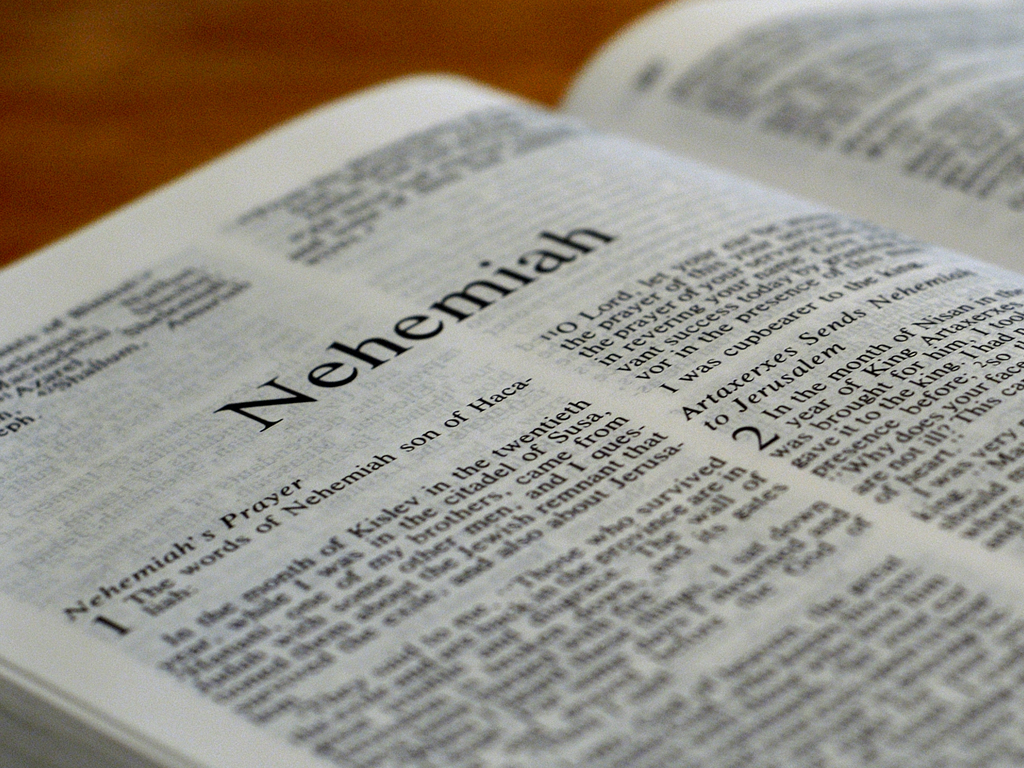

Let us examine the Ephesians 5:18. The Greek word Paul uses for “filled” is from the word pleroo (πληρόω), meaning to “make full, to fill up, to fill to the full.” Three insights regarding Paul’s usage of the verb pleroo. (1) It is in the present tense, implying that we are to be continuously filled with the Spirit; it is not a onetime act or a onetime experience. (2) The word “filled” is an imperative, which means it is a command. Being an imperative (a command) means that we have the choice to obey to either allow or not allow being filled with the Spirit from happening in our lives. Being filled with the Spirit is an imperative necessity.  (3)Also, the word “filled” is in the passive voice, which means being filled is not something we can do to ourselves but is something that God does in the Christian…we do the yielding (our part), the Lord does the filling (His part).

Putting together all that is contained in the Greek word “filled,” we are commanded to be continually yielded to the Lord to allow the process of the Spirit to work and flow in and through our daily lives. Again, we do the yielding, He does the filling. A Spirit-filled Christian is one who sustains union and a yielded relationship with Jesus Christ.

Paul in contrast urges the Christian not to yield one’s self to alcohol and be brought under its influence, but instead continuously (daily) yield one’s life to the Lord whereby His Spirit can daily influence our lives. The Christian doesn’t have to beg and plead for the Lord to fill one with His Spirit; one must daily yield and make themselves available for His Spirit to fill and influence our lives. We must understand that the Holy Spirit will only fill the individual who is yielded and makes themselves available to Him. Only our obedience to God’s commands allows the Spirit freedom to work within us.

A.W. Tozer says it well, “One of the strange things about God is that He will come in as far as we allow Him. I have often said that a Christian is as full of the Holy Spirit as he wants to be. We can beg to be filled with the Holy Spirit. We can talk about it, but until we are willing to empty ourselves, we will never have the fullness of the Holy Spirit in our lives. God will fill as much of us as we allow Him to fill” (Tozer, The Crucified Life, Bethany House Publishers, 2011, 28).

When as Christians we live in deliberate disobedience to the Lord, we will not experience the fullness of the Spirit’s working and His power in and through us. So, let us daily be continually yielded and living our lives under the power and influence of the Holy Spirit.

Blessings,
Dr. Dan

TIMELESS LESSONS FROM NEHEMIAH

As one dives into the treasure rich waters of the book of Nehemiah one soon discovers the truths contained within its pages are as fresh as the morning newspaper. Nehemiah was a remarkable man from whom we can glean many golden nuggets of truth that are much needed today in circles of Christendom. Unfortunately, many today are unfamiliar with this charismatic man and the timeless truths found within his memoirs. It would be wise to revisit his architectural personality. He was not only a man who oversaw the rebuilding of the walls of Jerusalem, he sought to be a builder in the lives of others.

Nehemiah is securely nestled in the Old Testament after the Book of Ezra. We meet Nehemiah in 445 BC, as he is serving as cupbearer for the king of Persia. As cupbearer he would taste of the king’s wine and food before the king ate to ensure no poison had been injected in them. No wonder Nehemiah is always saying, “Long live the king!” When we are introduced to Nehemiah he is talking to his brother, Hanani, who has come from Judah with the news that the former exiled Jews who had returned to Jerusalem were in distress and the walls and gates of Jerusalem were still broken down. Walls represented security, protection, and safeguard against enemies. Without walls Jerusalem was vulnerable to outside forces.

Nehemiah upon hearing the news, could not shake the situation from his mind. He wanted to see those walls rebuilt. After praying about the situation for four months and gaining permission and blessing from the king, Nehemiah and his entourage made the 800-mile trip to Jerusalem to rebuild the walls and secure the city. One day he is cupbearer in the palace, the next day he was the governor of Judah managing a project that seemed impossible! His relentless persistence and organization skills resulted in 52 days seeing the project completed (Neh. 6:15). It was an extraordinary accomplishment. In digesting the memoirs of Nehemiah one can learn much about the type of man he was.

Just what kind of man was Nehemiah and what timeless lessons can we learn from him?

First, Nehemiah acknowledged God’s Sovereignty, yet he acknowledged man’s responsibility (Neh. 1). One truth is apparent throughout the book and in his prayers, is Nehemiah’s belief that God is sovereign in His dealings with man and in the universe. Nehemiah knew nothing takes God by surprise or will anything or anyone derail His ultimate plan being fulfilled. However, Nehemiah didn’t use God’s sovereignty as an excuse to sit back and do nothing. He saw himself as being responsible and being used in the grand scheme of God’s divine purpose. Nehemiah viewed God as active in the universe, and he wanted to be a part of God’s workings. Yes, God is sovereign, but He uses people to carry out His plans and purposes, we must decide if we want God to use us in the process of the unfolding of His divine will.

Second, Nehemiah relied on the power of prayer, yet He recognized the need for action (Neh. 1). Throughout his memoirs we see him praying at every encounter, circumstance or situation. He believed that prayer was necessary before embarking upon a task for the Lord, but he also believed one had to put feet to their prayers. Praying for the Walls to be repaired, required some action on the part of him. Praying for the walls to be built was good and a must, but there had to be some foot power that took place for it to become a reality. As a woman once said to this writer, “I believe in putting footsies to my prayers.” Nehemiah is a sound example of one who put footsies to his prayers. When threatened by his enemies he prayed for the Lord’s protection, then armed half the men with spears, shields, bows, and armor and the workers worked with a sword strapped to their side (Neh. 4:15-23)! Let us never use prayer as an excuse not to take action, but let us put footsies to our prayers.

Third, Nehemiah had a genuine passion to see the walls rebuilt, and his enthusiasm resulted in others catching his vision and sharing his passion (Neh. 2). The passion in his heart resulted in him traveling 800 miles to undertake the task to rebuild the walls. After  surveying the ruins, he shared passionately his vision with the priests, nobles and officials. He enthusiastic presentation, ignited a fire in the hearts of those with whom he shared, and they got on board and began the work (Neh. 2). We can’t expect others to embrace the dreams and goals the Lord has placed in our hearts if we are not enthusiastic ourselves. Interestingly, the word enthusiasm comes from two Geek words that means “possessed of God.” Ralph Waldo Emerson once said, “Nothing great was ever achieved without first enthusiasm.” Nehemiah and his team prove the truth of Emerson’s statement.

Fourth, Nehemiah was a superb administrator and organizer, yet he didn’t mind getting his hands dirty (Neh. 5:16). He organized the workers and gave all the teams working on the walls certain assignments which required painstaking effort and getting the hands dirty (Neh. 3). Nehemiah didn’t dictate what everyone was to do and then sit and watch everyone else work. He not only organized the project, he got in there and worked side by side with everyone. He got his hands dirty just like everyone else. A true leader is not one who simply delegates what needs to be done, but is out leading the charge to see that the task is completed successfully. Leaders in the mold of Nehemiah are willing to get their hands dirty.

Fifth,  Nehemiah faced severe opposition, yet he never lost his focus (Neh. 6). Before Nehemiah even started the work he faced opposition from the likes of men like Sanballat, Tobiah, and Geshem, who sought to halt the work before it ever got off the ground. Then once the work started, they did all they could to halt the work (Neh. 2:22). Despite the opposition, Nehemiah never lost focus of the task at hand. He told his enemies, “I am doing a great work, I don’t have time be to be distracted by your detours” (Neh. 6:3). In spite of the persistence of the opposition, Nehemiah kept steam rolling down the track toward success. Too often when we endeavor to do a work for the Lord we pack it in at the first little opposition that pops up. The devil seeks to get us sidetracked, but to accomplish anything for the Lord requires remaining focused on the task at hand.

Sixth, when Nehemiah perceived discouragement among the people, he infused encouragement into the equation (Neh. 4, 6). As the work proceeded the workers got discouraged, Nehemiah was the kind of leader who refused to be overtaken by negative emotions, but sought to encourage them through the words he spoke and his presence among them. One who is an encourager can’t adopt a “down in the mouth” vocabulary, but must use words of positive reinforcement to instill “finishing energy” within those being ministering, too. As well, the ministry of presence is of invaluable aid in helping someone overcome discouragement. Our presence in someones life can’t be emphasized enough as to its support and the infusion of strength to continue on in the task.

Seventh, Nehemiah demanded Scriptural obedience from the people, and he set the example by living obediently before them (Neh. 10, 12) He didn’t teach by word only, but by his daily example . He didn’t say to them, “Do as I say, not as I do.” No, Nehemiah could say, “Do as I do.” Nehemiah didn’t tolerate sin in his own life, and he didn’t tolerate it in the lives of others. He was not like many today who compromise with sin and tolerate it. He was consistent in his voice against that which dishonored the Lord, and he was courageous in his actions in dealing with it. He threw Tobiah out on his ear when he found out he was living in a storeroom near the temple formerly used to store the grain offerings, incense and temple articles. He also locked the city gates so the people couldn’t go out and work on the Sabbath, and even tore hair out of the scalp of those who defied God’s commands…and then turned around and prayed for them (Neh. 13:25-29)! Nehemiah never asked them to live a life he himself refused to live. How can we ask others to obey in biblical areas that we ourselves are unwilling to be obedient? We can’t hold others to a higher standard of dedication to the Lord if we refuse to hold ourselves to the same standard. Nehemiah could scold others for being disobedient, because he set the example in the matters of which he spoke. We must do the same.

From Nehemiah these are seven timeless truths, among many, that are discovered within the inspired pages of the book that bears his name. Some key words that describe Nehemiah are faith, prayer, obedience, action, skill, tenacity and focused.
In a day of where compromise abounds, tolerance of actions and attitudes no matter how unscriptural they are, quitting when a little opposition arises, endeavors undertaken without passion, and prayer is neglected as the foundation of all endeavors, we need in Christendom more in the mold of Nehemiah. Oh, may his tribe increase.

Blessings,
Dr. Dan

YES, I HAVE BEEN BLINDED

It seems it is becoming more and more prevalent to read articles or find posts on social media which either insinuate or state in no uncertain terms that those who don’t embrace the agenda of secular humanism  and the progressive left, are blind to the prevailing times of tolerance and political correctness of all moral behavior and actions no matter how out of the norm, debased, perverted, or bizarre they may be. (I use the word “tolerance” as the compromise of moral and biblical convictions, a yielding of ground upon critical ethical, moral and biblical issues.) Those who don’t embrace the changing times of tolerance  have been labeled as “deplorables” and blinded by antiqued beliefs and old fashion doctrines that are fanciful to the reality of the way it ought to be and should be.

I must confess I am one of those who has been blinded. I count myself with the Apostle Paul who was blinded by the brilliant Light of Jesus Christ and as such viewed life differently from that day forward (Acts 9). Many moons ago as a college freshman, the Lord removed the scales from my eyes and shone His glorious Light into my eyes to see the brilliance of his face, blinding me to the way I used to think, live and behave. Being blinded by the Light of Christ, my “blindness” has led to embracing a biblical worldview.

Yes, I confess I have been blinded.

Having  been blinded by the Light of Christ, the eyes have been opened to behold the sacredness inherent in each human life. Since all life is sacred, I vehemently oppose the atrocious slaughter of babies through abortion, which is acceptable and even applaudable by those who see a baby as no more than a blob of cells. I unapologetically embrace the sanctity of life, that each life is created by God and bears His image. I will continue to remain blind to the agenda that thinks nothing of terminating a human life. The Light of Christ opens one’s eyes to see every life He created is of worth and value, and He gave His life that the sin-marred Image of God within us might be reestablished to communion with Him.

Having been blinded by the Light of Christ, as the stars are fixed in the heavens giving guidance to ancient travelers, the light of Genesis chapter 1-2 rests upon the brow of man and woman affirming God’s divine blueprint for the marriage relationship.  In the beginning God created Adam and Eve and joined them together. Marriage relationships which deviate from God’s original directive between a man and a woman are scripturally forbidden. Anything that is a perversion of biblical, traditional marriage weakness the home, society and the nation. The home, as ordained by God, is a bedrock of any stable society, and when that is destroyed society begins to sink into the quicksand of unrestrained immorality….which we are witnessing today in society.

Having been blinded by the Light of Christ, the divine rays of identity normalcy  shine exposing the deceptive delusion that one’s gender is fluid. God created male and female, and that can’t be altered. To mistakenly believe otherwise is to strike at the very core of one’s identity as to who God created one to be. One who accepts gender fluidity as normal is dismissing the truth that God created each person as either male or female for a distinct and definite purpose. To deny one’s biological identity is to deny God’s wisdom in His creation and abandon the creative purpose for which one was born.

Having  been blinded by the Light of Christ, His glorious light illuminates the false assumption that all religions are equal in their endeavors to obtain salvation and entrance into heaven. Jesus said, “I am the way the truth and the life, no man comes to the Father but by me” (John 14:6). Christianity alone has the answer to the sin problem of man. The man-made religions of the world say, “Do this and do that, and you shall obtain salvation.” Christianity says, “Christ has already done all that is necessary for man’s salvation, believe and be saved.” Man is incapable of complying with God’s holy demands, Jesus on our behalf complied with those holy demands for us. Christ is the Door who gains us entrance into heaven, all other doors lead to eternal darkness.

Having been blinded by the Light of Christ, brings into focus  the truth that an orderly society is not possible without Christian principles of morality as the foundation of a society. History is littered with fallen nations which have proven the validity of this truth. Secular humanists can deny history all they want, this nation’s Forefathers, though they were not all Christians, recognized that any nation must have woven into its foundation biblical morality or chaos will result. John Adams, our nation’s second President and Signer of the Declaration of Independence, on June 28, 1813, wrote in a letter to Thomas Jefferson, “The general principles, on which the Fathers achieved independence, were the only Principles in which that beautiful Assembly of young Gentlemen could Unite, and these Principles only could be intended by them in their address, or by me in my answer. And what were these general Principles? I answer, the general Principles of Christianity; in which all these Sects were United.” The Bible says it clear, “The nation that forgets God is tuned into hell” (Ps. 9:17). Our nation’s chaos can be traced back to the relentless eroding of biblical morality.

Having  been blinded by the Light of Christ,  He has enlightened the eyes to see all of humanity as broken and in need of a Savior. One truth is certain beyond argument, man is broken, a sinner, and alienated from God. All humanity is broken and each of us have adopted different ways, lifestyles, and actions by which that brokenness is manifested. Our brokenness can be manifested through the adoption of many lifestyles and behaviors that deviates from God’s moral directives in regard to addictions of all kinds, gender confusion, sexual immorality, destructive social interaction, a mindset bent toward dishonesty and deceptiveness, cruelty toward one’s fellowman, and the list goes on. Seeing all humanity as broken, helps one to see that all need the message of Christ’s loving redemptive power which can deliver, restore and redeem. The cross of Christ is God’s answer to sin and man’s brokenness. When one sees humanity as broken it instills in one, while disapproving of the sin, a love for  the sinner as one for whom Christ gave His life that they might be redeemed and “fixed” from those actions and behaviors which damns and destroys the body and soul.

Yes, I have been blinded by the Light of Christ, and as such I see life through the glasses of a biblical worldview and my true magnetic North being the cross of Christ. There can be no compromise with the godless philosophies of secular humanism and any agenda that seeks to purposely undermine biblical morality and abandon the sacredness of life. As society descends further into a state of decadence and distancing itself further from the foundation on which it was once built, with each passing day my eyes focus more and more on the Eastern skies, “Looking for that blessed hope, and the glorious appearing of the great God and our Savior Jesus Christ” (Titus 2:13). It is my earnest prayer that the Gospel will shine forth in an effulgence of grace, inspiring wonder and adoration, which will produce an awakening in humanity for whom Christ died and desires each to gaze upon His glorious face which shines brighter than a thousand suns.

Blessings,
Dr. Dan

WHAT IS MEANT BY THE FAITHFULNESS OF GOD?

God is faithful. The Psalmist proclaimed, “For the Lord is good; His lovingkindness is everlasting and His faithfulness to all generations.” (Psalm 100:5). What does it mean to say God is faithful? Is our saying He is faithful based on our perception of how we define faithfulness?

Recently I was praying about a matter of great concern, and the Lord graciously heard my cry, and in His grace I witnessed and experienced His hand move on my behalf and grant the answer to my request. I was thanking the Lord for how he granted my petition and said in praise, “Lord, I want to thank you for your faithfulness.” I stopped in the middle of my prayer, and asked myself this question, “Was I equating God’s faithfulness to the fact that he granted my petition?” Well, what if He had not granted my petition, would He then have been unfaithful? Is God’s faithfulness determined by whether or not he beckons to my request to turn situations and circumstances to my favor? Does God’s faithfulness in my life mean the absence of difficulties?

So, what is meant when the Bible says God is faithful? Faithfulness speaks to the very core of God’s character. Faithfulness has to do with being reliable, fidelity, firmness, stability, trustworthy, trueness to one’s word, dependability. While no earthly man is 100% faithful, the Bible teaches that God is 100% faithful in all He does in accordance with His divine character. God is always faithful to Himself. God is unchanging; therefore, He can never cease to be what He is and He will always be consistent with His righteous character.

God’s faithfulness cannot be defined by our perception as to whether or not events or circumstances work out in what we perceive to be in our favor. God is faithful even if events don’t turn out as we wish or think they should. God will never deny His own character or His divine plan to grant our request. God is always faithful to His character, for Him to do otherwise He would become unfaithful. Several examples are cited as to what is meant.

God’s faithfulness to His holy character. God will not and cannot deny His faithfulness in regard to his holy, moral character. When God created man He expressed His holy character in the form of moral directives that were for the welfare and blessing of humanity: that men should not steal, lie, covet, murder, that marriage is between a man and woman, that those of the same sex should not lay with one another as in the marriage relationship, honor thy father and mother, honor the Lord of heaven and acknowledge Him as Creator and Sovereign. When we violate God’s moral directives, negative consequences result. God will not be unfaithful to His moral nature by rescinding the consequences of violating His moral character. To do so He would not be faithful to Himself. God will be faithful to His moral character and will never rescind His holiness for anyone no matter how much one prays for Him to do so. Our nation today is experiencing the consequence of God’s faithfulness to His holy, moral directives.

God’s faithfulness in covenant. God made a covenant with Israel that if they were loyal to Him, didn’t embrace the god’s of the surrounding pagans, and would be a witness to the true God of heaven that He would bless them abundantly, but if they disobeyed and forsook Him they would experience the consequences of embracing other gods and would eventually go into captivity to other nations. God was faithful to His covenant, as when they obeyed Him they were blessed beyond measure and when they disobeyed they endured the bitter consequence of their forsaking their God. While the people blamed God when they found themselves in bondage, God was only being faithful to His covenant. He was faithful, they were not. God would have violated His faithfulness if He had changed the “terms” of the covenant to accommodate their disobedience. “Know therefore that the Lord your God is God; he is the faithful God, keeping his covenant of love to a thousand generations of those who love him and keep his commandments.” (Deuteronomy 7:9).

God’s faithfulness to His Word. Joshua said, “Not one word of all His good promises have failed” (Joshua 21:45). Jesus stated, “Your Word is truth” (John 17:17). Both the OT and NT echo the message that all that God has recorded to us in His Inspired Word may be trusted, and that the Bible supplies us with reliable and dependable information and instruction that one can rely upon with certainty. One can be sure of the truthfulness and reliability of His Word. “All your commandments are faithful” (Psalm 119:86). The Lord wants us to have assurance that His promises cannot and will not fail. He has promised He will never leave us or forsake us regardless of the circumstances, that He will work all things (good and bad) for the good of those who love Him, that heaven awaits those who trust Christ, etc. Paul said all the promises of God in Christ are yes and amen (2 Cor. 1:20). To those who adhere to the Word find it is a firm foundation upon which to build one’s life, because God is faithful to His Word.

God’s faithfulness in salvation’s design. God will not can cannot deny His faithfulness in regard to His designed plan of salvation. The Bible is a Book of redemption/salvation history. The Bible records how God has revealed Himself to sinful man and how he progressively unfolded His divine plan to provide humanity with a way to come into the presence of Holy God, which culminated in the Christ of the cross. Since man cannot comply with the holy demands of God, judgment is holiness’ reaction to man’s willful sin and disobedience to God’s perfect holiness. For God not to judge sin He would have to deny faithfulness to His holiness. What is man to do? God in Christ came to earth to be the answer to man’s predicament. Christ in his perfect life complied with God’s holy demands on our behalf, and satisfied holiness’ judgment on sin as He hung on the cross. The Christ of the Cross is God’s ONLY provision to the problem of man’s sin, and He will not make an exception for me or you. If He did, He would violate His own faithfulness in regard to what He proclaimed in Jesus, “No man comes to the Father but through me.”

God’s faithfulness to His divine plan: The Psalmist wrote, “The counsel of the Lord stands forever, the plans of His heart from generation to generation.” (Ps. 33:11). From the depths of the counsels of eternity, God set forth in motion a great master plan that involves all of creation and humanity that He is bringing to pass in real time. In and on his timetable He will bring to pass everything that He has purposed. Our finite minds cannot understand it all, how his plan is unfolding universally or in our individual lives, but we can be assured His divine plan is unfolding. As man stands in the train station of life, he is faced with two choices as the train of God’s master plan barrels down the tracks of history – either watch as the train passes by or get on board and ride with Him to His designed plan for our lives!! Isaiah wrote that he will bring it to pass with perfect faithfulness (Isaiah 25:1).

God’s faithfulness in His love. John declared, “God is love” (I John 4:16). God demonstrated His love toward us, that while we were yet sinners Christ died for us. God is faithful in His love toward humanity. One may reject His love, scoff at His love, but He will continue to be faithful in His love. One may hide themselves from the sun but one can’t keep the sun from shining. In Christ God has expressed a love that shouts He will never cease to love us, for even if we refuse him and find ourselves in hell His love will never cease. Such love boggles the mind. One may reject the God and Father of the Lord Jesus Christ but His holy-love still emanates from His faithful character continually urging all to embrace the Savior before it is too late. The faithfulness of God’s love as found in the Christ of the cross towers over time, bidding us to come unto Him and therein find the confidence of redemption and hope.

Yes, our Lord is faithful even if events or circumstances are difficult and don’t always appear to work out as we think they should. God’s faithfulness means He will never violate His character, but He will brings to pass in our lives that which will work together for His glory and our good (Romans 8:28). Whether we understand it or not, we can be assured that our Lord is completely reliable, trustworthy and faithful. Yes, God is faithful…always, all the time!

Blessings,
Dr. Dan

WHAT DOES “ONLY BEGOTTEN SON” MEAN?

Begotten SonRecently someone asked me to explain what was meant by the phrase found in the Fourth Gospel referring to Jesus as the “only begotten Son” (John 3:16). In John’s writings he uses the phrase “only begotten Son” five times in referring to Jesus (John 1:14; 1:18; 3:16; 3:18. I John 4:9) (the phrase is used nine times in the NT – three times in Luke, once in Hebrews, five times in John’s writings). It is important to understand what the phrase means, as erroneous teachers contend the word translated “begotten” teaches that Jesus is not equal to God in essence and that Jesus is not eternal in His existence, but was at some point in time created or “begotten,” contending Jesus had a beginning. Such a false conclusion fails to consider what the Greek word translated as “only begotten” actually implies and means.

While volumes have been written in seeking to explain the meaning of “only begotten,” an attempt will be made to be clarifyingly brief. The Greek word monogenes (μονογενής) is a compounded of monos (μονος) meaning “only, single of its kind” and genos (γενος) “race, family, offspring, kind.” The word is translated into English as “only” or “one and only” or “only begotten.”

According to one reputable Greek-English Lexicon, the word monogenes has two primary meanings in the NT. The first means “pertaining to being the only one of its kind within a specific relationship.” The author of Hebrews attaches this meaning of “only begotten son” when speaking of the special and unique relationship Isaac had with his father Abraham which no other earthly person shared (Heb. 11:17). Isaac was the “only one of [his] kind within a specific relationship” in regard to being the promised son of the covenant. The second meaning is “pertaining to being the only one of its kind or class, unique in kind, single of its kind, only.” (Walter Bauer, Editor F.W. Danker, Greek-English Lexicon of the New Testament and Other Early Christian Literature, Third Edition, (University of Chicago Press, 2001).

The much-respected Thayer’s Greek Lexicon says “begotten” means “single of its kind, only….used of Christ, denotes the only Son of God or one who in the sense in which He himself is the son of God has no [equal] brethren….” (John 1:1-3).

Greek scholars Moulton and Milligan conclude from research of multiple early sources that monogenes means “one of a kind,” “only,” and “unique” (Vocabulary of the Greek Testament, Baker Academic, 1995, 416).

Without question Jesus is unique in kind, having no equal brethren. Jesus is the self-expression of the Father because He and the Father are One (John 10:30). That Jesus is the “only begotten Son” seeks to highlight the uniqueness of Jesus as the one and only Son of God who is one with the Father in eternal relationship, being in nature and essence One. In John 1:1-3, the Apostle of Love makes it clear that the “Word” (Jesus) was not only with God in the beginning but that the “Word” was God. Jesus as the eternal “Word” is more than just “one of a kind,” John is saying that Christ as the “only begotten Son of the Father” uniquely shares the very nature of the Father.

That “begotten” implies “one of a kind” or “only” or “uniquely unique” can be found in a myriad of Greek writings. Found in a second-century writing, the Martyrdom of Polycarp, is a doxology which reads “Now unto him who is able to bring us all by his grace and bounty unto his eternal kingdom, through his one and only (monogenes) Son Jesus Christ, be glory, honor, power, and greatness forever” (Martyrdom of Polycarp (20.2)).

Writing about the same time as the Apostle John (c. 95 AD), was Clement of Rome. In 1 Clement 25, Clement wrote of the Phoenix, a mysterious bird of the East, as monogenes; meaning that the bird was “unique” or “the only one of its kind” (Richard Longenecker, “The One and Only Son,” chapter 11, The Making of a Contemporary Translation (International Bible Society, 1991), 122).

Found in the writings of the sixth-firth century BC philosopher Parmenides, he spoke of the Supreme Being as “ungenerated, imperishable, whole, unique [monogenes], and without end” (Frag. 8.3-4).

Another place where monogenes is found to mean “unique” or “incomparable” is in the Wisdom of Solomon, a Jewish book written around 100 B.C. In it is found a hymn to God’s “Wisdom” in which it is said that “there is in her a spirit quick of understanding, holy, unique /incomparable (monogenes), manifold” (7:22). While Wisdom is personified, monogenes is used in referring to Wisdom as “unique” and being “from everlasting, from the beginning” (Proverbs 8:22).

In addition to the examples given, which help shed light on the usage and meaning of “only begotten,” many more quotes could be cited from classical Greek writings (i.e., Plato, Herodotus, etc) and from the Septuagint (Greek translation of the Hebrew OT), where monogenes is used in the sense of “unique, one of a kind, incomparable, peerless, matchless, of singular importance, or the only one of its kind” (Longenecker in Barker, Kenneth, “The One and Only Son,” chapter 11 in The NIV: The Making of a Contemporary Translation, Zondervan, (International Bible Society, 1991), 119-126, 165-166.)

In summary, the phrase “only begotten Son” has no reference to Jesus being a created being at some point in time, which would erroneously teach that Jesus and God would not be One in nature and essence. F. M Warden summarizes in Monogenes in the Johannine Literature, “The evidence hitherto presented leads to the necessity of regrading monogenes [translated “only begotten”]; as expressing basically uniqueness of being, rather than any remarkableness of manner of coming into being, or yet uniqueness resulting from any manner of coming into being” (Warden, Monogenes in the Johannine Literature, (SBTS: Ky, 1938), 35-36). As the uncreated One, “only begotten” stresses the uniqueness and “onlyness” of Jesus and the oneness of the relationship of the First and Second Persons of the Trinity.

When John uses the word “begotten” he is describing the uniqueness of Jesus as the Son of God and to the uniqueness of the relationship of God and Jesus as the result of their being of the same nature and essence. John by using the phrase “only begotten Son” is shining light upon the truth that Jesus is not only “one of a kind” or that He is “one and only and unique,” but Jesus is the true divine Son of God, having the same divine nature or essence as the Father (John 1). John seeks to highlight the uniqueness of Jesus as the one and only Son of God who is one with the Father in the eternal past in nature and essence, there never being a time when the Father and Son were not one and in relationship.

The early church seeking to give understanding that Jesus as the “only begotten Son” is not a created being but is the one and only unique, eternal Son of God, in one of the earliest creeds, the Nicene Creed (325 AD), stated in unmistakable words: “We believe…in one Lord Jesus Christ, the only-begotten Son of God, begotten of the Father before all worlds; God of God, Light of Light, very God of very God; begotten, not made, being of one substance with the Father, by whom all things were made.”

O, what a Savior.

Blessings,
Dr. Dan